
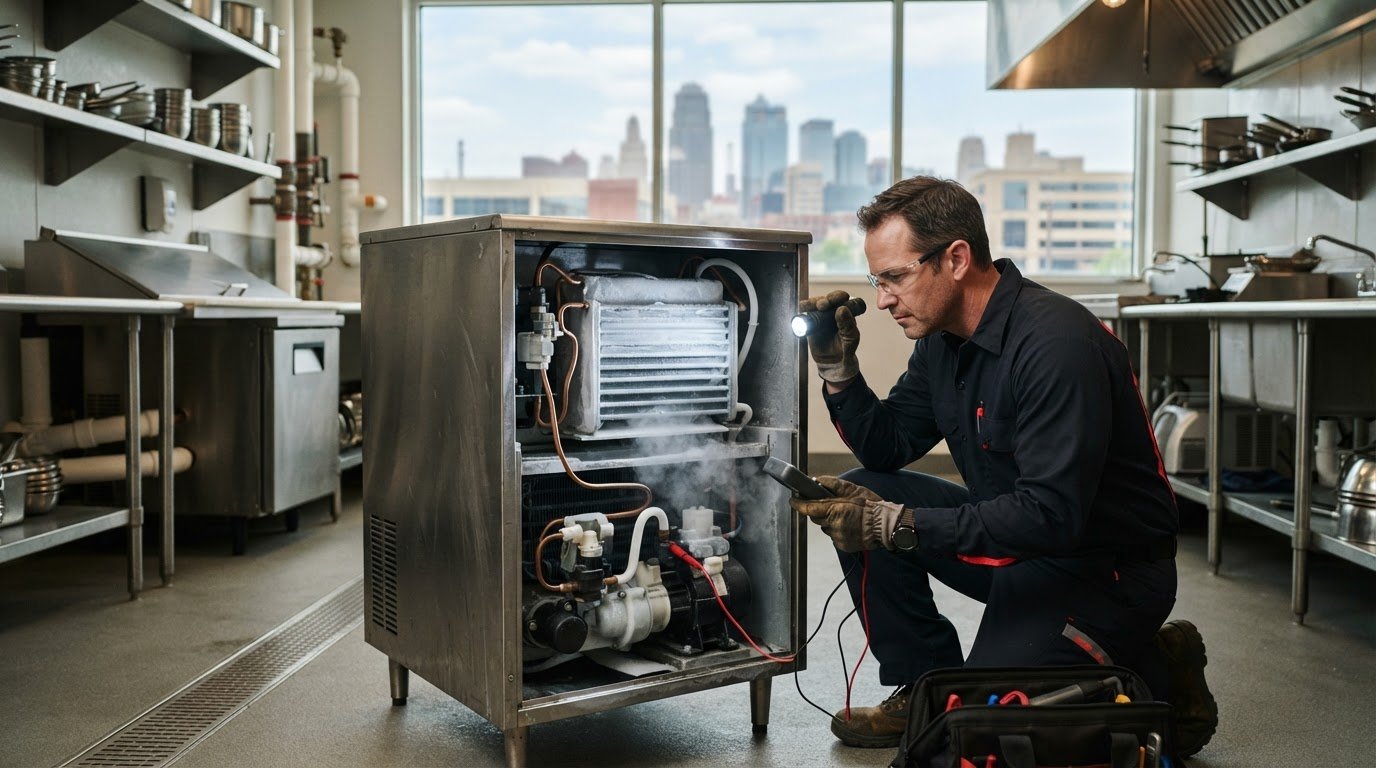
An ice machine that slows production or stops making ice can disrupt service, food preparation, and daily operations. For restaurants and other commercial facilities, commercial ice machine repair Kansas City businesses rely on starts with identifying the symptoms and the conditions around them, from water supply and filtration to airflow, drainage, and equipment operation.
It is not always clear whether a performance issue calls for cleaning, maintenance, or repair. The right next step depends on what the machine is doing, how it is used, and whether the issue affects production, ice quality, or both. This guide covers common warning signs, practical observations to record, and how to prepare for service.
Supreme Mechanical Solutions provides commercial ice machine repair and cleaning for businesses across the Kansas City metro in Kansas and Missouri. The company also services commercial refrigeration, HVAC, and food equipment, helping operators coordinate related facility needs. Routine care and clear symptom notes can help keep ice production and daily operations on track.
Key Takeaways
- Changes in ice production, ice quality, or machine operation can point to a water, airflow, drainage, cleaning, or equipment issue.
- Before arranging service, note what changed, when it happens, and whether the issue is continuous or intermittent.
- Keep the machine’s air inlets and outlets unobstructed, and follow the manufacturer’s instructions for routine cleaning.
- Commercial ice machines serve a different purpose from building HVAC and cold-storage equipment, even when all are part of the same facility.
- Supreme Mechanical Solutions provides commercial ice machine repair and cleaning in the Kansas City area, alongside refrigeration, HVAC, and kitchen equipment service.
Why commercial heating systems matter to Kansas City businesses
For a restaurant, gas station, or other commercial facility, an ice machine is operational equipment, not just a convenience. A drop in production can affect beverage service, food preparation, and the daily routine of staff. The machine also operates alongside other building systems, including air conditioning, heating, and refrigeration.
Ice needs vary with the business and how the space is used. A restaurant may rely on ice for customer service and food preparation, while a gas station may depend on it for routine operations. The machine’s location, surrounding conditions, usage patterns, and maintenance history all help explain a change in performance. A useful assessment begins with the actual symptoms rather than an assumption about the cause.
What commercial heating systems do in an operating building
Ice machines make and store ice through a refrigeration process. Water enters the machine, the equipment cools it to form ice, and the finished ice moves into a storage bin. The specific operating sequence varies by machine, but water supply, refrigeration components, controls, drainage, and airflow all play a role in operation.
That process is separate from building heating and cooling. Air conditioning manages conditions in occupied spaces, while commercial refrigeration equipment keeps products cold. A commercial ice machine has its own job: producing ice for the business. The Icemaker overview describes common operating principles, though service and cleaning should follow the instructions for the equipment installed at your facility.
When a machine’s output changes, take note of the specific impact. Is there less ice than usual, is the machine not producing at all, or does the ice look different from what the business normally uses? For commercial ice machine repair Kansas City operators need, these details help distinguish an ice-production concern from an issue with a separate cooler, freezer, or building system.
How building use shapes heating requirements
Occupancy and operating patterns can affect how an ice machine is used. A restaurant may have preparation before opening, a busy service period, and cleaning after close. A gas station or other commercial business may have a different pattern of demand. Note when the machine is working hardest and when the change in production becomes noticeable.
Placement matters as well. Check whether the area around the machine has changed, whether its air inlets and outlets are blocked, and whether nearby equipment or stored items affect access. Do not move or dismantle the unit to investigate. A clear view of the surroundings and a record of when symptoms occur are useful starting points for service.
Record the machine’s location, the time the issue appears, and what staff observe during normal operation. Include recent changes in use, cleaning, or the surrounding area if known. Supreme Mechanical Solutions provides commercial ice machine repair and cleaning for Kansas City-area businesses, as well as commercial heating service for facilities with related HVAC needs.
How commercial heating systems produce and distribute heat
An ice machine follows a cycle: water enters the equipment, the machine produces ice, and the ice is released into a storage bin. Controls manage the machine’s operation, while water, refrigeration, and drainage components support the cycle. The exact arrangement depends on the unit, so the equipment’s own instructions and operating information matter when describing a problem.
Heat sources and distribution components
Although the heading refers to heating, the relevant equipment for this article is the commercial ice machine. Its performance depends on several connected functions. The water supply must reach the machine, the equipment must be able to carry out its refrigeration cycle, and the resulting ice must be released and stored. Air-cooled machines also need clear airflow around their air inlets and outlets.
When one part of the process is affected, the symptoms may appear elsewhere. For example, a machine may produce less ice, stop cycling, or have trouble moving finished ice into the bin. These observations do not identify a specific failed component by themselves. They do give a technician a clearer starting point than a general report that the machine is “not working.”
Operators can make a safe visual check of the immediate area: look for blocked vents, items restricting access, or an obvious change in the water supply. Follow the equipment’s instructions for routine cleaning, and do not open panels or attempt repairs that require working on internal or electrical components. If the machine’s status or operating sequence is unclear, record what is visible and arrange service.
Controls, zones, and day-to-day operation
Controls direct the machine’s operation according to its design. Indicator lights or displayed messages may help describe what the equipment is reporting, but their meaning depends on the specific model. Record any visible message or indicator exactly as shown rather than guessing what it means.
For example, a gas station manager may notice that ice production has changed during a particular part of the operating day. Staff can note when the change occurs, whether the machine continues to run, and whether the storage bin appears to be receiving ice. This creates a useful timeline without assuming a particular control setup or diagnosing a component.
Basic operating sequence:
- Water supply: Water reaches the machine according to its design.
- Ice production: The machine cools water and forms ice through its refrigeration process.
- Release and storage: Finished ice moves into the storage bin.
- Controls: The machine’s controls guide operation and respond to its operating conditions.
Ice production and building heating are different processes, even when they serve the same facility. Commercial ice machine repair Kansas City businesses need applies to the ice-making equipment, not to a furnace or rooftop unit. Keeping the systems distinct helps managers describe which equipment is affected and how the issue is disrupting operations.
For heating support at a commercial facility, Supreme Mechanical Solutions also provides commercial heating service in the Kansas City metro.
Commercial heating system types: compare equipment for different spaces
Commercial ice machines are designed for different ice-production and storage needs. When reporting a problem, identify the machine and how it is used, then describe the observed symptom. Do not assume that every unit has the same controls, cleaning process, or operating sequence. The machine’s type, its location, and the facility’s normal demand provide useful context for service.
Furnaces, heat pumps, and rooftop units
These are building heating systems, not types of ice machines. For an ice-production concern, focus instead on the installed machine, its storage bin, and the conditions around it. If the facility is also experiencing a heating or cooling issue, report that separately so the two symptoms are not confused.
| Equipment type | General application | Heat delivery and context |
|---|---|---|
| Commercial ice machine | Producing ice for a commercial business | Uses a refrigeration process to make ice. The machine’s type and operating instructions guide cleaning and service. |
| Ice storage bin | Holding produced ice for use | Note whether ice is reaching the bin and whether the reported concern is with production or storage. |
| Water supply and filtration | Providing water for ice production | Record visible changes in water supply or filtration service, without assuming they are the cause of the problem. |
| Airflow and drainage | Supporting equipment operation and water removal | Keep the area accessible and note visible obstructions or drainage concerns for the service team. |
For a practical comparison, distinguish a production problem from a storage or access problem. If the machine appears to be running but the bin is not receiving the expected ice, record what staff observe and when. If the machine is not operating, note any visible indicator or message. Supreme Mechanical Solutions provides commercial ice machine repair and cleaning for Kansas City-area businesses, along with HVAC and refrigeration service.
Unit heaters and infrared heaters
Unit heaters and infrared heaters serve commercial heating needs, not ice production. A business may have these systems in the same building as its ice machine, but each piece of equipment has a separate function. When arranging service, identify the machine or system involved rather than describing every facility issue as an HVAC problem.
For an ice machine, note the machine’s location, what staff have observed, and whether the change affects production, ice quality, or delivery to the bin. Include the normal operating pattern and any recent changes in cleaning or use. There is no need to guess at a failed part. A clear description helps direct attention to the equipment and symptoms. If the building also needs heating service, Supreme Mechanical Solutions handles commercial heating alongside refrigeration and ice machine service.
What to assess when planning commercial heating in Kansas City
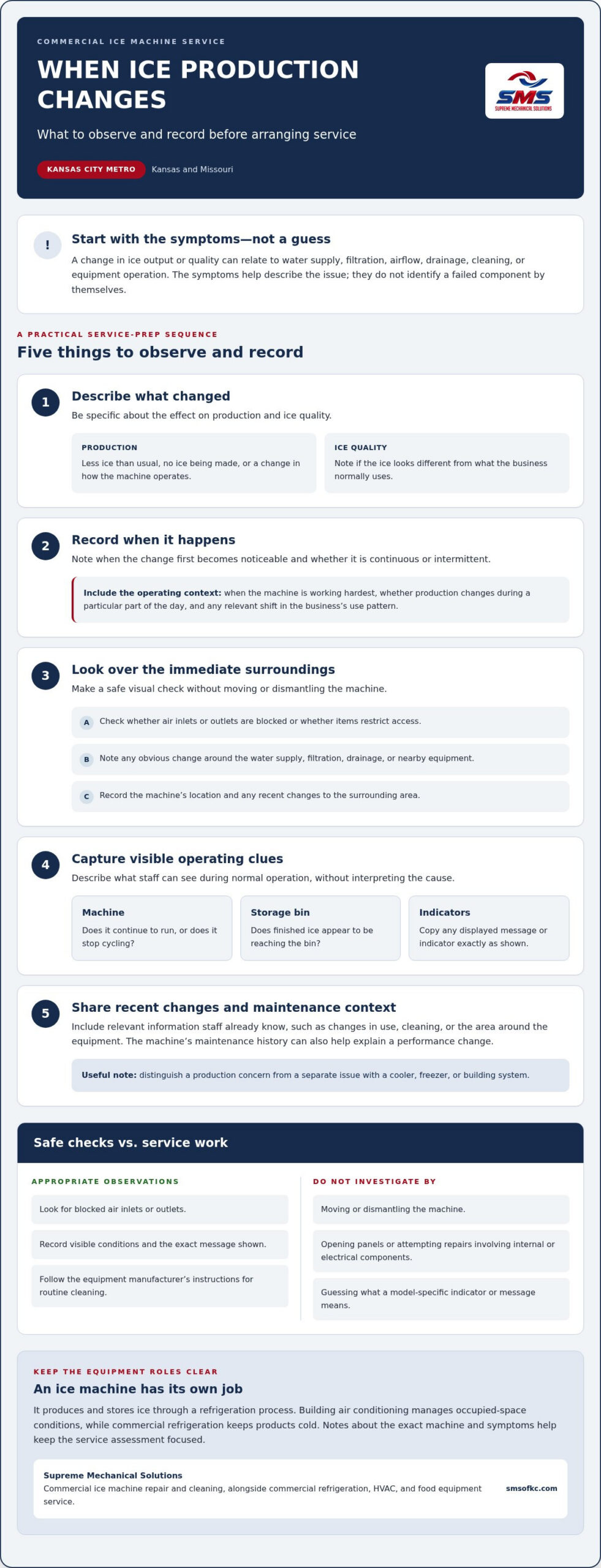
When planning service for an ice machine, start with what has changed and how it affects the business. Gather the machine’s identifying information if available, describe the symptom, and note when it occurs. These details help focus the service conversation on the equipment and its operating conditions rather than a guess about the cause.
Review the building, schedule, and heating concerns
Work through the observations in order. First describe how the machine is used, then record the visible symptoms and the conditions around it. This makes it easier to distinguish a consistent production issue from an occasional change or a concern with the storage bin.
- Describe the business use and schedule. Note when the machine is typically used most and whether the problem occurs during a particular operating period. Include preparation, service, or other routines that help explain demand.
- Identify the equipment and location. Record the machine’s make and model if readily available, where it is installed, and whether it is paired with a separate storage bin. Do not remove covers or move equipment to find this information.
- Describe what changed. Note whether production has slowed, stopped, or become inconsistent, or whether the concern relates to how ice reaches the bin. Include any visible indicator or message exactly as displayed.
- Check the immediate surroundings. Look for items blocking access or airflow and note visible changes around the machine. Follow the equipment’s instructions for routine cleaning, and avoid internal repairs or work on electrical components.
- Record timing and related events. Note when the issue began, whether it comes and goes, and any recent change in use, cleaning, or the surrounding area that staff have noticed.
For example, a restaurant manager may find that staff notice reduced ice production during a particular service period, while the machine appears to operate normally at other times. Recording when the issue occurs and what staff see helps a technician assess the concern without assuming a cause. If production has stopped and operations are affected, describe that impact when arranging service.
Plan maintenance around operating needs
Preventive maintenance gives operators a planned way to care for commercial equipment. Ice machine cleaning is part of maintaining the equipment, and the appropriate cleaning process depends on the machine and its manufacturer’s instructions. Staff should follow the stated cleaning procedures rather than applying an unverified method or product.
Keep maintenance notes and recurring symptoms together. Record when cleaning was performed, what was observed, and whether the production concern returned. This is especially useful when coordinating HVAC and refrigeration service at one facility. A restaurant may need heating support for occupied areas and commercial ice machine repair Kansas City service for its ice equipment, but each system should have its own symptom and maintenance record.
Supreme Mechanical Solutions provides commercial ice machine cleaning and repair, as well as preventive maintenance for commercial systems. The company’s services include coil cleaning, ice machine cleaning, and quarterly maintenance plans. Sharing the equipment details and the facility’s operating needs helps make the service discussion specific to the equipment in place.
Commercial heating service in Kansas City: how Supreme Mechanical Solutions helps
Supreme Mechanical Solutions serves commercial customers across the Kansas City metro with commercial ice machine repair and cleaning, alongside refrigeration, HVAC, and food equipment service. When an ice machine’s output changes or it stops producing ice, the team can address the equipment as part of the facility’s commercial service needs. Clear information about the machine and symptoms helps keep the service conversation focused.
Heating support for commercial facilities
Restaurants, gas stations, warehouses, and other commercial properties have different equipment and operating demands. A restaurant may need service for ice production as well as cold storage or kitchen equipment. A gas station may have ice equipment operating alongside building HVAC and refrigeration. Describe the affected unit, the issue, and how it affects the business.
Supreme Mechanical Solutions provides commercial refrigeration service, including walk-in coolers and freezers, reach-in coolers and freezers, and commercial glycol chillers. The company also handles commercial cooking and food equipment repair. For operators managing several equipment concerns, identifying each system separately can help coordinate service without mixing up an ice machine issue with a cold-storage or HVAC problem.
Commercial ice machine repair Kansas City businesses need may involve a machine that is producing less ice, has stopped making ice, or is showing another change in normal operation. Staff observations do not confirm the cause, but they provide helpful context. Note what is happening, when it happens, and whether the machine’s visible surroundings or recent maintenance have changed.
Supreme Mechanical Solutions also provides commercial heating service for Kansas City-area facilities. When arranging service for multiple systems, list each piece of equipment and its symptoms separately. This gives the team a clearer picture of the issues affecting the facility and the business operations involved. For a heating-system assessment, review this commercial furnace checklist for Kansas City businesses.
Contact Supreme Mechanical Solutions
For routine service planning, contact Supreme Mechanical Solutions during office hours, Monday-Friday, 8:00 AM-4:30 PM. The team handles commercial refrigeration and ice machine needs alongside HVAC and food equipment repair, helping businesses coordinate service for related facility equipment. When reporting an ice machine issue, share the equipment location, the symptoms, and when staff first noticed the change.
24-hour emergency HVAC service is available at (913) 399-7711. Office hours are Monday-Friday, 8:00 AM-4:30 PM; emergency service availability does not mean the office is open around the clock. Call the emergency number for urgent service needs, and describe how the equipment issue is affecting operations.
Supreme Mechanical Solutions serves commercial businesses in Kansas City, Kansas City MO, Kansas City KS, Overland Park, Olathe, Lenexa, Shawnee, Leawood, Lee’s Summit, Independence, Blue Springs, Liberty, Gladstone, Grandview, Belton, Raymore, and Louisburg. To schedule commercial ice machine repair, call (913) 399-7711 or email sales@smsofkc.com.
Plan your next service step with confidence
Use the machine’s symptoms and your facility’s operating needs to guide the next service conversation. If ice production has changed, note what staff see, when the issue occurs, and how it affects service or food preparation. That information helps focus the discussion on commercial ice machine repair Kansas City businesses need, while keeping ice equipment distinct from heating, air conditioning, and cold-storage systems.
Supreme Mechanical Solutions supports commercial facilities with ice machine repair and cleaning, commercial refrigeration, HVAC, and food equipment service. Whether you are addressing a specific equipment issue or coordinating several service needs, a clear description of each problem helps establish a practical next step for your operation.
Keep your facility moving with commercial service tailored to the equipment your business depends on. Call (913) 399-7711 or email sales@smsofkc.com to schedule service.
Frequently Asked Questions
How often should commercial heating systems be serviced?
Service frequency depends on the equipment, its operating schedule, and the facility’s needs. For an ice machine, follow the manufacturer’s instructions for routine cleaning and keep a record of maintenance and recurring concerns. Supreme Mechanical Solutions provides commercial ice machine cleaning and preventive maintenance, including quarterly maintenance plans. Before arranging service, gather the equipment details and note changes in production, operation, or ice delivery to the bin.
Why is one area of a commercial building colder than another?
Uneven building temperatures are a heating or air-distribution concern, separate from ice machine performance. If the facility has both issues, record them independently. For a temperature concern, note the affected rooms and when the difference occurs. For an ice machine concern, describe changes in production or operation and when staff notice them. Separate observations help identify which system needs attention.
Can a commercial heat pump provide heating and cooling?
Yes, commercial heat pumps can provide heating and cooling, depending on the system’s design and configuration. A heat pump serves the building, while an ice machine produces ice through its own refrigeration process. If both systems have an issue, describe the symptoms and equipment separately so the service need is clear.
What information should I have ready before arranging commercial heating service?
For ice machine service, have the facility address, type of commercial business, machine location, and a clear description of the issue ready. Note when the problem began, whether it is continuous, and whether it affects production, ice quality, or movement into the bin. Supreme Mechanical Solutions serves Kansas City, Kansas City MO, Kansas City KS, Overland Park, Olathe, Lenexa, Shawnee, Leawood, Lee’s Summit, Independence, Blue Springs, Liberty, Gladstone, Grandview, Belton, Raymore, and Louisburg. These details help make the service conversation specific to your facility.
Does Supreme Mechanical Solutions provide emergency commercial heating service?
Yes, 24-hour commercial HVAC repair in Kansas City is available for commercial service needs. Call (913) 399-7711 and share the building location, equipment type if known, and the operational issue. Office hours are Monday-Friday, 8:00 AM-4:30 PM; emergency service availability does not mean the office is open around the clock. For an ice machine issue, explain whether production has slowed or stopped and how that affects the business.
Can one contractor support commercial heating and refrigeration equipment?
Yes. Supreme Mechanical Solutions works with commercial heating and refrigeration systems, as well as commercial cooking and food equipment. This can simplify coordination for a restaurant managing building comfort alongside cold storage or ice production. For commercial ice machine repair Kansas City businesses need, describe the ice equipment issue separately from any heating concern so each system can be addressed appropriately. Call (913) 399-7711 or email sales@smsofkc.com to schedule service.


