
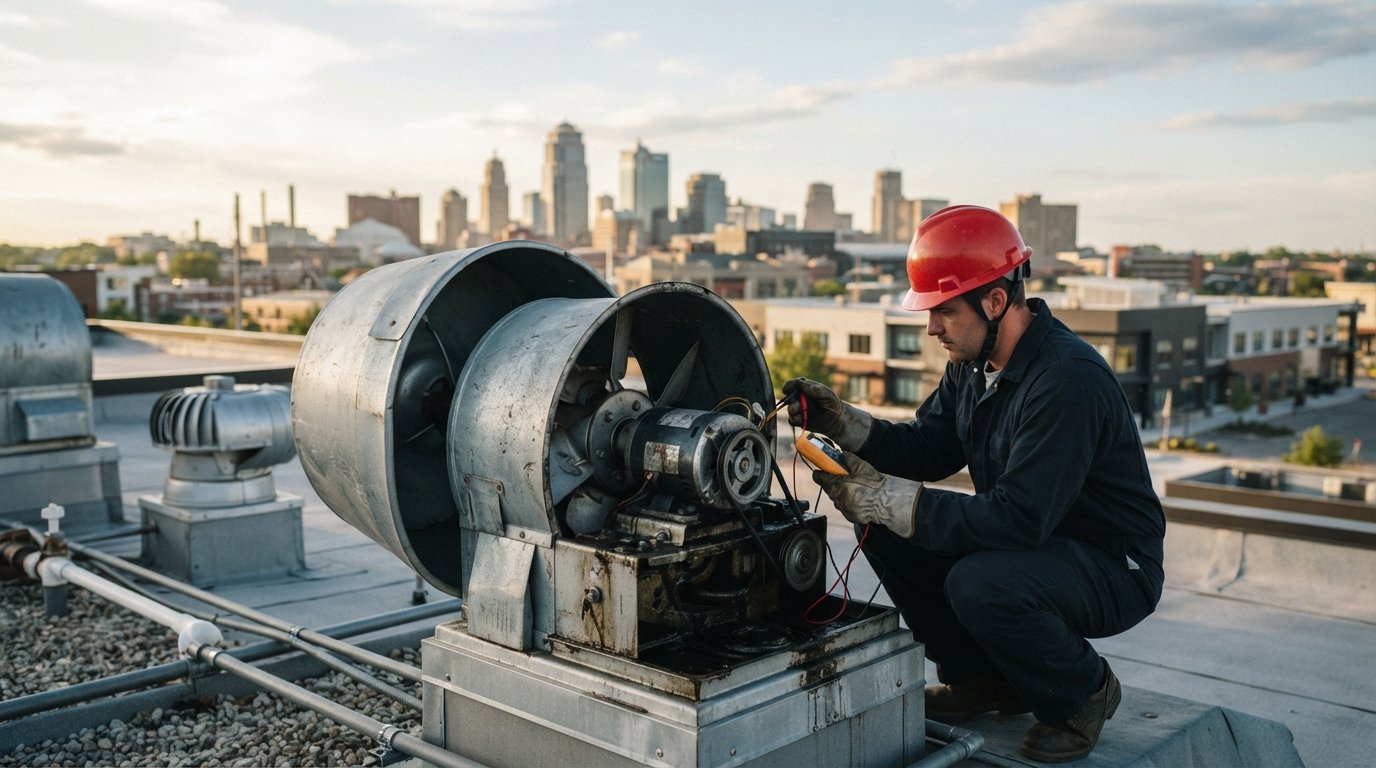
A rooftop exhaust fan can be failing even when it still runs. Burning odors, motor trouble, weak airflow, unusual fan or blower operation, and excessive noise can all signal that restaurant exhaust fan repair in Kansas City is needed. A prompt assessment can help identify whether the problem lies with the fan, motor, belt, or airflow path.
For restaurant operators, a noisy or underperforming exhaust system can disrupt kitchen work and make ventilation harder to manage. Symptoms offer useful clues, but the underlying cause may not be obvious from inside the kitchen.
This guide explains what common warning signs may indicate, how rooftop fan and blower problems develop, and what a repair visit can involve. It also covers factors that shape repair scope and how exhaust service relates to other kitchen equipment and HVAC needs.
Key Takeaways
- Burning odors or motor trouble are signs to assess the fan and its operating components rather than assuming the issue will resolve on its own.
- Grease buildup on fan blades can affect balance and efficiency, and may contribute to premature belt wear.
- Pay attention to when excessive noise occurs and whether it changes with fan operation; those details can help narrow the source of the problem.
- A repair assessment can examine the rooftop fan or blower, belts, and airflow path to identify what is affecting performance.
- Understand how the hood and exhaust fan repair process works so you can plan service around your kitchen’s operating needs.
Burning odors and fan motor issues
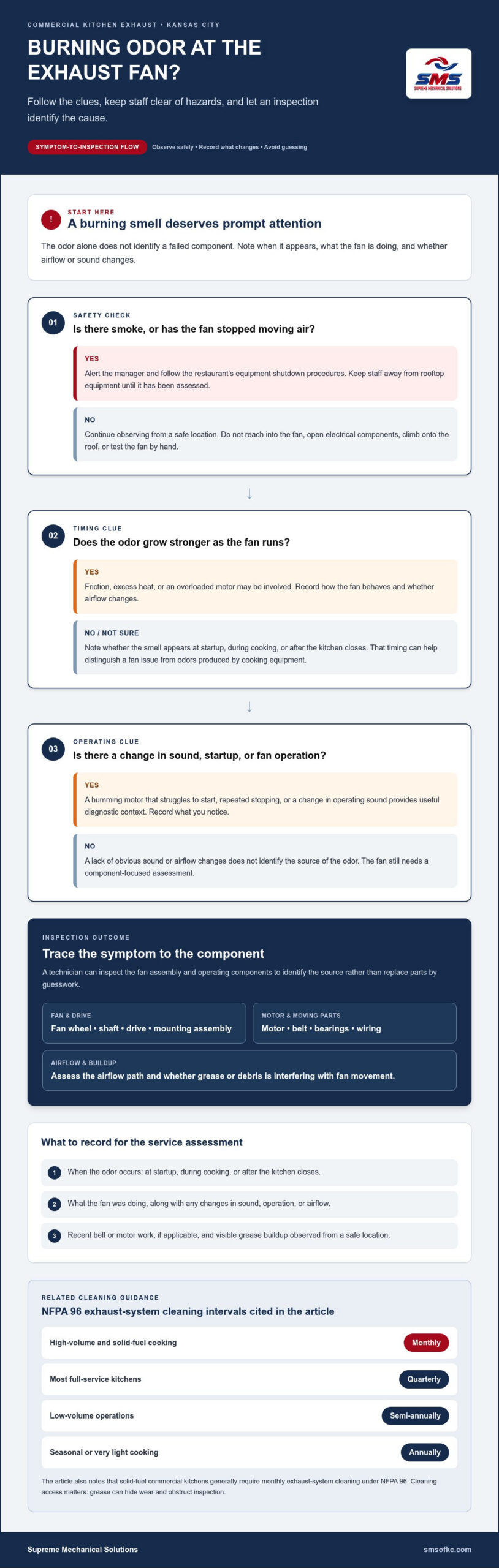
A burning smell near a commercial hood deserves prompt attention. Note whether it appears when the exhaust fan starts, during cooking, or after the kitchen closes. A smell that grows stronger as the fan runs may point to friction, excess heat, or an overloaded motor. Record what the fan was doing and whether airflow changed. These details can help distinguish a fan problem from odors produced by cooking equipment.
Several mechanical problems can create heat or friction. A worn or slipping belt may produce a hot-rubber odor, while a motor bearing problem can cause heat and rough operation. Grease and debris on moving parts can also interfere with fan movement. Don’t reach into the fan or open electrical components. A technician can safely inspect the motor, belt, bearings, wiring, and wheel to identify the source rather than replace parts by guesswork.
Pay attention to sound and airflow alongside the odor. A humming motor that struggles to start, a fan that repeatedly stops, or a change in operating sound provides useful diagnostic context. If smoke appears or the fan stops moving air, alert the manager and follow the restaurant’s equipment shutdown procedures. Keep staff away from rooftop equipment until it has been assessed.
Cleaning access matters because grease accumulation can hide wear and obstruct inspection. According to the National Fire Protection Association (NFPA), commercial kitchen exhaust fans require hinge kits and access panels. NFPA 96 cleaning guidance calls for monthly cleaning for high-volume and solid-fuel cooking, quarterly cleaning for most full-service kitchens, semi-annual cleaning for low-volume operations, and annual cleaning for seasonal or very light cooking. Solid-fuel commercial kitchens generally require monthly exhaust-system cleaning under NFPA 96.
For a useful service report, record the odor, when it occurs, how the fan behaves, and any change in ventilation. Note whether the smell is strongest at startup or after extended operation. Include recent belt or motor work, if applicable, and any visible grease buildup observed from a safe location. Don’t climb onto the roof or test the fan by hand. These observations help focus the inspection without exposing staff to moving equipment or electrical hazards.
A burning odor alone doesn’t identify a failed component. A sound diagnosis follows the evidence: inspect the fan assembly, check motor operation, examine the belt and bearings, and assess grease buildup and airflow. Addressing the cause can help restore dependable exhaust performance and prevent a minor mechanical symptom from disrupting kitchen ventilation.
Commercial rooftop exhaust fan and blower repair
Rooftop fan repair begins by matching the reported symptom to the equipment’s operation. Note whether the fan starts, stays on, or shuts down unexpectedly. A technician can inspect the motor, shaft, bearings, drive, wheel, and mounting assembly to locate the affected component. The repair plan should identify the failure and explain how the proposed work addresses it.
Commercial kitchen exhaust fan repair or replacement cost depends on the failed parts, the fan’s overall condition, rooftop access, and the scope of work. A specific price is provided after a quote request, based on those factors.
When choosing a commercial exhaust fan repair contractor in Kansas City, confirm that the contractor’s license applies to the work and location. Look for a written scope identifying the equipment inspected, the diagnosed fault, and the proposed repairs. A clear record helps restaurant managers coordinate approval and compare completed work with the original concern.
For Kansas City fire-code requirements, consider the hood, duct, and rooftop fan as one system during inspection. Fan operation alone doesn’t establish whether the exhaust system meets applicable requirements. Keep inspection findings and maintenance records with the property’s equipment documents so the responsible facilities team can track follow-up work.
Set the restaurant exhaust fan inspection and maintenance schedule according to cooking volume and fuel type, following the cleaning intervals discussed earlier. Mechanical inspections can also respond to operational changes, such as unexpected cycling or unsteady rotation. Recording these symptoms helps distinguish a developing mechanical fault from planned cleaning work.
Restaurant exhaust fan repair service areas around Kansas City include the metro in Kansas and Missouri. Provide the site address, rooftop access details, and equipment location when coordinating service. For a multi-location operator, identify the specific building and hood so records and service arrangements stay tied to the right property.
A focused repair visit can also document the fan’s condition for future decisions. The technician can record which components were inspected, what work was completed, and whether further attention is recommended. This gives restaurant managers and property teams a practical reference for equipment upkeep or recurring issues.
Grease buildup on commercial kitchen exhaust fans can reduce efficiency and cause premature belt wear, shortening the fan’s lifespan. During a repair assessment, the technician can note visible grease and belt condition alongside the original operating symptom. This helps the restaurant team decide whether the concern is limited to mechanical repair or should be considered alongside cleaning follow-up. Keep the observation with the service record for review during later visits.
Grease buildup on exhaust fan blades can throw the fan off balance and reduce its effectiveness and efficiency, particularly when technicians cannot access both sides of the blades. The inspection record should note which blade surfaces were reachable and whether access limited the assessment. Managers can use that detail to discuss the next service step instead of treating a partial view as a complete evaluation. Recording balance symptoms, blade access, belt condition, and completed work helps the team compare later findings and address recurring problems.
Excessive fan noise
A new sound from a commercial exhaust system can help narrow the inspection. Note whether it is a steady hum, sharp whistle, low rumble, or intermittent click. Record where staff hear it most clearly, such as beside the hood, near a ceiling penetration, or outside. Sound can travel through connected ductwork, so its loudest point may not reveal the source.
Timing adds useful context. Note whether the noise begins when the fan starts, appears after it has run for a while, or changes during a cooking shift. If staff can safely observe normal operation, record whether the sound changes with the kitchen’s activity. Don’t touch the fan or access rooftop equipment to investigate. A technician can compare the reported timing with the equipment’s operation.
A whistle near the hood differs from a mechanical rattle at the fan. A technician may assess airflow openings, duct connections, fan supports, and motor mounts to locate the sound. The inspection should distinguish noise generated by the fan from sound transmitted through the building. That distinction matters because work on the wrong component may leave the original noise unchanged.
Keep a brief noise log for the service visit. Include the time, operating condition, sound description, and location where it is most noticeable. For example, record whether a low rumble is heard only in the dining area or also near the kitchen hood. Note any recent change in the sound, even if the fan appears to operate normally.
Staff can compare the sound with nearby equipment, too. A reach-in cooler compressor or another kitchen appliance may create noise that seems to come from the exhaust system. Observe whether the sound continues when the exhaust fan is off during normal, safe operations. Don’t shut down equipment outside established procedures. This comparison can help the technician distinguish a fan issue from noise made by other operating equipment.
During inspection, the technician can check the mounting assembly, motor operation, drive components, and duct connections. The findings should explain which component produces the noise and what repair addresses it. If the sound comes from a connection or support, replacing the motor alone won’t correct the source. A clear diagnosis keeps the repair focused on the actual noise path.
After service, note whether the original sound has changed under comparable operating conditions. Keep the observation with the equipment record, including when and where the noise was heard. If it returns, that comparison gives the next inspection a useful reference and helps track whether the same location or operating condition is involved.
Commercial kitchen exhaust fan repair companies near Kansas City
For a restaurant in the Kansas City metro, commercial exhaust work involves more than replacing a fan motor. The repair scope may include the rooftop assembly, hood connection, duct path, and makeup air relationship. Describe the operating problem clearly so the inspection can cover the relevant parts of the system. A useful diagnosis connects a symptom, such as weak hood capture, to a tested component or airflow condition.
Before arranging service, prepare details that help focus the visit. Identify the property address in Kansas or Missouri, the affected hood, and the fan’s rooftop location. Note whether the system starts, runs continuously, or stops unexpectedly. Include examples such as a new scraping sound or smoke lingering near one cooking line. Don’t climb onto the roof or open electrical compartments to gather information.
A clear service scope explains the inspection and findings in practical terms. The report should identify the suspected fault, the component involved, and how the proposed work relates to the observed symptom. For example, if airflow remains weak after the fan starts, the explanation should address what was tested beyond the motor. A written report also helps managers share repair details with franchise teams, property owners, or facilities staff.
Rooftop access affects coordination. Confirm who can unlock the roof, whether access is through a ladder or hatch, and which kitchen areas may need to remain clear. Tell the technician about service windows or delivery activity that could restrict access. A manager can identify the equipment disconnect and communicate site-specific safety procedures before work begins. Keep staff away from the fan while inspection or repair is underway.
For commercial kitchen exhaust fan repair in Kansas City, arrange service based on the system’s symptoms and location, not just a general equipment label. An exhaust fan and a rooftop air-conditioning unit may both sit above the same building, but they serve different functions. Share the hood location and fan details so the work targets the right system. Ask the service report to distinguish completed repairs from any further recommended work.
Use these practical criteria when coordinating commercial service:
- Match the request to a restaurant exhaust fan, hood, or blower problem.
- Provide the property address and a clear description of fan behavior.
- Arrange rooftop access and communicate site procedures before arrival.
- Request findings that connect the tested component to the reported symptom.
These steps help restaurant owners and facility managers make a service visit more focused. Clear communication also supports maintenance records across multiple locations, such as franchise restaurants throughout the Kansas City metro. Keep the diagnosis and completed work with the equipment history so recurring changes in operation can be compared during future service.
Restaurant hood and exhaust fan repair process
A focused repair process starts with the kitchen’s reported problem. The technician needs to know which hood is affected, when the issue occurs, and what changed. For example, smoke lingering over one cooking line may indicate an airflow problem beyond the rooftop fan. The technician can compare the complaint with fan operation, hood capture, and airflow through connected ductwork.
Next, the technician inspects the equipment and airflow route. The fan, blower, drive components, hood, and accessible duct sections each affect exhaust performance. A fan that runs does not prove the system moves air effectively. Grease buildup or another obstruction inside existing ducts can restrict flow. Clearing obstructions and adding vents or return-air pathways can improve airflow in Kansas City.
Diagnosis should connect the observed symptom to a specific finding. For example, weak capture may lead to checks of the fan wheel, drive, duct path, and available replacement-air routes. If the fan runs normally but airflow remains poor, the inspection should consider restrictions beyond the motor. A written summary can identify the issue, work performed, and any related airflow concern that remains.
Once the cause is identified, repair work can address the affected components. Depending on the findings, the technician may correct a mechanical fault or address an airflow restriction. Hood and exhaust systems work as connected parts, so a fan repair alone may not resolve smoke movement if duct restrictions remain. Keep the kitchen manager informed about access needs and affected work areas.
After repair, the technician should operate the system and assess whether the original symptom has changed. The manager can observe the same cooking area that prompted the service request. For instance, note whether smoke clears more effectively from the hood during normal cooking. Comparing the result with the original report makes the service record more useful for future maintenance.
Restaurant teams can prepare for the visit with a few practical details:
- Identify the affected hood and cooking line.
- Describe when the airflow issue appears and what staff observe.
- Arrange rooftop and mechanical-room access for the technician.
- Share any prior repair notes for that fan or duct system.
These steps keep diagnosis, repair, and follow-up tied to the same operating concern. Record the date, reported symptom, inspection findings, and completed work in the equipment file. If smoke capture changes again, that record gives the next inspection a clear point of comparison.
Supreme Mechanical Solutions: Air Conditioning
Supreme Mechanical Solutions supports commercial operators with air conditioning and rooftop unit service. If a restaurant is also dealing with temperature problems, an unreliable rooftop unit, or uneven cooling, these HVAC issues can be assessed alongside the kitchen’s operating needs. Exhaust ventilation and air conditioning are separate systems, so describe each concern clearly when arranging service.
Commercial equipment includes rooftop units, split systems, and mini split systems. For example, a rooftop unit that struggles to maintain dining-room comfort calls for a different inspection than a kitchen exhaust fan with reduced airflow. Learn more about commercial air conditioning and the systems available for commercial settings.
Plan the next service step with confidence
Move forward with a practical service plan for your commercial operation.
Frequently Asked Questions
What are common commercial kitchen exhaust fan problems and repair options?
Loose duct joints or damaged transitions can also let exhaust escape before reaching the rooftop discharge. A technician can trace the duct route, inspect accessible seams, and determine whether a connection needs repair or sheet-metal work. Grease residue around a duct joint, for example, can help locate a leak. Keep staff clear of affected areas and record where residue appears for the service visit.
commercial kitchen exhaust fan repair versus replacement cost
Repair or replacement cost depends on the failed parts, the fan’s overall condition, rooftop access, and the scope of work. A specific price is provided after a quote request.


