
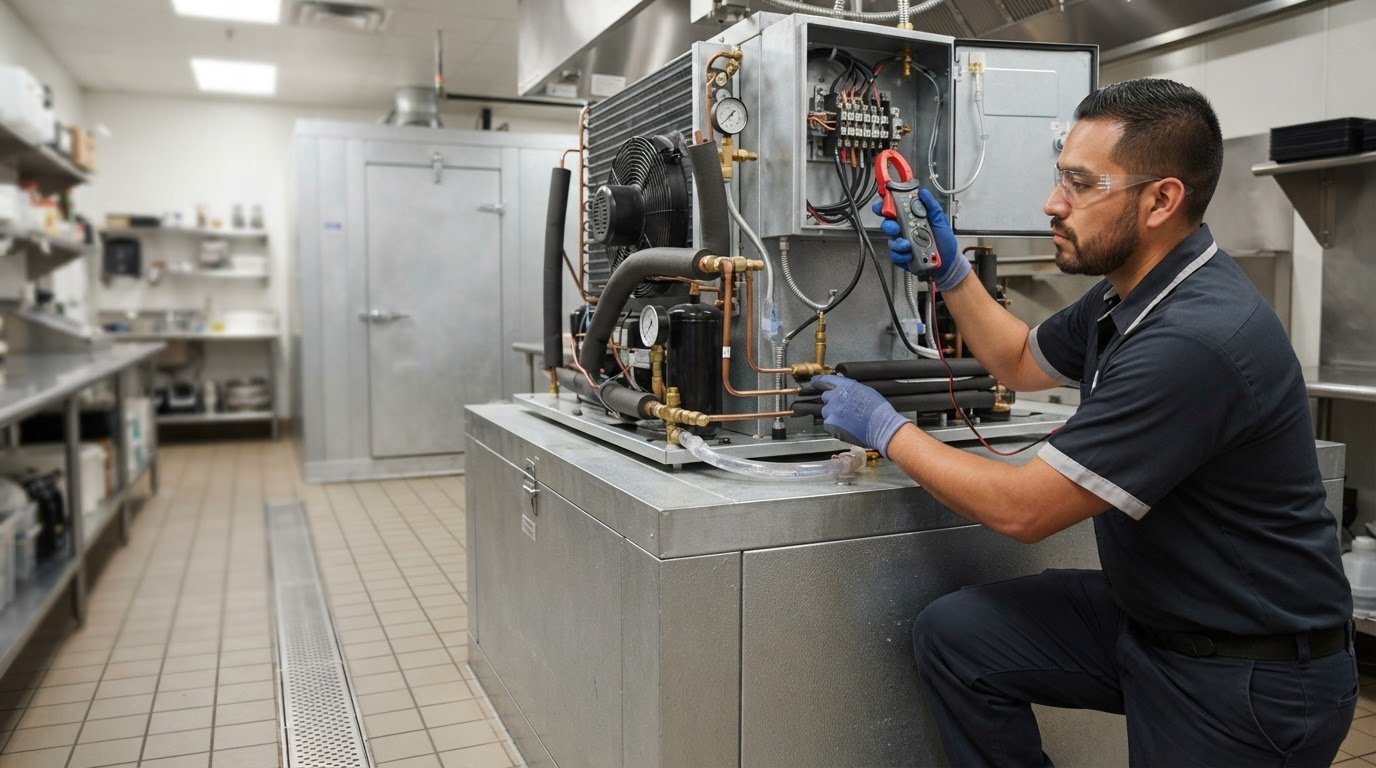
A refrigeration issue can quickly disrupt routine operations. Quarterly commercial refrigeration maintenance in Olathe can include electrical component and amp-draw checks, refrigerant-system assessments, filter service, and drain clearing. Scheduled visits give commercial operators a practical opportunity to review key parts of their refrigeration equipment.
Knowing what a maintenance visit covers helps you plan around your equipment and operations. This guide explains common checks, what technicians look for, and how maintenance can vary across walk-in coolers, freezers, and other commercial refrigeration equipment. It also covers how to organize service records and recognize when a repair call may be needed. Use these details to make informed decisions for your facility.
Key Takeaways
- Electrical checks and amp draw readings can help identify components that need attention during routine service.
- Filter condition, refrigerant checks, and clear drains are practical parts of a planned refrigeration inspection.
- Maintenance tasks should reflect the equipment being serviced, including walk-in and reach-in systems.
- Use a consistent maintenance plan to keep key inspection and service tasks on your facility’s schedule.
- When refrigeration or commercial HVAC equipment needs professional service, choose support suited to commercial systems.
Electrical component and amp draw inspection
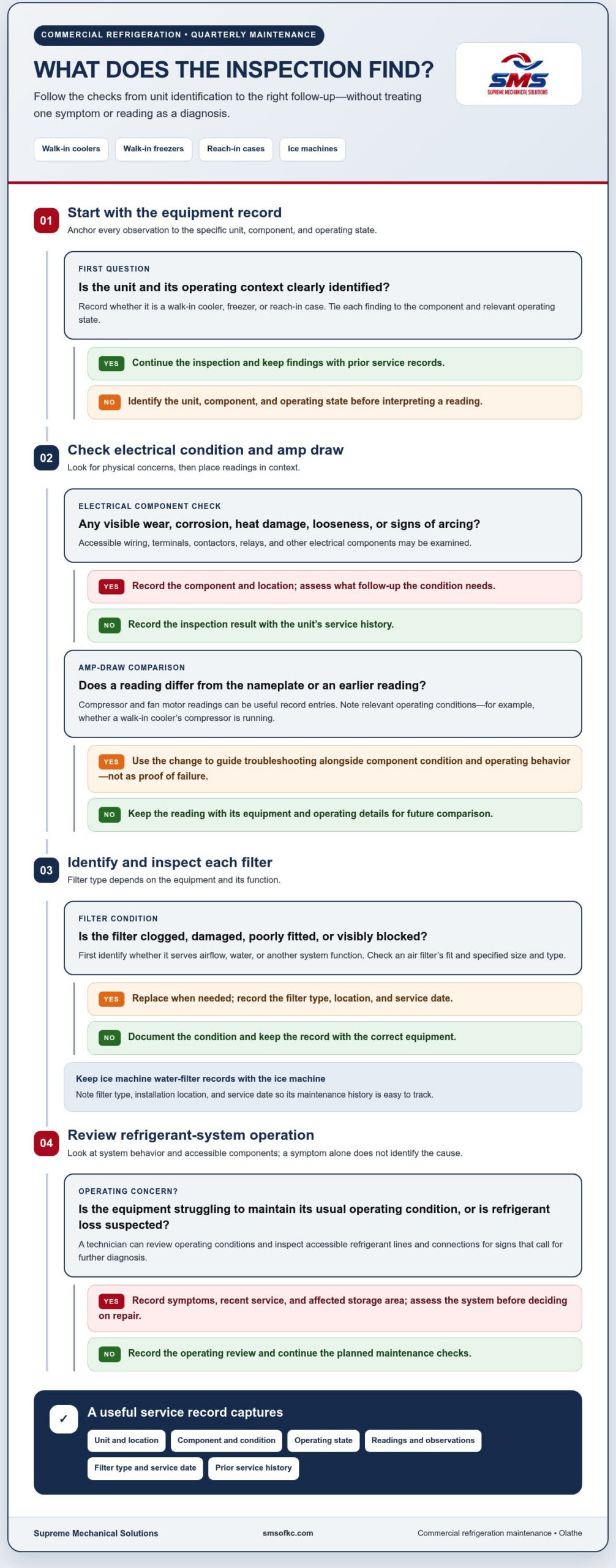
An electrical inspection looks for wear, loose connections, and operating changes that can affect refrigeration equipment. Record observations by unit so your Olathe maintenance team can track developing concerns between visits.
Electrical Component Inspection
A technician examines wiring, terminals, contactors, relays, and other accessible electrical components. The inspection looks for visible wear, corrosion, heat damage, loose connections, and signs of arcing. A discolored terminal or damaged wire, for example, may need closer attention. Recording the component and its location helps staff plan the right follow-up.
Amp Draw Inspection
Amp-draw readings show how much electrical current a component uses while operating. A technician can compare readings with the equipment nameplate and record differences under relevant operating conditions. Compressor and fan motor readings are useful entries in the inspection record. A change from an earlier reading can guide troubleshooting, but should be considered alongside the component’s condition and operating behavior.
Context matters. Tie each reading to the specific equipment, component, and operating state rather than treating it as a stand-alone verdict. For a walk-in cooler, note whether the compressor is running when the measurement is taken. This detail makes the service record more useful for future comparisons and helps distinguish a new change from a condition already noted.
- Identify the unit: Record whether the inspection covers a walk-in cooler, freezer, or reach-in case.
- Note the component: Match each observation or reading to the compressor, motor, or electrical connection.
- Describe the condition: Record visible damage, looseness, corrosion, or unusual operating behavior.
- Track the result: Keep current observations with prior service records for comparison.
These records help managers discuss repairs using specific observations rather than general concerns. If a technician finds a damaged connection or a notable amp-draw change, the next step is to assess the affected component and its role in the system. Don’t treat a single reading as proof of a particular failure. The equipment’s condition, operating state, and inspection history all inform the assessment.
For commercial refrigeration maintenance in Olathe, include electrical findings in the service record alongside the unit identification and inspection date. A clear record supports follow-up across shifts and helps facility teams communicate which equipment needs attention. The commercial refrigeration service page provides context on refrigeration systems that may need repair when an inspection identifies an issue.
Filter replacement and refrigerant checks
Filter service depends on the equipment and its design. A walk-in cooler, reach-in case, and ice machine may use different filter types. During maintenance, identify each filter by location and function before replacing it. This prevents confusion between a water filter, an air filter, and a refrigerant-system component.
For equipment with an accessible air filter, inspect its condition and fit. Dust or grease buildup can restrict airflow across the surface the filter protects. Compare the installed filter with the equipment’s specified size and type, then replace it when needed. A poorly fitted filter can leave gaps that let debris pass around it.
Ice machines may have water filters that need attention during routine upkeep. Record the filter type, installation location, and service date so staff can track its maintenance history. If the filter is clogged or damaged, replacement may be appropriate. Keep this record with the ice machine rather than filing it only under general refrigeration notes.
Refrigerant checks focus on system operation, not simply on adding refrigerant. A technician can review operating conditions, inspect accessible refrigerant lines and connections, and look for signs that call for further diagnosis. A cooler struggling to maintain its usual operating condition, for example, may need a broader assessment. One symptom alone does not identify the cause.
- Identify the filter: Note whether it serves airflow, water, or another system function.
- Inspect its condition: Look for visible blockage, damage, or a poor fit.
- Document service: Record the replacement and equipment location for future visits.
- Assess refrigerant operation: Review system behavior and inspect accessible components.
Suspected refrigerant loss calls for diagnosis, not an automatic top-off. A technician assesses the equipment and its operating conditions to determine the appropriate repair step. Record the unit’s symptoms, recent service, and affected storage area to help focus the assessment. For a walk-in freezer, note whether the concern affects the whole space or a specific area.
Coordinate filter service with the equipment’s maintenance history and operating needs. A restaurant manager, for example, can keep filter records alongside notes on ice machine performance and cooler concerns. That makes recurring issues easier to describe during a service visit. For help organizing ongoing equipment care, review the commercial preventive maintenance services relevant to your facility.
Commercial refrigeration maintenance
A maintenance plan should reflect each unit’s workload, condition, and role in daily operations. For quarterly commercial refrigeration maintenance in Olathe, use service records to organize inspections and follow-up.
Provider Qualifications and Local Options
Choose a commercial refrigeration provider that services your equipment, whether walk-in coolers, freezers, reach-in cases, or ice machines. Look for scheduled visits and clear records of findings and completed tasks. Supreme Mechanical Solutions provides quarterly maintenance plans for commercial refrigeration equipment in Olathe and across the Kansas City area.
Quarterly visits provide more frequent opportunities to review equipment condition than semiannual visits. Consider each unit’s workload, service history, and importance to operations when choosing an interval. Keep records that identify the equipment and any recommended follow-up. Comparing entries over time helps managers see whether a concern is recurring or new.
Equipment Types and Quarterly Tasks
Commercial equipment suited to planned maintenance includes walk-in coolers and freezers, reach-in coolers and freezers, and ice machines. Depending on the unit, tasks may include inspecting components, cleaning coils, reviewing filters and gaskets, clearing drains, and checking system operation. The checklist should match the specific equipment and its recorded condition.
Keep a separate record for each piece of equipment, including its location, service date, condition, and follow-up needs. A restaurant, for example, can track a walk-in freezer separately from an ice machine. Unit-specific records make it easier for staff to describe concerns and identify which equipment needs attention.
Early Repair Warning Signs
Arrange repair service between visits if equipment develops a noticeable change in operation. Watch for difficulty maintaining its usual conditions, unusual sounds, visible water near the unit, or repeated interruptions. Note when the symptom occurs and which equipment is affected. A walk-in cooler or freezer that loses temperature can spoil food products in hours.
Risks and Costs of Skipping Maintenance
Skipping planned service can leave wear, drainage problems, or filter issues unaddressed until equipment performance changes. The effect depends on the unit, the issue, and its impact on operations. A restaurant may face food-storage disruption, while a warehouse may need to reorganize inventory around equipment requiring repair.
A quarterly commercial refrigeration maintenance plan in Olathe gives managers regular opportunities to review service records and plan follow-up. It doesn’t replace repair service when a problem appears between visits. Use the records to prioritize affected equipment, assign follow-up, and coordinate service with facility operations.
Commercial system maintenance
A maintenance plan should address the complete refrigeration system, not just one visible component. For each scheduled visit, match the work to the unit type, operating demands, and service history.
Start with an equipment inventory. Record each walk-in cooler, freezer, reach-in case, and ice machine separately, along with its location and the products or work area it supports. This helps staff connect each service note to the right equipment, especially when a facility has several units.
Next, review components that affect system operation. Coil cleaning removes accumulated debris from accessible coil surfaces. Inspect belts and gaskets too, since wear or a poor fit can affect equipment operation. Record the component, its condition, and any work completed. A clear service history gives the next technician useful context.
- Walk-in equipment: Review door gaskets, accessible coils, and drain areas.
- Reach-in cases: Note condition changes and service needs by unit.
- Ice machines: Include scheduled ice machine cleaning and water-filter service.
- All units: Keep findings and completed tasks with each equipment record.
Coordinate the visit with facility operations. A restaurant can identify equipment supporting active food storage and arrange access before service begins. A warehouse manager can group units by location to simplify a multi-unit inspection. Record operating concerns staff have noticed, such as a door that no longer closes properly.
Service records should distinguish inspection findings from completed work. For example, note whether a gasket was inspected, cleaned, or replaced. Mark coil cleaning as completed only after the task is done. This detail helps managers compare visits and track follow-up without assuming every task applies to every unit.
Use each quarterly visit to review open items from the previous service record. Check whether a noted issue was addressed, whether it has returned, and whether a new symptom needs attention. If the equipment’s condition has changed, document the unit and the observed change. This creates a clear handoff between facility staff and service technicians.
A practical plan also accounts for equipment changes. When a walk-in cooler is replaced or an ice machine is installed, update the inventory and service record. New equipment may have different components and maintenance needs. Current records help technicians tailor each visit to the equipment operating at your site.
For Olathe facilities, a complete maintenance record connects each unit to its inspection history, cleaning tasks, and follow-up needs. Managers can use it to coordinate service across locations and keep refrigeration work organized throughout the year.
What does quarterly commercial refrigeration maintenance include?
A scheduled visit should leave a clear record of what the technician inspected, cleaned, replaced, or flagged for follow-up. Match the checklist for each walk-in, reach-in, or ice machine to its components and service history.
Begin with a unit-by-unit review. Identify the equipment and discuss current operating concerns with the manager or facility staff. Inspect accessible electrical components and record relevant amp-draw observations. Review refrigerant-system operation and note conditions needing further diagnosis. These findings help distinguish routine maintenance from repair work.
Cleaning and replacement tasks depend on the system. A visit may include coil cleaning, filter replacement, belt inspection, and gasket checks. For ice machines, include machine cleaning and water-filter service where applicable. Clear the drain and note any blockage or recurring issue. Record each task as completed, recommended, or requiring follow-up.
- Equipment record: List the unit type, location, and observed operating concerns.
- Component review: Document electrical checks, amp draw observations, and refrigerant-system findings.
- Care tasks: Record applicable coil cleaning, filter service, belt and gasket checks, and drain clearing.
- Ice machine service: Note cleaning and water-filter work separately from other equipment.
- Follow-up: Identify repair needs and track them against the next service record.
Use the service report to distinguish observations from completed work. For example, “gasket inspected” does not mean it was replaced. A clear note identifies the unit, the condition found, and any action taken. This makes the report useful to managers reviewing maintenance across shifts or locations.
Compare current findings with the previous visit. A recurring drain issue, repeated filter concern, or change in equipment behavior deserves a specific note. Staff can add operational context, such as which cooler has changed and when the issue occurs. The technician can then assess it alongside inspection findings rather than relying on a broad description.
Finally, identify recommendations that need attention before the next planned visit. Separate urgent operating concerns from routine maintenance items, and assign follow-up through the facility’s normal service process. A complete report helps managers plan, track completed work, and coordinate repairs for walk-in coolers, freezers, reach-in equipment, and ice machines.
Supreme Mechanical Solutions: Air Conditioning
Supreme Mechanical Solutions also provides air conditioning services for separate HVAC needs at Olathe sites. These include rooftop units, split systems, and mini split systems. Because each system suits different building configurations, the equipment already installed helps define the appropriate service request.
Keeping refrigeration and building comfort concerns distinct helps facility managers describe the issue clearly. For example, report whether the concern involves a cooler or freezer, or the building’s air conditioning system. For commercial HVAC needs, explore commercial air conditioning services.
Make Maintenance Part of Your Operating Plan
Plan your next maintenance visit around your facility’s equipment and operating needs.
Frequently Asked Questions
How often should commercial refrigerators and walk-in coolers be serviced?
Schedule professional maintenance quarterly, and arrange repair service if operation changes between visits. When planning staff monitoring, consider each unit’s workload, service history, and role in daily operations. Restaurant staff, for example, can note changes in a walk-in cooler holding active inventory and report them promptly instead of waiting for the next planned visit. Keep records tied to each unit and service timing consistent.


