
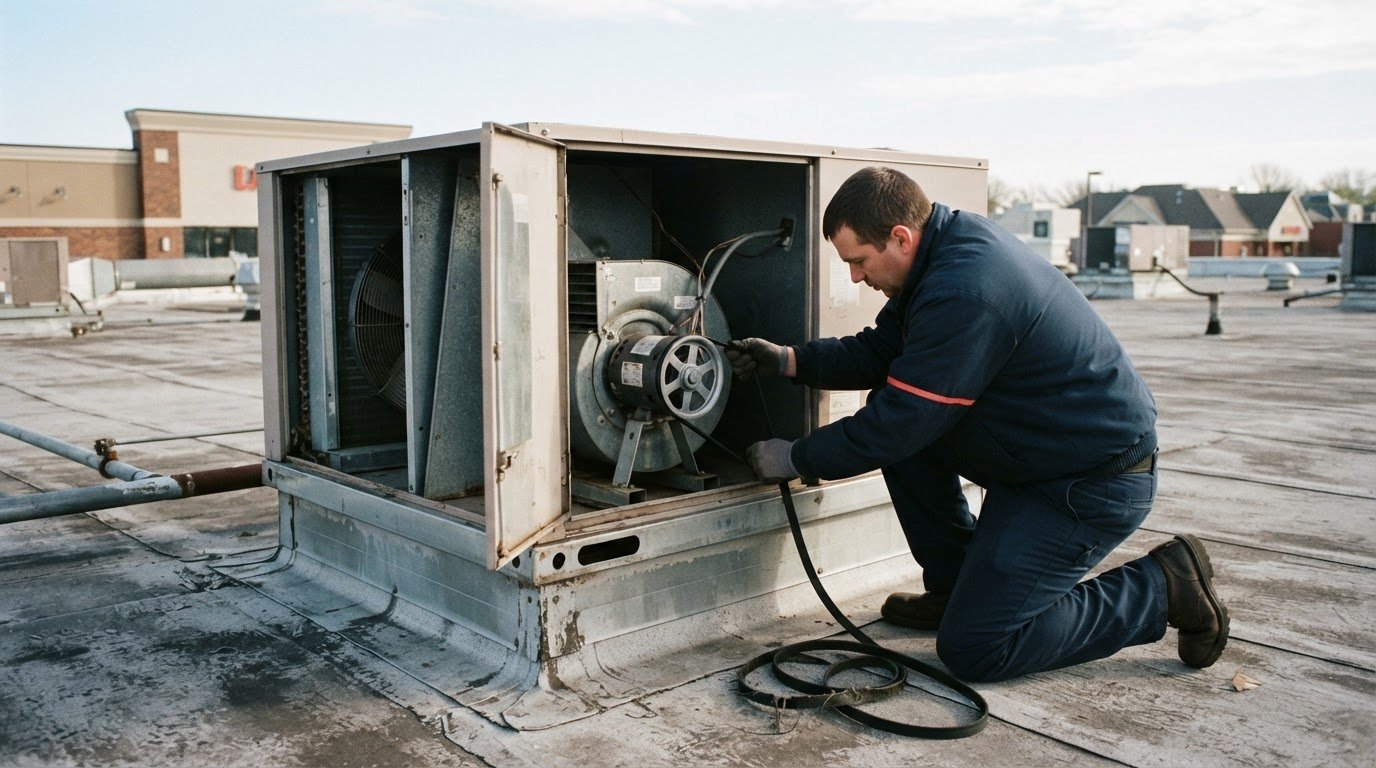
A rooftop unit failure can disrupt cooling, heating, and daily operations. The first priority is to identify the fault and restore reliable performance. Emergency rooftop unit repair in Shawnee, KS starts with reviewing the symptoms, assessing the equipment, and determining which repair addresses the cause. Details about the unit and what changed help focus the service visit.
For restaurant operators, property managers, and facility teams, an HVAC problem can quickly affect staff, customers, and building comfort. Knowing what to do when a rooftop unit stops working, what a repair visit involves, and when to consider replacement or maintenance helps you plan the next step.
This article covers common rooftop unit problems, the repair process, and the factors that shape a repair decision. It also explains commercial AC and heating service in Shawnee, helping you understand your options and plan for your building.
Key Takeaways
- Note the rooftop unit’s symptoms and any changes in its operation to help focus an emergency service assessment.
- Understand which factors shape the repair approach, including the equipment involved and the source of the failure.
- Compare repair and replacement considerations before deciding how to address an air conditioning problem.
- Learn how commercial AC service can support cooling needs across different system types.
- See how rooftop units, split systems, and mini split systems fit into commercial air conditioning service in Shawnee.
Commercial emergency HVAC service in the Kansas City metro
For Shawnee businesses, an HVAC failure can affect customer comfort, staff productivity, and equipment operation. A focused service call identifies the affected system, its symptoms, and the repair steps needed.
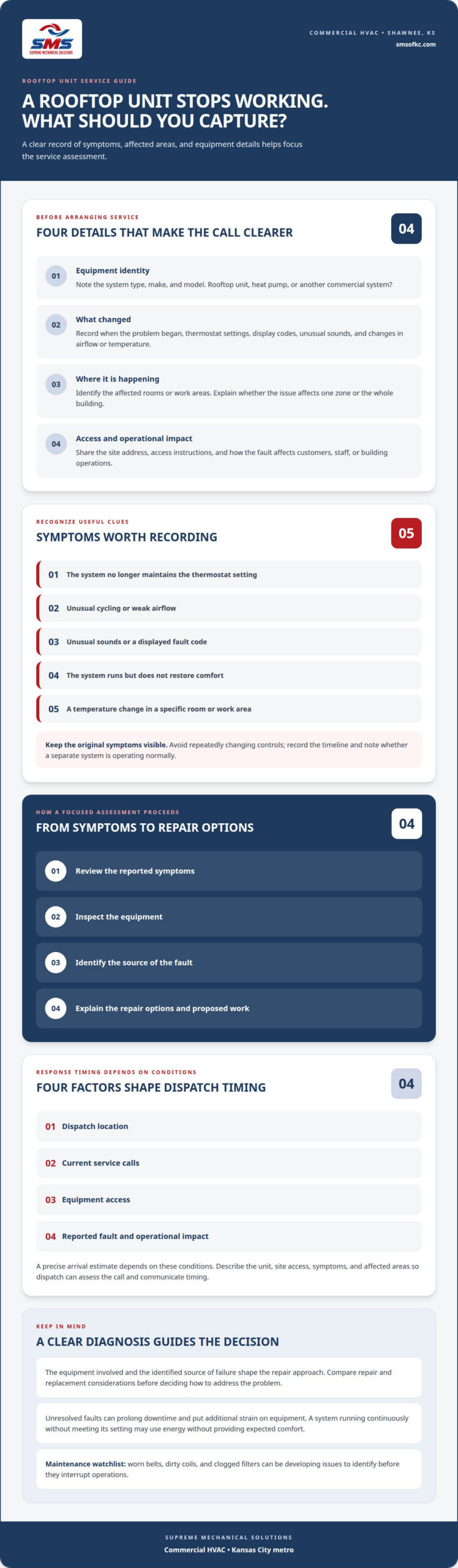
Commercial emergencies can include a rooftop unit that stops cooling, a heat pump that no longer heats, or a control fault that interrupts operation. Before arranging service, note the equipment type, affected area, and any display code. These details help technicians prepare to diagnose the issue at a restaurant, warehouse, or other commercial building.
Compare any warranty terms in writing, including covered parts, labor, exclusions, and coverage period. Keep after-hours fees separate from diagnostic and repair charges when reviewing an estimate. Costs depend on the equipment, fault, parts, and timing, so request a quote based on your specific situation.
Commercial rooftop units combine mechanical, electrical, and control components, so relevant HVAC experience matters. Look for experience diagnosing commercial systems such as rooftop units and heat pumps. A clear service process moves from reviewing symptoms to inspecting equipment, identifying the fault, and explaining repair options. This helps facility managers understand the proposed work before authorizing it.
Emergency Response Timing
Response timing for an emergency rooftop unit repair in Shawnee depends on the dispatch location, current service calls, equipment access, and the reported fault. A precise arrival estimate comes from those conditions, not from a general promise. Share the site address, unit type, operating symptoms, and any access instructions so dispatch can assess the call and communicate timing.
When requesting service in Shawnee, describe whether the issue affects one zone or the entire building. A rooftop unit serving a restaurant dining area may have a different operational priority from a heat pump affecting a rarely used space. Explain the impact clearly when requesting emergency service.
Steps While Waiting for Service
While waiting for rooftop unit service, record when the problem began, thermostat settings, display codes, and changes in airflow or temperature. Note which rooms or work areas are affected. This timeline gives technicians useful context and can help distinguish a persistent fault from an intermittent one.
Tell staff which areas are affected and adjust operations around the space as needed. Avoid repeatedly changing controls, which can make symptoms harder to track. If a separate system, such as a heat pump, is operating normally, note that too. It helps clarify the scope of the issue.
When comparing emergency HVAC services in the Kansas City metro, consider commercial equipment experience, communication, equipment types serviced, and the repair process. Share the unit’s make and model so the service team can assess the equipment and explain its approach. A useful assessment outlines the diagnosis, repair options, and any work that may affect heating or cooling. This helps managers plan operations while the fault is addressed.
Emergency HVAC repairs in Shawnee
In a commercial building, an HVAC fault can affect customers, staff, and daily operations. Record the symptoms and affected zones to help technicians focus their assessment.
Permit and code requirements depend on the work involved. Repair and rooftop unit replacement may have different considerations, so identify the work scope and applicable local requirements before work begins.
Signs a Packaged System Needs Repair
A packaged HVAC system may need attention if it no longer maintains the thermostat setting, cycles unusually, or produces weak airflow. Note whether the problem affects the whole building or one zone, and record any displayed fault code. Unusual sounds or a system that runs without restoring comfort are also useful diagnostic clues.
For example, a restaurant manager can record when dining-room temperatures change and whether the kitchen is affected. This operating history helps distinguish a localized control issue from a broader equipment problem.
Consequences of Delayed Repairs
Leaving a fault unresolved can prolong downtime and put additional strain on equipment. A system that runs continuously without meeting its setting may use energy without providing the expected comfort. In a restaurant, uneven cooling can disrupt customer areas, while a heating problem can affect staff working conditions.
Arrange an assessment if symptoms persist rather than repeatedly resetting controls. A technician can determine whether the issue calls for a targeted repair, furnace repair, or further system evaluation. The equipment’s condition and the identified fault determine the work involved.
Around-the-Clock Emergency Service
For emergency service in Shawnee, look for commercial HVAC providers that clearly state their emergency coverage and explain how calls are handled outside regular office hours. Confirm that the service covers commercial rooftop equipment, then share the unit type, site access details, and operational impact.
Ask how the diagnosis, repair authorization, and any warranty terms will be explained before work proceeds. If an estimate is described as free, clarify what it covers. These details help managers compare service approaches without assuming every call follows the same process.
Preventive maintenance can identify worn belts, dirty coils, clogged filters, and other developing issues before they interrupt operations. Keep records of installation details, service dates, and recurring symptoms. This gives technicians useful context and helps facility teams track patterns across the HVAC system.
When a unit fails, describe what stopped working, when it changed, and which areas are affected. Avoid repeated adjustments that obscure the original symptoms. For a closer look at commercial HVAC repair and maintenance, review the service details relevant to your building.
Air conditioner repair and replacement
A commercial air conditioner may need repair if it stops cooling, runs continuously, or delivers uneven airflow. Before arranging a diagnosis, record the affected areas, thermostat settings, and any display codes. These details help connect the symptom to the equipment and guide the repair decision.
During diagnosis, technicians assess the unit’s operating condition and identify the source of the fault. A rooftop unit struggling to cool one zone may need a different repair from a system that has stopped running altogether. Share recent changes, such as unusual sounds or rising energy bills, rather than assuming replacement is the only option.
Repair may make sense when the fault is identifiable and the equipment can return to its intended operation. Replacement may be worth considering when the unit’s condition, recurring problems, or operational needs make continued repairs a poor fit. For a commercial rooftop unit, the decision should account for the building’s cooling demands, existing system setup, and installation requirements. A repair assessment can clarify these factors before work proceeds.
Roof condition also matters during rooftop equipment work. Most roofs last 20-30 years, though damage may require earlier replacement. A facility manager planning rooftop unit replacement should consider roof condition alongside equipment access and installation timing. For example, coordinating equipment work with an aging roof project can help avoid planning separate disruptions to the same area.
Water heater repair or replacement is separate from air conditioner service, even when both affect building operations. If a restaurant has a water-heating issue, record whether it involves water temperature, delivery, or the heater itself, and arrange service for that equipment. Don’t treat a water heater symptom as an air conditioning fault. Keeping the descriptions separate helps direct diagnosis to the right system.
Use a practical decision process: document the symptom, identify the equipment, arrange a diagnosis, and compare the recommended repair with replacement needs. If a furnace also serves the building, note whether heating operates normally. This helps distinguish a cooling-only issue from a broader HVAC concern. Clear records support an informed decision about the next step.
Include a periodic check that the AC unit remains level as part of ongoing attention to the equipment. Record whether it remains level when documenting the unit’s condition, and share any observed change with the technician during diagnosis. This check complements symptom records without replacing the repair assessment.
Commercial AC repair
Commercial AC repair starts by identifying the equipment, symptom, and affected area. Note whether the rooftop unit, split system, or mini split has stopped cooling, then record thermostat settings and visible fault codes. This helps distinguish an equipment issue from a general comfort complaint and gives the technician specific information to assess.
A clear diagnosis follows a practical sequence: review the reported symptoms, inspect the system, identify the fault, and explain repair options. A unit that runs without cooling needs a different assessment from one that will not start. Share when the problem began and whether it affects one zone or the entire building. These details help technicians focus on relevant components.
At a restaurant, weak airflow in the dining area can affect customer comfort, while a problem limited to an office may point to a different zone. Record these distinctions before service. A commercial HVAC technician can use them alongside the equipment type and operating history. Ask for an explanation of the diagnosis and proposed repair specific to your system.
- Record the equipment type and location.
- Note affected areas and changes in airflow or cooling.
- Capture thermostat settings and displayed fault codes.
- Share any recent service or operating changes.
After diagnosis, the repair plan should describe the work needed to restore operation and any parts involved. If the system has recurring faults, share dates and symptoms from previous service records. That history helps distinguish a repeat failure from a new problem. For a rooftop unit, roof access and equipment location also matter when planning the work.
Seasonal operation provides useful context. A commercial system may have different demands during summer cooling and winter heating, so report which mode is affected. If a furnace or heat pump operates normally while cooling fails, include that detail. For work involving a licensed trade, clarify the scope and responsibility in the work order rather than assuming every repair has the same requirements.
After service, keep the diagnosis and repair notes with the equipment records. Facility managers can track recurring symptoms, work performed, and changes in operation across a rooftop unit or split system. This supports future maintenance planning and helps technicians understand the system’s history at the next visit.
Which HVAC companies offer 24/7 emergency rooftop unit repair in Shawnee, KS?
For a commercial building in Shawnee, look for an HVAC provider that explicitly states 24-hour emergency service for commercial equipment. Confirm that rooftop units are within the stated service scope. The phrase “24/7” should describe emergency availability, not simply a general contact form or office hours.
Before choosing a provider, understand how emergency calls are handled. Ask how calls are answered outside regular business hours, how dispatch timing is communicated, and whether the service covers diagnosis and repair. These details distinguish emergency response from routine scheduling. For example, a restaurant with a failed dining-room unit needs a clear way to report the equipment and operational impact.
Check the provider’s commercial equipment experience and the information it needs to handle the call. Share the building address, rooftop unit type, symptoms, affected areas, and any access instructions. If the system displays a fault code, record it. Specific details help the service team understand the issue before arrival and prepare for the site conditions.
- Confirm emergency coverage applies to commercial rooftop units.
- Ask how call handling and dispatch updates work outside office hours.
- Describe the fault, affected zones, and operating impact.
- Clarify how diagnosis, repair approval, and warranty terms are explained.
Coverage wording matters. Some providers may accept emergency calls at any hour, while dispatch and on-site work depend on the stated service arrangement. Ask what the provider means by “24/7,” including whether it covers call intake, technician dispatch, or both. A direct answer helps a facility manager plan the next operational step without assuming a particular arrival time.
Compare the service process, not just an emergency availability label. A useful provider explains how it will assess the rooftop unit, communicate findings, and present repair options. At a Shawnee warehouse, roof access and the affected zone can shape the visit. At a restaurant, explain whether cooling loss affects customer areas, food preparation, or both.
Emergency service is different from an office being open around the clock. Use the provider’s emergency contact method and explain the issue clearly, with equipment details and site access information ready. This helps the service team route the call and communicate the next steps.
Architectural shingles are described as offering better insulation and wind resistance. For rooftop-unit emergencies, confirm HVAC repair availability directly with the provider.
Supreme Mechanical Solutions: Air Conditioning
Supreme Mechanical Solutions handles commercial air conditioning needs for Shawnee businesses, including rooftop units, split systems, and mini split systems. Contact the team when a system needs diagnosis or repair, or when you are planning for replacement and cooling problems are affecting building operations.
Share the equipment type, symptoms, and affected areas so the service team can understand the issue and coordinate the next step. Restaurant operators, facility managers, and property managers can discuss their commercial system and the work needed for their space.
Plan the Next Step for Your Commercial System
For emergency rooftop unit repair in Shawnee, KS, start with a clear service request. Note the equipment type, symptoms, and how the issue affects your building. These details help focus the conversation on your system’s needs and operating priorities.
Supreme Mechanical Solutions provides commercial air conditioning services for rooftop units and split systems. If your facility needs a repair or you are reviewing system requirements, share the equipment information and affected areas. A direct discussion can help identify the right service for your commercial space.
Plan beyond the immediate disruption by keeping equipment details and prior repair notes together. This record supports future decisions and connects current concerns with your building’s broader cooling requirements.
With a clear understanding of your system’s needs, your team can plan the next step.
Frequently Asked Questions
What is the emergency service call fee for rooftop unit repair in Shawnee, KS?
Emergency service call fees depend on the case and are provided after a quote request. An estimate may account for call timing, equipment type, and the reported fault. When requesting a quote for a Shawnee commercial rooftop unit, include its symptoms and building access details. Review any call or diagnostic charge separately from repair work so you understand each part of the estimate.
What rooftop unit problems require immediate emergency repair?
Request prompt service when a rooftop unit shuts down or cannot maintain conditions needed for normal business operations. A restaurant that loses cooling across its dining area or a warehouse with a unit that stops heating may need urgent attention. Repeated shutdowns or a fault affecting several zones also call for timely assessment. Describe the operational impact clearly so the service team understands the urgency.
Do Shawnee HVAC companies repair commercial rooftop HVAC units and all major brands?
The unit’s manufacturer, model, controls, and fault shape the diagnostic approach for commercial rooftop-unit repair in Shawnee. Supreme Mechanical Solutions provides commercial HVAC repair and rooftop unit services. Share the equipment nameplate details and any displayed fault code to help identify the system and keep the service discussion specific to your building.
What factors affect the cost of emergency rooftop unit repair in Shawnee, KS?
Repair costs depend on the fault, equipment condition, labor involved, and parts required. A control issue may have a different scope from a failed component requiring additional work. Emergency call and repair charges may also be separate. Costs depend on the case and are provided after a quote request; sharing the symptoms and unit model helps frame the estimate.
Can a rooftop unit be repaired or does it need replacement?
A rooftop unit may be repairable when its condition and diagnosed fault support a practical fix. Consider replacement when recurring problems or the unit’s overall condition make continued repairs a poor fit for the building. The decision also depends on cooling needs and installation requirements. Compare the repair scope with the system’s operating demands before choosing a path.
Are HVAC technicians in Shawnee, KS licensed and insured for rooftop unit repairs?
A provider’s licensing and insurance status are separate from its experience with commercial rooftop units. For facility records, keep the service provider’s contact information, work description, and authorization details with the equipment history. This creates a clear record of who serviced the unit and what work was performed.


