
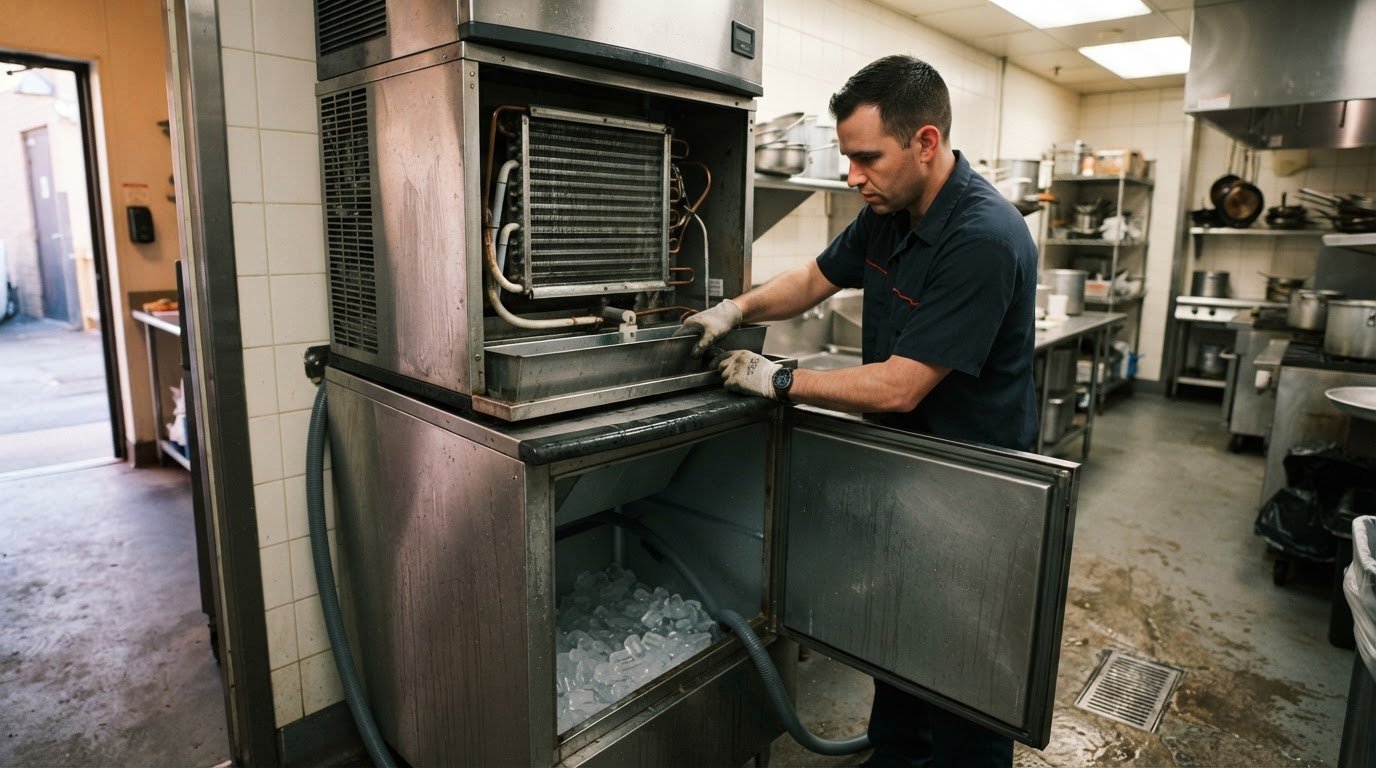
A failed ice machine needs a clear repair plan, not guesswork. For emergency commercial ice machine repair in Lenexa, start by describing the symptoms, how the machine is operating, and how the outage affects service. The diagnosis guides the repair, while timing depends on the fault, equipment access, and parts required.
It’s reasonable to want to know whether same-day or after-hours service is possible, what a diagnostic fee covers, and how parts and labor are handled under warranty. This guide explains what to expect when arranging commercial ice machine service, which details help with scheduling, and what can affect repair timing and cost. You’ll also see how to prepare for a service visit and what to consider when a machine stops producing ice or fails to maintain its cycle. Clear information up front helps your team make practical decisions while keeping daily operations in view.
Key Takeaways
- Prepare the machine’s symptoms and operating history before scheduling so the service team can understand the issue.
- Learn which details can affect appointment timing, including the type of fault, equipment access, and parts required.
- Understand what to clarify about diagnostic fees and how repair costs depend on the work involved.
- Review how parts and labor warranty terms apply to a completed repair.
- See how to arrange commercial ice machine repair in Lenexa and identify the right next step for your operation.
Diagnostic fees and appointment scheduling
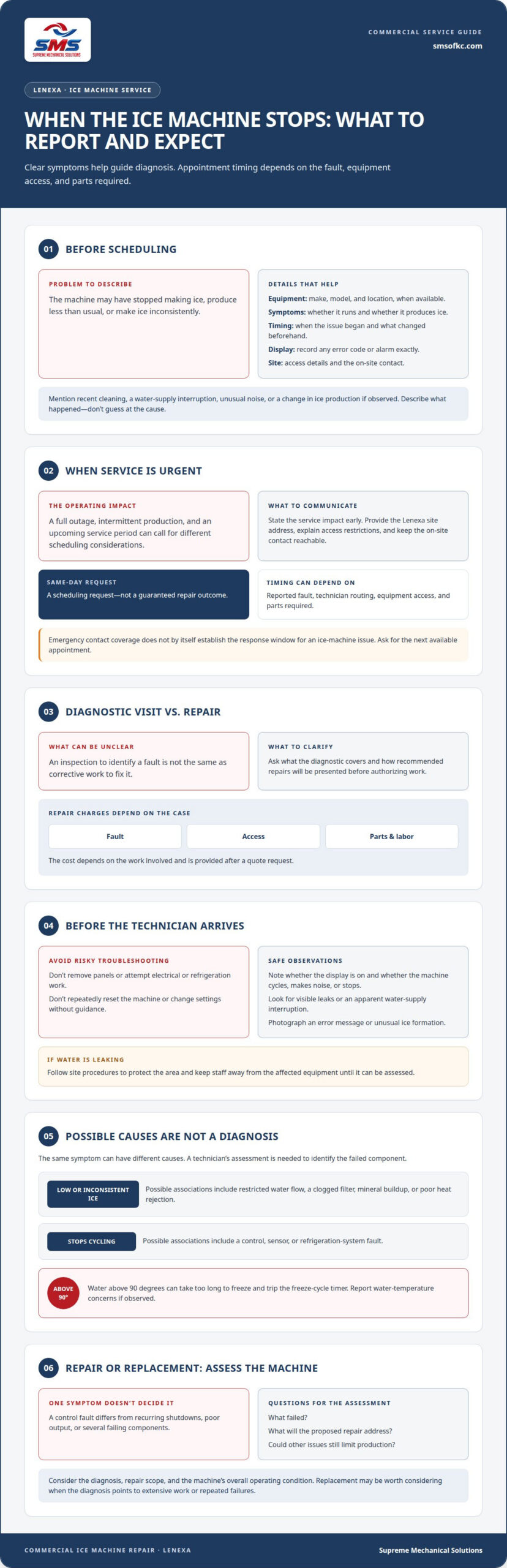
For emergency commercial ice machine repair in Lenexa, have the equipment details and symptoms ready when you call Supreme Mechanical Solutions. Share the make and model if accessible, the machine’s location, what you’ve observed, and when the issue began. Explain whether it has stopped producing ice, produces less than usual, or makes ice inconsistently. These details help the technician prepare to assess the problem.
Describe what changed before the problem began. For example, mention recent cleaning, an interruption to the water supply, unusual noise, or a change in ice production. If the display shows an error code, record it exactly rather than interpreting it. Tell the scheduler whether the machine is accessible and whether someone on site can reach its controls and service area. For a restaurant, explain how the outage affects service and when staff can provide access.
- Equipment make, model, and location, when available.
- Current symptoms, including whether the machine runs or produces ice.
- When the issue began and any recent change you observed.
- Any displayed code, alarm, or repeated operating pattern.
- Site access details and the best on-site contact.
Diagnostic work and repair charges are separate. A diagnostic visit identifies the fault; repairs may require parts, labor, or additional work. The cost depends on the case and is provided after a quote request. Factors include the fault, equipment access, parts required, and labor involved. Ask what the diagnostic covers and how any recommended repair will be presented before authorizing work. This helps distinguish an inspection from corrective repairs.
Scheduling depends on the reported problem, access, and what the technician needs to assess. A machine that runs but produces little ice may need a different diagnostic path than equipment that will not start. Water above 90 degrees can take too long to freeze and trip the freeze-cycle timer, so report water-temperature concerns if you have observed them. Don’t guess at a cause; describe the actual operating condition.
For a same-day or urgent request, state the service impact early in the call. Give the site address in Lenexa, identify any access restrictions, and keep the on-site contact reachable. A complete report helps the scheduler match the appointment to the problem and helps the technician arrive prepared to assess the machine.
Emergency and same-day commercial ice machine repair
Urgent service starts with clear symptoms, safe observations, and a realistic view of the operating impact. Same-day requests, emergency response, replacement decisions, and backup ice are related needs, but each requires a separate plan.
Repair Versus Replacement
A repair assessment considers the failure, the machine’s operating condition, and whether a specific component can restore production. A control fault, for example, differs from recurring shutdowns, poor output, or several failing components. Record the symptoms and equipment model, then consider the technician’s diagnosis alongside the machine’s overall condition before deciding.
Replacement may be worth considering if the diagnosis points to extensive work or repeated failures. Ask what failed, what the proposed repair addresses, and whether other issues could still limit production. A clear explanation helps managers weigh the repair scope against continued disruption without assuming one symptom proves replacement is necessary.
Emergency Service Availability
In Lenexa, distinguish a provider’s emergency contact coverage from its specific ice-machine scheduling. A 24-hour HVAC emergency line does not automatically describe the response window for every refrigeration issue. Ask for the next available appointment and explain whether the machine is fully down, producing intermittently, or affecting a scheduled service period.
Same-day service is a scheduling request, not a guaranteed repair outcome. Timing can depend on the reported fault, technician routing, equipment access, and parts required. If ice production has stopped, say so clearly and provide the site address and an on-site contact. These details help the scheduler assess urgency and coordinate access.
Safe Steps Before the Technician Arrives
Limit your checks to visual observations. Note whether the display is on, look for visible leaks, and see whether the water supply appears interrupted. Photograph an error message or unusual ice formation. Keep the service area accessible and share your observations with the technician rather than removing panels or attempting electrical or refrigeration work.
Don’t reset the machine repeatedly or change settings without guidance. Record when production changed and whether the machine makes noise, cycles, or stops. If water is leaking, follow your site’s procedures to protect the area and keep staff away from the affected equipment until it can be assessed.
Common Failures and Their Causes
Low or inconsistent ice production can be associated with restricted water flow, a clogged filter, mineral buildup, or poor heat rejection. A machine that stops cycling may have a control, sensor, or refrigeration-system fault. These are possible causes, not a diagnosis: the symptom alone does not identify the failed component.
Temporary machines and backup ice are separate from repairing installed equipment. Build an operating plan around an approved alternate ice source, safe storage, and staff communication. For example, a restaurant can identify which menu items depend on ice and adjust service while the machine is assessed. Keep the fault details and access ready so the technician can focus on diagnosis.
Parts and labor warranty
After an ice machine repair, check the written record to understand the terms that apply to the replacement component and the technician’s work. Review what coverage is stated, what it covers, and how to report a problem. A clear document helps managers understand what to expect if the repaired fault returns.
Start with the part description. A work order might identify a water inlet valve, control board, or sensor. Check that the listed component matches the repair performed. Then review the stated start point, coverage period, and any conditions for the part. These terms should be documented, not left to a verbal summary.
Review labor terms separately. A parts warranty might address the component but say nothing about labor for a return visit. Check whether the written terms explain labor coverage, service-call conditions, and how a repeat issue is evaluated. For example, a failed replacement valve and a separate drainage problem are different faults, even if both affect ice production.
Before approving work, use this review sequence:
- Match the diagnosed fault to the repair description.
- Identify each part installed and its stated coverage.
- Read the labor terms and any conditions for follow-up work.
- Keep the invoice, work order, and service notes together.
Keep those records to connect any later symptoms with the original repair. If the machine stops producing ice again, note when the problem returned and whether the same symptom is present. Compare your observations with the original diagnosis and invoice. A recurring symptom does not automatically mean the same component failed again, so the record matters.
Also distinguish warranty coverage from routine maintenance. Ice machine cleaning addresses buildup and cleanliness; it does not replace repair coverage or establish that a later mechanical failure is covered. If a follow-up visit is needed, the written terms and technician’s findings help clarify whether the issue relates to the earlier work.
Managers need a straightforward explanation before authorizing a repair. Keep a copy of the terms where facility staff can find it, especially when shift leads change. In a restaurant, the manager on duty can then report the original repair details, component, and current symptom without relying on memory.
Written terms should clearly describe any covered parts and labor, along with exclusions or conditions. Read them alongside the completed work order, not as a general promise about every future machine problem. This simple document check gives Lenexa operators a practical way to track repairs and follow-up.
Which companies provide 24/7 emergency commercial ice machine repair in Lenexa, KS?
A 24-hour emergency label alone doesn’t establish round-the-clock commercial ice machine repair. In Lenexa, the key distinction is whether the service specifically covers commercial ice machines, rather than emergency HVAC or general refrigeration work. A business should describe its service scope precisely so operators can understand what the emergency line handles.
Some contractors provide emergency response for one equipment category without extending that coverage to every system they service. For example, 24-hour emergency HVAC service does not automatically mean an ice machine technician is dispatched overnight. Likewise, a general refrigeration listing does not clarify whether urgent ice machine diagnostics are included. Read the stated service scope, not only the words “24-hour” or “emergency.”
For a Lenexa operation, useful distinctions include:
- Equipment scope: Commercial ice machines should be named, not inferred from HVAC coverage.
- Call coverage: A round-the-clock phone line may differ from technician dispatch at all hours.
- Service area: Lenexa should be included in the stated coverage area.
- Repair process: Emergency assessment, parts availability, and follow-up work are separate steps.
These distinctions matter during an overnight outage. A restaurant with no ice before opening needs to report which machine is affected, explain the failure, and understand the next step. A gas station may have different operating needs, but the key is the same: clearly identify the commercial ice equipment and the problem.
Emergency service does not mean every repair will be completed the same day. Diagnosis may identify a component failure requiring a specific part or reveal a fault that needs additional work. Response and repair are separate stages, so describe the issue clearly and ask what the next step involves.
When comparing a listed service with an urgent ice machine outage, match the equipment type and location first. Then distinguish phone availability from actual repair coverage. Keep the make and model, symptoms, Lenexa site address, and access details ready; that information helps communicate the situation accurately. Don’t interpret a general emergency label as a promise about every piece of commercial equipment.
The practical answer is to rely on an explicit description of commercial ice machine emergency coverage, not a broad claim about HVAC availability. For facility managers, that distinction supports better planning: document the correct emergency contact for each equipment category and keep the machine’s service history accessible. That way, staff can report the right system and operating issue without delay.
What are typical commercial ice machine repair costs in Lenexa, including parts and labor?
Commercial ice machine repair costs in Lenexa depend on the fault and repair scope. A clogged water filter, failed control, and refrigeration-system problem require different work. The estimate should distinguish diagnostic work from corrective repairs so operators can see what each charge covers. No single price applies to every machine or failure.
The cost depends on the case and is provided after a quote request. Factors include the diagnosed fault, parts required, equipment access, and labor involved. For example, replacing an accessible component differs from tracing an intermittent fault or reaching equipment in a restricted service area. The estimate should connect each proposed task to the technician’s findings.
Review the estimate for these cost elements:
- Diagnosis: What inspection or testing identifies the failure?
- Parts: Which component is needed, and is replacement included?
- Labor: What repair work and testing are covered?
- Additional work: Are separate repairs listed apart from the original fault?
Distinguishing diagnosis from repair helps prevent confusion about the work being approved. If a technician finds a failed water inlet valve, the estimate should identify that repair. If testing reveals a separate control issue, ask for it to be listed separately before authorizing the additional work.
Equipment access can affect the work involved. A unit with clear service access is different from one blocked by stored supplies or installed in a tight area. The fault matters too: a visible leak may require a different repair path from a machine that runs without producing ice. Share the equipment model and symptoms so the technician can assess the job accurately.
Before approving work, review the diagnosis, listed parts, labor scope, and proposed follow-up. Ask how additional faults found during repair will be handled. Keep the written estimate with the invoice and service notes. These records help managers track recurring issues and assess future repair needs for the same machine.
For a Lenexa restaurant, weigh the repair scope against the impact of continued downtime. A clear estimate gives the manager a practical basis for authorizing work and coordinating operations. Confirm that the proposed repair addresses the diagnosed fault rather than assuming every symptom has the same cause.
Supreme Mechanical Solutions: Air Conditioning
Supreme Mechanical Solutions provides commercial air conditioning services for facilities managing multiple operational needs. Its systems include rooftop units, split systems, and mini split systems. For a restaurant or commercial building, this offers a way to address building cooling alongside refrigeration needs.
If your Lenexa facility also needs commercial air conditioning service, share the equipment type and symptoms when arranging service. For an ice machine issue, use the guidance above to prepare the machine details and describe the fault.
Contact Supreme Mechanical Solutions at (913) 399-7711 or sales@smsofkc.com to schedule service.
Keep Your Commercial Equipment Plan Moving
For emergency commercial ice machine repair in Lenexa, make the equipment issue part of your facility’s service plan. Keep service records accessible and note which equipment affects daily operations. This gives managers a practical starting point when coordinating repairs around business needs.
Supreme Mechanical Solutions also provides commercial air conditioning services, including rooftop units and split systems. If a cooling concern affects the same facility, discuss it alongside your ice machine service request. Having equipment details and site access information ready helps keep the conversation focused.
Choose the next step that fits your operation: arrange service or discuss your equipment needs with Supreme Mechanical Solutions. Describe the affected machine and site to get the conversation started.
Frequently Asked Questions
What is the emergency service call fee for commercial ice machine repair in Lenexa?
The service call fee and total repair cost depend on the specific case, and a quote is provided after a request. The diagnosed fault, machine access, parts required, and labor involved can affect the repair scope. For example, assessing a machine that runs without producing ice may lead to different work than assessing one that will not start. Request an estimate that distinguishes diagnosis from recommended repairs.
How quickly can a technician arrive for emergency ice machine repair in Lenexa?
Arrival timing depends on the reported problem, technician scheduling, site access, and work required. A machine that has stopped producing ice presents a different operating impact from one with inconsistent output. Share the Lenexa site address, equipment type, symptoms, and access details when arranging service. This helps the team understand the situation and coordinate an appointment without relying on an unsupported arrival-time estimate.
Which commercial ice machine brands do Lenexa repair companies service?
Brand coverage varies by service provider, and no specific ice machine brands are identified here. For a Lenexa service request, provide the nameplate information, including the manufacturer and model, if it’s accessible. This gives the technician useful equipment context before diagnosis. If the nameplate is difficult to reach, a clear photo of the machine’s identification label can help communicate its make and model.


