
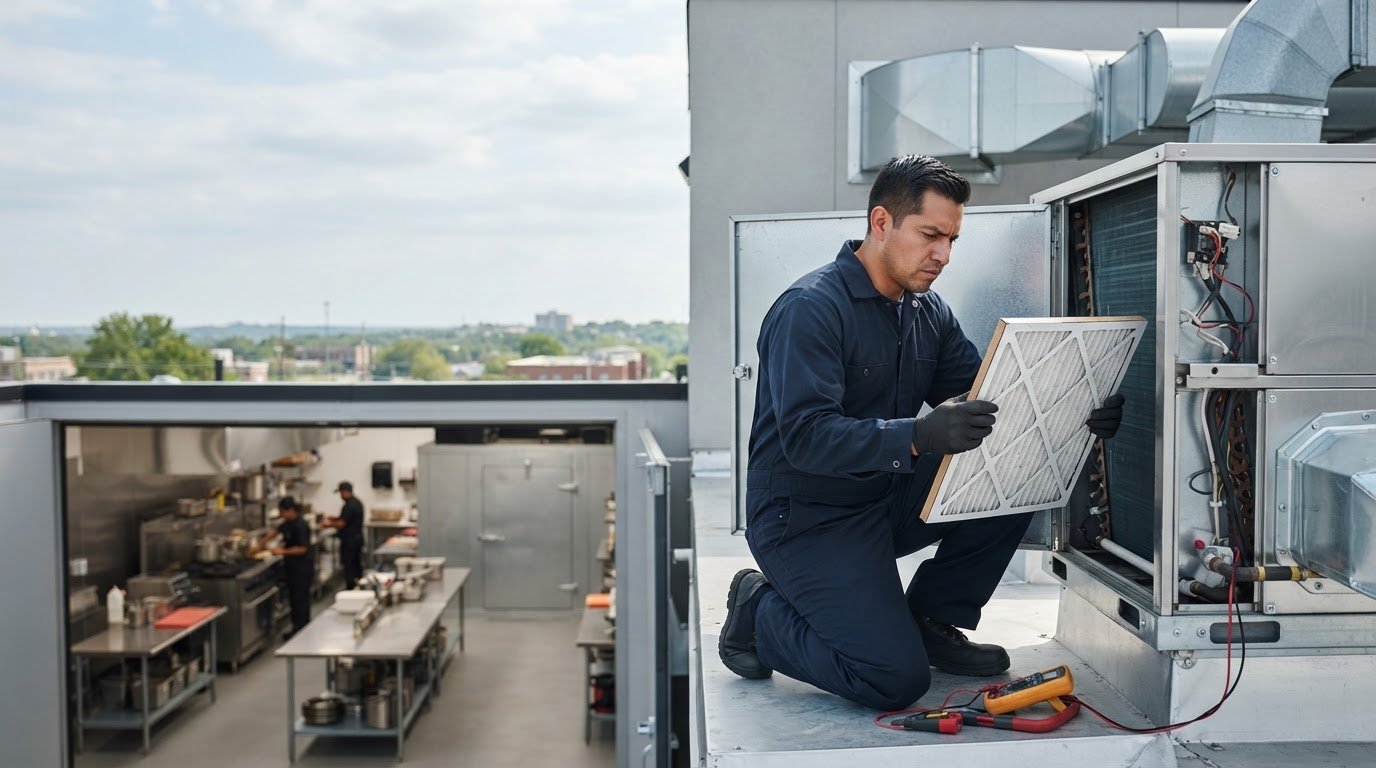
A restaurant HVAC problem can become a food-safety concern, not just a comfort issue. Malfunctioning HVAC can contribute to high humidity that’s bad for some food items, while refrigeration upkeep includes monitoring temperatures and inspecting door seals. For preventive HVAC maintenance for restaurants in Lee’s Summit, check filters at least monthly and replace them at least every 3 months, sooner when they’re dirty.
Comfort, airflow, and refrigeration all depend on equipment working as a coordinated system. The practical challenge is making maintenance consistent without missing components that affect service. This guide covers staff checks and professional service intervals, explains how filters and airflow affect daily operations, and identifies equipment that needs regular attention, from HVAC coils and condensate drains to kitchen exhaust, makeup air, walk-ins, and reach-ins. You’ll also learn how routine maintenance supports a comfortable dining room and helps managers spot refrigeration changes before they disrupt service.
Key Takeaways
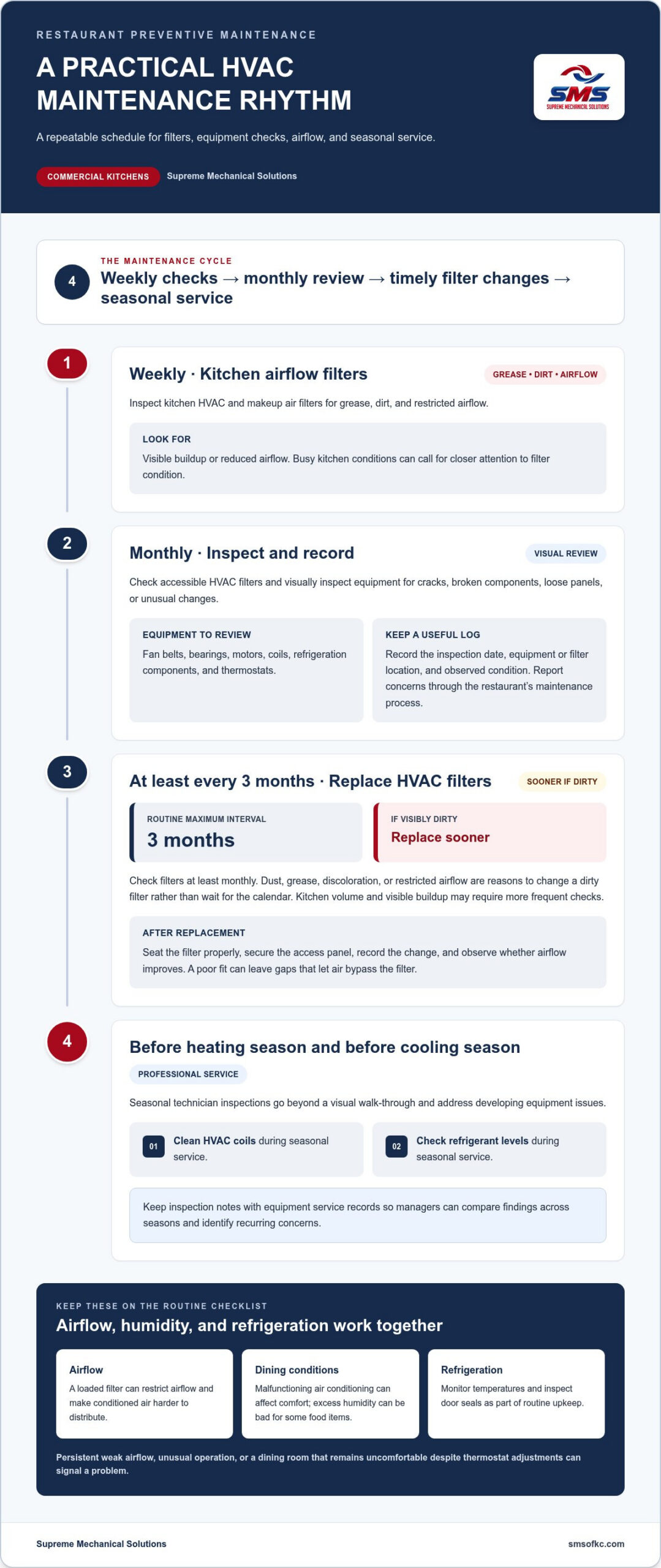
- Check HVAC filters at least monthly, and replace them at least every 3 months or sooner if they’re dirty.
- Inspect kitchen HVAC and makeup air filters weekly for grease, dirt, and restricted airflow.
- Keep refrigeration performance on your routine checklist by monitoring temperatures and inspecting door seals.
- Schedule professional HVAC maintenance before heating season and before cooling season to address developing equipment issues.
- Connect airflow, humidity, and refrigeration upkeep to the conditions that support food quality and a comfortable dining room.
Why is HVAC maintenance critical?
Restaurant HVAC maintenance supports dining comfort, ventilation, and conditions that affect food. A malfunctioning air-conditioning system can make diners uncomfortable, while excess humidity can be bad for some food items. Monthly inspections help managers spot developing issues before they disrupt service. A repeatable checklist also gives staff a clear way to track equipment condition between professional visits.
Which Lee’s Summit HVAC contractors offer restaurant maintenance plans? Look for commercial HVAC contractors with restaurant-focused plans that cover the equipment and operating conditions in your facility. A useful plan sets out routine inspections and seasonal service, with findings recorded for managers to review.
During a monthly visual inspection, staff can look for cracks, broken components, loose panels, or unusual changes around HVAC equipment. Check fan belts, bearings, motors, coils, refrigeration components, and thermostats. These checks can reveal wear, visible damage, or changes in operation that need professional attention. Record the equipment, its observed condition, and the inspection date, then report concerns through the restaurant’s maintenance process.
Seasonal professional inspections address work that goes beyond a visual walk-through. Have technicians clean HVAC coils and check refrigerant levels during seasonal service. Under EPA Section 608, technicians who service equipment containing refrigerant must be certified, according to the U.S. Environmental Protection Agency. Keep inspection notes with the equipment’s service records so managers can compare findings across seasons and identify recurring concerns.
- Check the roof for weather damage, leaks, and loose exterior fixtures, because water intrusion can affect building spaces and equipment.
- Inspect rooftop signage and nearby exterior areas, because damaged or obstructed components can complicate access and upkeep.
- Test emergency lights, exit signs, and exterior lighting, because staff and guests need functioning illumination during an outage or evacuation.
- Walk dining and kitchen floors for cracks, uneven surfaces, and worn finishes, because damaged flooring can create trip or slip hazards.
Include emergency procedures in the maintenance review. Managers should know who receives an HVAC failure report and how staff should respond while equipment is assessed. A written preventive maintenance schedule helps organize inspection findings, seasonal work, and follow-up tasks. Pairing monthly visual checks with professional seasonal inspections gives restaurant teams a practical routine for monitoring HVAC and refrigeration condition.
Monthly inspections of fan belts, bearings, motors, coils, refrigeration components, and thermostats can help managers catch changes before they affect comfort. Restaurant HVAC maintenance guidance recommends inspections of these components Monthly. Recorded findings can guide follow-up and support consistent upkeep.
An uncomfortable dining atmosphere can affect the customer experience and may lead to negative online reviews. Managers should also monitor roofing, signage, and exterior fixtures for weather damage and leaks. Check that emergency lights, exit signs, and exterior lighting work properly to help keep the facility ready for normal operations and changing conditions.
How often should a restaurant replace HVAC filters?
Check restaurant HVAC filters at least monthly. Replace them at least every 3 months, or sooner if they’re dirty. A common inspection interval is every 30 to 90 days, but kitchen volume and visible grease or dust can call for closer attention. High-volume kitchens may need more frequent checks because cooking activity can load filters faster. In Lee’s Summit, preventive HVAC maintenance for restaurants should reflect actual kitchen use, not just a fixed calendar reminder.
Use a consistent process so staff can spot changes instead of relying on memory. Record the inspection date, filter location, and condition. Compare the filter with its previous state, noting visible dust, grease, discoloration, or restricted airflow. If it looks dirty before its scheduled replacement, change it rather than waiting for the calendar.
- Check monthly: Inspect each accessible HVAC filter and note whether buildup is present.
- Replace at least every 3 months: Use this as the maximum routine interval, not a reason to leave a visibly dirty filter in place.
- Inspect more often in busy kitchens: Increase checks when cooking volume, grease, or dust makes filters soil quickly.
- Track each change: Record the date and filter location so the next shift can follow the same schedule.
Filter condition affects how freely air moves through the system. A loaded filter can restrict airflow and make it harder for heating or cooling equipment to distribute conditioned air. Staff may notice weak airflow at a dining-area grille or rooms that feel uneven despite the thermostat setting. Treat these observations as reasons to inspect the filter and report persistent problems.
What signs show a restaurant HVAC system needs repair or urgent service? Weak airflow, unusual changes in operation, or a dining room that stays uncomfortable despite thermostat adjustments can signal a problem. Foul odors or equipment that stops heating or cooling also warrant prompt attention.
After replacing a filter, make sure it sits properly in its slot and the access panel is secure. A poor fit can leave gaps that let air bypass the filter. Record the replacement in the maintenance log, then observe whether airflow improves. If the same area remains uncomfortable, don’t use repeated filter changes as a substitute for diagnosing the equipment.
Match the routine to actual operating conditions. A quieter dining room and a high-volume kitchen may not load filters at the same pace, even with similar equipment. Monthly checks give managers a regular decision point; visible soil, grease, and restricted airflow help determine whether a filter needs earlier replacement. A preventive HVAC maintenance schedule for restaurants in Lee’s Summit can make those checks easier to coordinate with kitchen operations. For a coordinated next step when filter issues persist, contact the service team.
What systems are most important to maintain in a restaurant?
Restaurant maintenance should cover kitchen airflow, filters, condensate drains, exhaust equipment, and grease management. These systems affect air movement and can help prevent avoidable problems caused by moisture or grease buildup. Assign each check to a role, then record the date and any issues found. A written checklist makes routine tasks easier to hand off between shifts and helps managers see what needs follow-up.
Check kitchen HVAC and makeup air filters weekly for dirt, grease, or restricted airflow. A visibly loaded filter can limit air movement, so note its condition and report problems for follow-up. Managers can also check whether kitchen doors have slight inward airflow. That observation helps assess whether kitchen pressure is drawing air inward rather than pushing cooking odors toward guest areas. Record unusual airflow changes for review.
Condensate drain lines need attention every 1 to 2 months. Check for visible blockage or water near the equipment, then arrange cleaning if buildup appears. A clear drain helps water leave the HVAC system rather than collect around it. Keep the inspection interval on the maintenance calendar so busy service periods don’t cause the task to disappear. Report recurring drainage problems rather than repeatedly treating the visible symptom.
Grease affects more than filters. Arrange professional cleaning for hood systems, ducts, and exhaust fans, where grease accumulation can interfere with ventilation. Staff should report visible buildup or changes in exhaust performance rather than dismantling equipment. Routine kitchen drain cleaning matters too, since grease can contribute to clogs. Maintain a grease-trap cleaning schedule that follows applicable local requirements.
Are there Missouri or Lee’s Summit regulations for restaurant ventilation and hood exhaust maintenance? Local requirements can apply to grease-trap cleaning, so maintain a schedule that follows applicable Lee’s Summit requirements. Include hood and exhaust equipment in the maintenance plan, but don’t assume one interval applies to every system.
What HVAC maintenance tasks can restaurant staff do, and which require a licensed technician? Staff can inspect accessible filters, observe airflow at kitchen doors, note visible drain issues, and report unusual equipment changes. Equipment diagnosis, repairs, and refrigerant service should be handled by qualified HVAC professionals. Staff should not attempt work beyond their training.
- Weekly: Inspect kitchen HVAC and makeup air filters for dirt, grease, and restricted airflow.
- Every 1 to 2 months: Check condensate drain lines and arrange cleaning when buildup or blockage appears.
- On a recurring schedule: Coordinate hood, duct, and exhaust-fan cleaning, plus kitchen drain and grease-trap upkeep.
- During service: Record findings and assign follow-up so airflow or drainage concerns don’t get lost between shifts.
Daily attention to high-use systems helps staff notice changes early, while professional service covers equipment and cleaning tasks beyond routine observation. Keep the log with kitchen maintenance records, including filter checks, drain concerns, airflow observations, and scheduled exhaust cleaning. This gives managers a clear view of what is working and what needs follow-up.
Refrigeration temperature and condenser coil maintenance
Restaurant refrigeration needs consistent monitoring because a walk-in cooler, freezer, or reach-in can lose performance without an obvious breakdown. Record equipment temperatures during routine checks and compare each reading with the unit’s established operating target. A change from its normal pattern is a reason to inspect the equipment and report the issue. Don’t guess at a temperature target: follow the requirements established for the equipment and stored food.
Condenser coils need regular cleaning because dust buildup can reduce cooling efficiency. Include coils on the refrigeration maintenance checklist and arrange cleaning when debris accumulates. Clean coils help the refrigeration system reject heat as designed. Record the cleaning date and any visible buildup so staff can identify recurring conditions around the equipment.
Door seals are another useful inspection point. Check walk-in and reach-in gaskets for wear, gaps, or damage that could let cold air escape. Inspect hinges too, since worn or damaged hinges can prevent a door from closing properly. Report doors that won’t seal or close consistently, then arrange repair or replacement of worn gaskets and hinges to help maintain proper temperatures.
- Monitor temperatures: Record readings for each cooler and freezer, then compare them with the unit’s established operating target.
- Inspect seals: Look for damaged or worn gaskets, gaps, and doors that don’t close properly.
- Check hinges: Note looseness or damage that affects door movement and closure.
- Track condenser coil condition: Check for dust buildup and schedule cleaning when coils need attention.
- Log follow-up: Record the equipment, observed condition, and repair or cleaning action.
Use the log to connect temperature changes with equipment condition. For example, if a walk-in’s readings move away from their normal pattern, check whether the door closes fully and the gasket appears worn. Note any visible dust on the condenser coil. These observations help technicians focus their inspection and help managers distinguish a one-time reading from a recurring concern.
Keep refrigeration checks separate from the restaurant’s heating and cooling schedule. Dining-area comfort can change with HVAC operation, but walk-in and reach-in temperatures need their own monitoring routine. Assign staff to record readings and report changes, while professional service covers equipment diagnosis and repairs. This division keeps routine observations clear and ensures coil cleaning, gasket issues, and temperature concerns receive follow-up.
Include condenser coils, door seals, hinges, and temperature records in the same maintenance log. Consistent records help managers identify recurring issues across shifts and prioritize service tasks. If temperatures change or a refrigeration door no longer seals correctly, treat these findings as equipment concerns rather than relying on adjustments to the restaurant’s heating or cooling system.
Regular commercial HVAC preventive maintenance
Set service intervals according to each restaurant HVAC system’s function. A system that only heats or only cools generally needs professional maintenance once a year. A system that provides both heating and cooling should receive professional maintenance twice a year, typically before summer and winter. These seasonal visits let technicians address changing operating demands ahead of each major season.
What preventive HVAC maintenance should restaurants schedule in Lee’s Summit, Missouri? Arrange professional service before heating season and before cooling season when equipment handles both. Quarterly maintenance can also include coil cleaning and inspections of electrical connections and ductwork, while staff continue routine checks between visits.
What does a restaurant HVAC maintenance plan typically include? A practical plan organizes scheduled inspections, filter and belt checks, coil cleaning, and documented follow-up. Keep inspection reports and maintenance logs together to give managers a useful record of recurring issues and completed work.
- Before heating season: Schedule professional service for equipment that provides heating.
- Before cooling season: Have cooling equipment inspected and coils cleaned as needed.
- Quarterly: Include coil cleaning and checks of electrical connections and ductwork.
- Between visits: Keep filters, belts, and visible equipment condition on staff checklists.
Regular maintenance gives technicians a chance to identify developing equipment concerns during planned visits. A commercial HVAC system often lasts 15 to 25 years with regular preventive maintenance. That figure describes an observed lifespan, not a guarantee for an individual system. Equipment condition, operating demands, and maintenance history all matter when planning repairs or replacement.
Keep outdoor HVAC units clear of leaves, trash, snow, and stored items. Obstructions can interfere with an outdoor unit’s operating space, so include the surrounding area in routine site checks. Organize service records by equipment, date, inspection findings, and completed work. This helps technicians review past concerns rather than start without maintenance history.
For gas-fired heating equipment, schedule professional checks and keep carbon monoxide detectors working. Cracks can allow carbon monoxide to escape, making equipment condition and detector function important safety considerations. Record detector status and any heating-equipment concerns, then arrange professional attention for issues that require diagnosis or repair.
A consistent schedule connects seasonal service, quarterly inspections, and routine staff observations. It helps restaurant managers track HVAC condition, prepare for heating and cooling demands, and keep follow-up tasks visible across shifts.
Supreme Mechanical Solutions: Air Conditioning
Supreme Mechanical Solutions provides commercial air-conditioning maintenance for restaurants in Lee’s Summit, including rooftop units, split systems, and mini split systems. Turn to the team when equipment needs service or cooling performance changes. Maintenance tailored to the installed system helps operators address equipment concerns while keeping dining and kitchen spaces in view.
For restaurant HVAC support, coordinate service around your equipment and operating needs. Call (913) 399-7711 or email sales@smsofkc.com to schedule service.
Build a Maintenance Routine That Fits Your Operation
Turn inspection findings into a working schedule, with clear ownership for routine checks, service records, and follow-up. Preventive HVAC maintenance for restaurants in Lee’s Summit can start with the equipment that most affects daily operations, then adapt as staff identify recurring issues. Keep the schedule accessible to managers and maintenance staff so each shift knows how to report changes and where to record them.
Supreme Mechanical Solutions helps restaurant operators coordinate commercial air-conditioning service around their equipment and operating needs. Use your next maintenance review to identify priorities, organize service history, and plan the next step for your facility.
A clear routine gives your team a practical starting point for reliable day-to-day operations.
Frequently Asked Questions
Can HVAC issues affect food safety?
Yes. HVAC problems can affect humidity and conditions around food, while refrigeration systems maintain cold storage. For example, if a kitchen becomes unusually humid, managers should check whether HVAC operation has changed and review refrigeration readings separately. Don’t assume comfortable dining-room conditions mean a walk-in or reach-in is operating properly. Track changes and report equipment concerns through the restaurant’s established procedures.
How often should restaurant HVAC systems be inspected and serviced?
Inspect filters monthly, and schedule professional service based on whether the system heats, cools, or does both. Systems that provide heating and cooling should receive professional maintenance twice a year, typically before summer and winter; heating-only or cooling-only systems generally need service once a year. Keep separate records for each unit, since a restaurant may have different systems serving the dining room and kitchen.
How can preventive HVAC maintenance reduce restaurant energy costs and avoid equipment failure?
Clean coils, clear airflow, and timely attention to worn components help equipment operate without avoidable restrictions. A planned inspection can also identify changes before they become a breakdown that interrupts service. Preventive programs can reduce maintenance spending by as much as 18% compared with fixing equipment only when it breaks. Track recurring issues and completed work to help managers plan follow-up instead of relying only on emergency repairs.
Which Lee’s Summit HVAC contractors offer restaurant maintenance plans?
Look for commercial HVAC contractors with restaurant-focused plans that cover your facility’s equipment and operating conditions. A useful plan includes routine inspections, seasonal service, and recorded findings for managers to review.


