
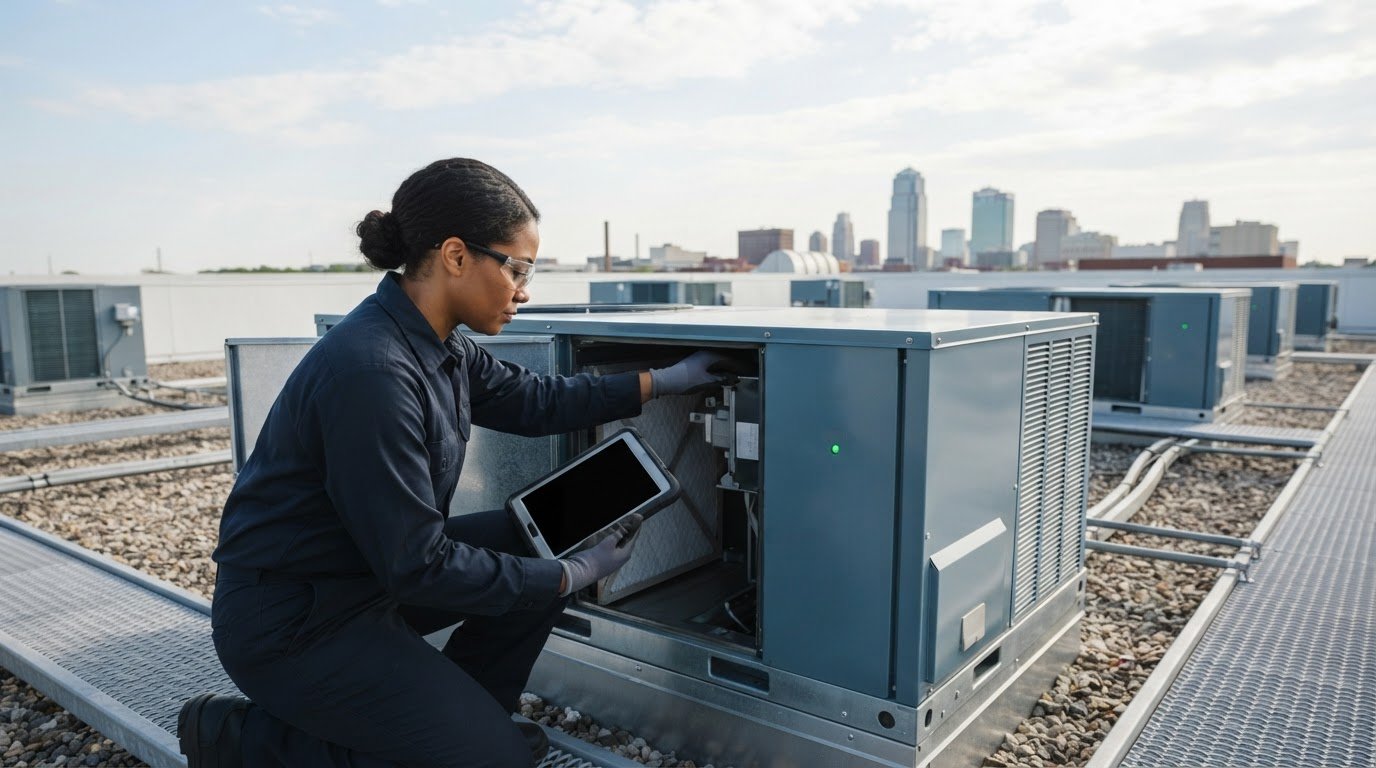
A commercial HVAC maintenance plan in Kansas City should combine scheduled inspections and cleaning with a service frequency suited to the building and its equipment. Restaurants and food facilities often need quarterly or monthly maintenance, while seasonal preparation helps commercial systems handle changing heating and cooling demand. A well-matched schedule supports reliable operation and can help limit avoidable wear.
A useful maintenance plan spells out which equipment technicians inspect, clean, and service. This article explains what preventive care can cover, how it relates to energy use, repairs, and system reliability, and what to consider when assessing a Kansas City provider. Equipment type, operating hours, and facility demands all affect the schedule. The goal is a practical plan built around your operation, not a one-size-fits-all checklist.
Key Takeaways
- Match maintenance frequency to equipment, operating hours, and the demands of your facility.
- Review what a plan covers, including inspections, cleaning, and seasonal preparation, so the scope fits your building.
- Use maintenance findings to spot developing issues and support reliable operation, while recognizing that service can’t prevent every breakdown.
- Compare providers by how clearly they tailor maintenance to your equipment and explain the work included.
- Consider whether one commercial contractor can support your air conditioning needs across rooftop units, split systems, and mini splits.
1. Energy efficiency and utility cost reduction
Routine HVAC care can reduce the energy required to heat and cool a commercial building. The U.S. Department of Energy estimates organizations can save 5-20% on energy bills annually by following commercial HVAC care best practices. The actual effect depends on equipment condition, operating schedules, building use, and how consistently maintenance tasks are completed.
Start with components that affect airflow and heat transfer. Dirty coils make it harder for a system to move heat, and clogged filters restrict airflow. Technicians can inspect these areas, clean coils, and change filters to suit the building’s needs. These practical steps help equipment operate smoothly and reduce unnecessary strain on fans and compressors.
Belts and gaskets also warrant attention during planned service. Worn belts can interfere with airflow, while damaged gaskets allow conditioned air to escape around equipment access points. A technician can identify wear, replace affected components, and document the work. Tracking recurring issues helps facility managers connect maintenance findings with changes in utility use.
Refrigerant performance matters, too. If a cooling system isn’t operating as intended, a qualified technician can inspect its operation and determine whether service is needed. Refrigerant handling is part of appropriate equipment service, not a substitute for diagnosing airflow, coil condition, or other mechanical problems. A thorough inspection considers the system’s overall performance.
In Kansas City, prepare equipment before heating and cooling seasons begin. Seasonal transitions can reveal problems when a rooftop unit or split system shifts from low demand to heavier operation. Scheduling maintenance ahead of peak demand gives technicians time to clean and inspect equipment before the building depends on it most.
Efficiency and equipment longevity are connected, but neither follows from a single cleaning. Most commercial HVAC systems are designed to last 15 to 20 years. Keeping coils, filters, belts, and other serviceable components in working condition supports steady operation and helps limit avoidable strain. Equipment age, workload, and maintenance history all shape long-term performance.
Energy use and indoor conditions are connected. Restricted airflow or neglected equipment can make temperature control less consistent and affect air quality. Facility teams can record comfort complaints, operating changes, and service findings alongside utility bills. These records can reveal patterns, such as a recurring issue in one zone or higher demand during a particular operating period.
For a practical maintenance framework, review the preventive maintenance services available for commercial equipment. A plan should define the equipment covered and the tasks performed. Compare those details with your building’s schedule and operating demands, then use service records to track work and recurring maintenance needs.
2. What is a commercial HVAC maintenance plan?
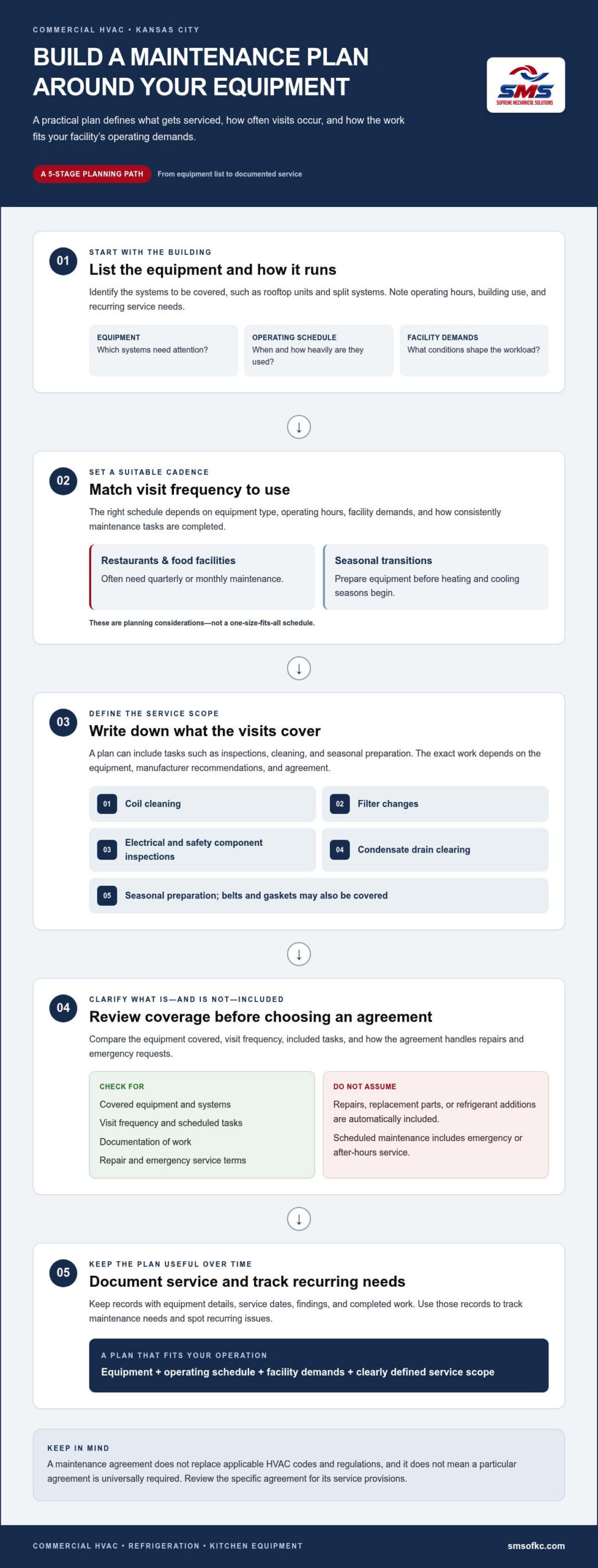
A commercial HVAC maintenance plan is a scheduled service arrangement that defines which equipment receives attention, what work is covered, and how often visits occur. In Kansas City, the scope should reflect the building’s systems, operating schedule, and equipment demands. A busy restaurant kitchen may need a different schedule from a warehouse with different heating and cooling loads.
A plan can include coil cleaning, filter changes, electrical and safety component inspections, condensate drain clearing, and seasonal preparation. Scheduled preventive service may also cover belts, gaskets, and other components. Exact tasks depend on the equipment, manufacturer recommendations, and agreement. Repairs, replacement parts, and refrigerant additions aren’t automatically included in every plan.
When comparing a commercial HVAC maintenance plan, review the covered equipment, visit frequency, included tasks, documentation, and how the agreement handles repairs and emergency requests. Check whether both rooftop units and split systems are covered, for example, and whether the schedule suits their operating hours.
Plan pricing depends on the equipment covered, visit frequency, and included work, with the price provided after a quote request. These factors help explain why a plan should match the facility rather than rely on a generic checklist. Review the scope alongside your maintenance priorities before selecting an agreement.
Commercial buildings in Kansas City must meet applicable HVAC codes and regulations. A maintenance agreement doesn’t replace those obligations or mean that a particular agreement is universally required. Nor is a service agreement a universal manufacturer warranty requirement. Keep service records with equipment details, dates, findings, and completed work to support maintenance tracking and warranty documentation.
Do Kansas City commercial HVAC plans include emergency or after-hours service? Not automatically. Emergency response and after-hours terms vary by agreement, so review the specific service provisions rather than assuming scheduled maintenance includes urgent repairs.
For a customized plan, start by listing each system, its operating schedule, and recurring service needs. Then align the visit schedule and task list with those details. A restaurant, for instance, may need HVAC care coordinated with refrigeration and kitchen equipment demands, while a gas station may have different equipment and operating patterns. Clear records help facility teams track completed work and plan future visits. Review the commercial preventive maintenance services to see how scheduled tasks can be organized around equipment needs.
3. System reliability and indoor air quality
Reliable operation depends on more than whether an HVAC system starts. Technicians assess how equipment performs under operating conditions, including airflow, temperature control, and component response. In Kansas City, hot, humid summers and sharp seasonal transitions can stress commercial systems. Scheduled inspections can identify performance changes before they disrupt occupied spaces or normal building operations.
Controls and thermostats are part of that assessment. A technician can compare thermostat settings with actual space conditions, then test whether the system responds as expected. If a restaurant’s dining area feels different from its kitchen, the difference may point to airflow or control issues. Performance testing helps distinguish a control problem from an equipment problem.
Indoor air quality also depends on how air moves through the building. Indoor concentrations of some pollutants are often 2-5 times higher than typical outdoor concentrations. High-traffic facilities accumulate contaminants faster, so filters and coils may need more aggressive service schedules. Inspecting these components helps facility teams address buildup that can restrict airflow and affect the air circulating indoors.
Humidity deserves attention in Kansas City. High humidity increases condensation and mold risk, making regular HVAC inspections and cleaning important. Technicians can inspect condensate pathways and identify moisture concerns around equipment. In a busy commercial kitchen, managers can report persistent dampness or comfort changes so the service team can assess the relevant system areas.
Inspection frequency should reflect system size and duty cycle. Larger commercial systems and continuous-duty equipment need more frequent inspections, adjusted to their load and cycling patterns. Industrial and manufacturing facilities should have HVAC inspections at least quarterly. Facility managers can use operating hours, recurring service findings, and changes in space use to shape a practical schedule.
Tune-ups also offer a chance to assess whether the system still fits the building’s needs. During commercial HVAC system installation, equipment selection and setup should account for the building’s use and operating conditions. After installation, performance testing establishes how the system responds across its intended functions. Later inspections can compare current operation with those baseline observations and flag changes for attention.
Keep a concise record after each visit. Note the equipment inspected, control settings reviewed, test results, observed moisture, and recommended follow-up. If occupants report uneven cooling or changing indoor air conditions, record the location and timing. These details give technicians useful context for targeted inspections and help facility teams connect operational complaints with system performance.
4. Preventive maintenance versus run-to-failure operation
Run-to-failure operation means waiting for equipment to malfunction before scheduling service. That approach can leave a restaurant without cooling during a busy shift or interrupt temperature control in a warehouse. Preventive maintenance instead schedules inspections around equipment needs, giving facility teams a chance to address developing issues before they disrupt operations.
Commercial HVAC maintenance visits can uncover developing problems, but they can’t prevent every repair or breakdown. A technician may find a worn belt, restricted filter, or drain issue during an inspection. Addressing findings early can reduce added strain and give managers time to plan corrective work before equipment failure affects staff, customers, or daily operations.
Scheduled service also creates a consistent record of equipment condition. A preventive inspection can document the system, observed wear, completed tasks, and recommended follow-up. Facility managers can compare records over time to spot recurring issues, such as the same unit needing attention or filters becoming restricted sooner than expected.
Maintenance plans can include inspecting and replacing belts, cleaning coils, and servicing filters. They may also schedule work before seasonal demand, helping teams prepare equipment for changing operating conditions. Tasks and frequency should suit the system and its workload. A continuously operating rooftop unit, for example, may need a different inspection approach from equipment that runs less often.
There is a financial reason to consider scheduled care. Building owners and operators with a commercial HVAC maintenance plan often spend 50% less on HVAC maintenance than those without one. That figure does not remove the need to budget for repairs. It highlights the value of planning service and tracking issues instead of responding only after a failure.
Equipment care can also affect useful life. Regular attention to belts, filters, coils, and other serviceable components helps limit preventable wear. Poor maintenance can reduce a commercial HVAC system’s lifespan by as much as 50%. Keeping service records and addressing inspection findings gives facility managers a clearer basis for ongoing equipment decisions.
Use a practical process: list each unit, record its operating schedule, and document inspection findings. Assign follow-up work, then track whether the issue returns. If a filter repeatedly restricts airflow, for example, review its replacement schedule and the conditions around that unit. Preventive maintenance works best as an operating routine, not a visit that ends without recorded findings or next steps.
Maintenance visits don’t guarantee uninterrupted operation, but they help teams identify concerns early. For commercial operators, that distinction matters: a plan supports informed scheduling and maintenance decisions, while run-to-failure makes the timing and impact of breakdowns less predictable.
5. Choosing a Kansas City commercial HVAC provider
A useful provider comparison starts with the facility, not a generic service list. Identify each system type, operating schedule, and the spaces that depend on it. Restaurants, warehouses, and gas stations place different demands on HVAC equipment. Matching the service scope to those differences helps reduce the risk of missed equipment or poorly timed visits.
Next, compare the maintenance scope line by line. Look for clearly defined inspections, cleaning, filter service, and seasonal preparation. Note which rooftop units, split systems, or other equipment the plan covers. A plan that names each covered system gives managers a practical way to track scheduled work across the facility.
Service frequency should reflect equipment use and building operations. Continuous-duty systems and high-traffic facilities may need closer attention than equipment with lighter use. Consider how a visit fits the operation: scheduling maintenance before a heating or cooling season can help teams prepare without interrupting peak activity.
Review how inspection findings lead to next steps. Clear service records identify inspected equipment, completed tasks, observed issues, and recommended follow-up. If a technician notes recurring filter restrictions or uneven indoor temperatures, for example, the facility team can connect the finding to a specific unit and track whether conditions change.
Understand the boundary between maintenance and repair before comparing agreements. A scheduled inspection can identify developing problems, but plans don’t universally include repairs, replacement parts, or refrigerant additions. Knowing what work is included helps managers plan for corrective service without confusing routine maintenance with a repair agreement.
Operational fit matters as much as the checklist. Consider how the service schedule coordinates with building access, business hours, and equipment that cannot easily be taken offline. A restaurant may need maintenance coordinated around kitchen operations, while a warehouse may prioritize steady heating and cooling across work areas. The approach should reflect how the facility is actually used.
For Kansas City businesses, local operating conditions also shape provider fit. Hot, humid summers and sharp seasonal transitions can change demands on commercial equipment. Compare how the maintenance schedule prepares systems for those transitions and how service records help facility managers plan future work. Look for a clear scope, relevant inspections, and dependable follow-through.
Choose based on documented scope, equipment fit, service boundaries, and useful maintenance records. These details clarify what the facility receives and how the work supports daily operations. A commercial HVAC maintenance plan in Kansas City should suit the building’s needs, not rely on a one-size-fits-all schedule.
Supreme Mechanical Solutions: Air Conditioning
Supreme Mechanical Solutions provides commercial air conditioning service for businesses with rooftop units, split systems, and mini split systems. Turn to the team for commercial cooling support or maintenance aligned with your facility’s equipment. The right service scope depends on your system type, operating demands, and building needs.
For restaurant managers, franchise operators, property managers, and facility teams, clear maintenance records connect scheduled care with equipment condition. Discuss the units you operate and the service needs that affect daily operations. Supreme Mechanical Solutions can help plan the next step for your commercial air conditioning equipment.
Put Your Maintenance Approach Into Action
With a clear plan and the right support, your team can prepare confidently for upcoming maintenance.
Frequently Asked Questions
What is a commercial HVAC maintenance plan?
A maintenance plan is a written arrangement for organizing recurring service across a commercial building’s HVAC equipment. Beyond listing tasks, a useful plan helps facility teams coordinate access, record findings, and assign follow-up internally. A property manager, for example, can use service notes to tell building staff which unit needs attention and when work was completed. This makes maintenance easier to coordinate across multiple spaces or shifts.
How Often Should Kansas City Businesses Schedule HVAC Maintenance?
Set service frequency according to building use and equipment demands. Office buildings in Kansas City should generally schedule HVAC maintenance twice per year, in spring and fall. Restaurants and food facilities should generally schedule it quarterly or even monthly. If a facility has changing hours or areas with uneven occupancy, share those patterns when scheduling so maintenance reflects how the building is used.
How much do commercial HVAC maintenance plans cost in Kansas City?
The price depends on the scope of work. To support an accurate quote, provide an equipment inventory and identify operating constraints, such as spaces that must remain in service during visits. Compare proposals against the same equipment and service expectations. This helps distinguish differences in scope rather than treating unlike plans as equivalent.
Which Kansas City HVAC companies offer commercial maintenance agreements?
Supreme Mechanical Solutions offers preventive maintenance contracts and quarterly maintenance plans for commercial equipment. For a productive discussion, prepare an equipment list and note the facility’s operating priorities, such as areas where temperature changes affect staff or customers. This connects the maintenance conversation to the building’s needs. Restaurants, gas stations, warehouses, and other commercial facilities can share their systems and operating conditions.
How often should commercial HVAC equipment be inspected and serviced?
Use equipment workload and observed condition to guide inspection frequency. More comfort complaints, unusual operating changes, or recurring service findings can signal that a unit needs attention before its routine visit. Keep a dated log noting the affected area and equipment, along with when the issue occurs. These details help technicians focus their inspection and give facility managers a clearer service history.
What factors affect commercial HVAC maintenance pricing in Kansas City?
Pricing reflects the requested work and conditions at the facility. The scope may depend on the equipment included, service timing, and coordination around occupied or operational spaces. When comparing proposals, provide consistent site details, including equipment access and any areas that cannot be interrupted. This makes proposals easier to evaluate without relying on a headline price alone.
What are typical response times and repair discounts in commercial HVAC maintenance contracts?
Response times and repair discounts depend on the agreement’s written terms. Separate a stated response commitment from an arrival estimate, and check whether any discount applies to labor, parts, or particular repairs. Supreme Mechanical Solutions offers 24-hour emergency HVAC service at (913) 399-7711. That emergency service is separate from any specific response-time or discount terms in a maintenance agreement.
What maintenance is recommended for Kansas City heating and cooling systems by season?
Plan service around the shift between heating and cooling demand, and prepare a short operating log for each visit. Record persistent hot or cold areas, thermostat changes, and equipment that has been difficult to operate. Tell the technician which spaces matter most during business hours. This context helps focus seasonal service on day-to-day concerns, not just a general equipment checklist.


