
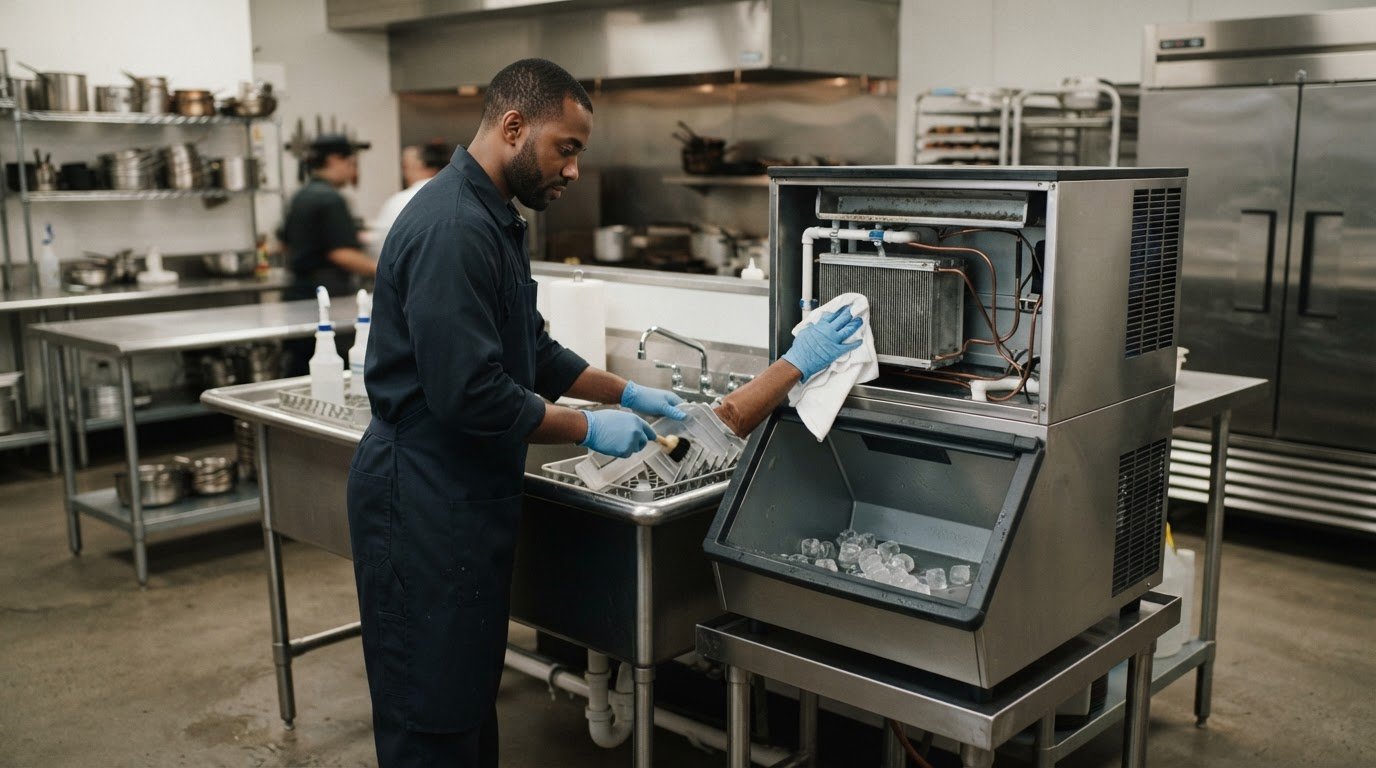
Scale buildup can reduce ice production, so commercial ice machine cleaning in Kansas City should remove mineral deposits and clean and sanitize ice-contact areas. Commercial ice machines should be emptied and thoroughly sanitized every six months.
Cloudy or foul-smelling ice, low production, and dispensing problems can disrupt service and signal maintenance needs. This guide explains how scale develops, how water filtration can limit buildup, and what thorough cleaning and routine maintenance involve. You’ll also learn what restaurant and bar operators may notice when an ice machine needs attention, so you can plan the right next step.
Key Takeaways
- Cloudy ice, reduced production, and unusual odors can point to cleaning or water-quality issues that affect daily service.
- Scale can restrict water flow and interfere with ice production; filtration and descaling address different parts of the problem.
- Build cleaning and sanitizing into a routine, and keep maintenance aligned with the machine’s condition and use.
- Professional cleaning includes more than visible surfaces: the ice-contact components and sanitation process matter too.
- Cleaning costs depend on the equipment’s condition and the work required, so understand the scope before scheduling service.
Customer experiences with cleaning and maintenance
Most commercial ice machines operate 24 hours a day, 7 days a week, so cleaning needs to fit around service. Restaurant teams may notice cloudy ice, an unusual odor, lower production, or dispensing problems before scheduling maintenance. Each symptom gives operators a practical starting point. Record what changed, when it began, and whether it affects every batch or only part of production. That timeline can help distinguish a recurring issue from a single shift’s observation.
For Kansas City restaurants, clean and sanitize ice-contact surfaces according to the machine manufacturer’s instructions and the sanitation procedures that apply to your operation. A maintenance interval alone does not define a local health-code requirement.
Water quality can affect the ice customers see and taste. Poor-quality water or an ineffective filter can contribute to cloudy, off-tasting ice. Filters remove sediment and can help reduce odors and bad taste. If ice looks or tastes different, note the change and inspect the filter’s condition and service history. Filtration treats incoming water; it does not replace cleaning the machine or bin.
Maintenance notes can help distinguish cleaning needs from repair symptoms. Record whether the machine stops making ice, produces less than usual, leaks, or has trouble dispensing. Also note freezing before water reaches the ice mold, error codes, or unusual noises. These details give a technician a clearer picture than a general report that the unit “isn’t working.” Cleaning alone will not fix every mechanical fault.
- Record the date of each cleaning and any visible change in ice quality.
- Note filter condition and any odor, taste, or cloudiness in the ice.
- Track production or dispensing changes, leaks, error codes, and unusual sounds.
- Keep cleaning and repair observations separate to identify recurring symptoms.
Some machines have antimicrobial protection built into food-zone plastics to inhibit slime and mold growth. This feature does not eliminate the need to clean and sanitize. Staff should follow the machine’s instructions and the established sanitation routine. A maintenance log also helps managers compare observations across shifts, such as reduced output during a busy service period or a change after filter maintenance.
At a bar serving drinks through a long shift, cloudy ice can affect presentation, while dispensing problems can slow service. At a restaurant, a leak or low production can disrupt kitchen routines. Describe the symptom, when it occurs, and any recent cleaning or filter work. These details help identify whether the next step is routine maintenance, cleaning, or repair.
When comparing ice machines for a restaurant, listed daily capacity is a useful reference alongside observed demand.
These figures can help managers assess whether a machine’s listed output suits the operation, but actual service needs and maintenance observations also matter when evaluating performance.
Ice machine scale buildup and descaling
Mineral scale forms when dissolved minerals in water collect on ice-machine surfaces. Deposits can restrict water flow, coat components, and interfere with ice formation. As a result, a machine may produce less ice even while its refrigeration system continues running. Commercial ice machine water filters can help limit scale buildup, which may otherwise reduce production. Filtration manages incoming water; descaling removes deposits already inside the machine.
Scale can be less obvious than a visible leak or cloudy ice. Look for deposits on accessible water-contact areas, slower filling, or irregular ice formation. Record what you see and whether production changed after filter maintenance. A clogged or ineffective filter and accumulated scale are related, but they are not the same problem. Replacing a filter does not remove deposits already attached to internal surfaces.
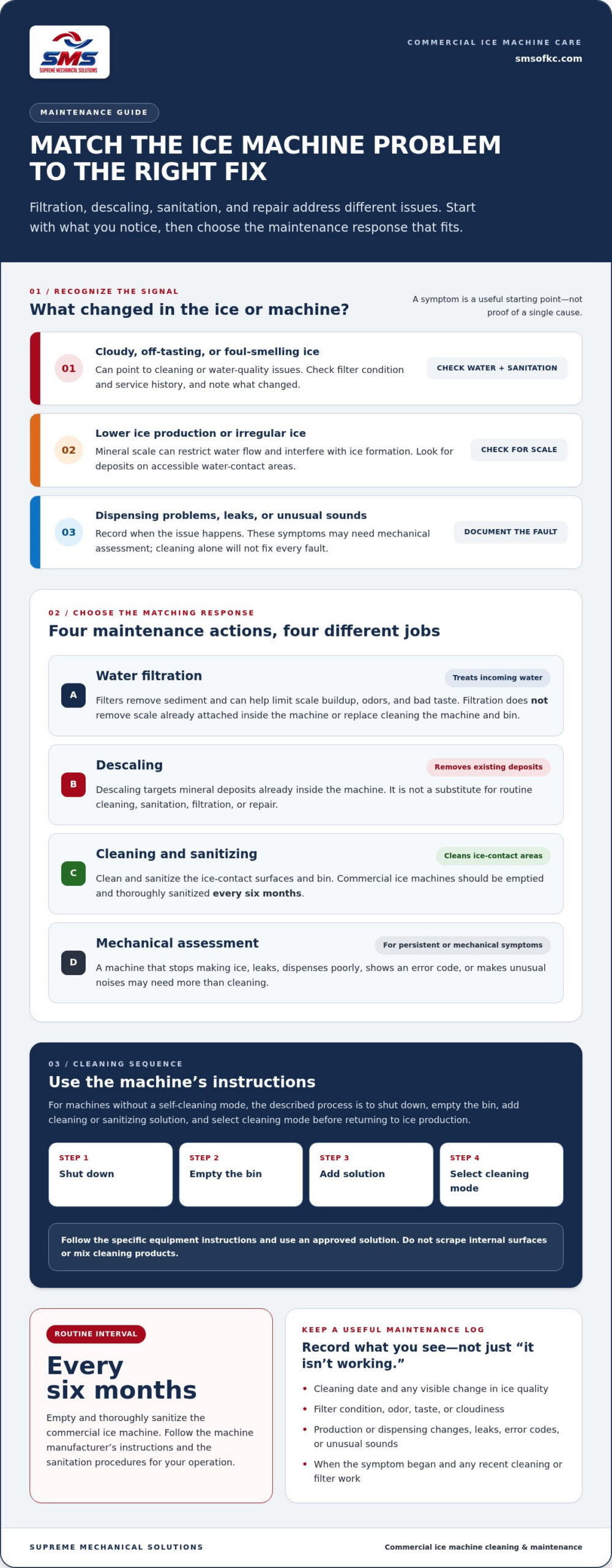
For a machine without a self-cleaning mode, the U.S. Environmental Protection Agency describes a process of shutting it down, emptying the bin, adding cleaning or sanitizing solution, and selecting cleaning mode before returning it to ice production. Follow the equipment manufacturer’s instructions for the specific machine and approved solution.
For commercial ice machine cleaning in Kansas City, match descaling to the equipment’s design and visible buildup. Avoid scraping internal surfaces or mixing cleaning products. If scale remains after routine maintenance, production drops, or an error appears, the machine may need mechanical assessment rather than repeated cleaning alone.
- Check accessible water-contact surfaces for mineral deposits.
- Review filter condition and maintenance records alongside production changes.
- Use the machine’s cleaning mode and follow its equipment instructions.
- Record persistent low output, irregular ice, or recurring scale for follow-up.
Dirty ice equipment can create sanitation concerns and affect the appearance or odor of ice. Poor cleaning may also draw attention during a food-safety inspection, but specific Kansas City code findings depend on the conditions and applicable requirements. Keep ice-contact areas clean, follow the machine’s instructions, and document completed maintenance. Descaling alone does not address sanitation.
For example, a bar may notice thin or inconsistent cubes after mineral deposits build up. A restaurant may see lower output during service and find scale near water-contact components. These observations help distinguish a maintenance issue from a broader production problem. Before arranging service, note the symptom, filter condition, and recent cleaning work.
Descaling is most useful when deposits are present; it isn’t a substitute for routine cleaning, filtration, or repair. If buildup returns or the machine’s output remains inconsistent, review commercial equipment service options as a practical next step.
How often should commercial ice machines be cleaned and sanitized
Use a written schedule that separates full machine sanitation from smaller maintenance tasks. Commercial ice machines should be emptied and thoroughly sanitized every six months. This interval gives restaurant managers a planning baseline, not a substitute for the equipment manufacturer’s instructions. Log the date, work completed, and any observed buildup.
Antimicrobial sticks or pouches generally need changing every 2 to 3 months. Record each replacement so staff can track the next service date without relying on memory. These products support maintenance, but they don’t replace emptying and sanitizing the machine. A log should distinguish stick or pouch replacement from a full cleaning.
Some Manitowoc automatic cleaning systems can be set to sanitize an ice maker every two, four, or twelve weeks. Settings vary, so follow the machine’s instructions and operating needs when choosing a cycle. An automatic cycle does not replace the six-month schedule for emptying and thorough sanitation. Document the setting and completed cycles.
Condenser fins or air filters need cleaning or replacement every six months. Add this task to the same maintenance calendar, but record it separately from sanitation. Fins and filters affect the machine’s air side, while sanitation addresses the ice-making and storage areas. A checklist should identify the component serviced, the action taken, and the date.
- Every 2 to 3 months: Replace antimicrobial sticks or pouches, where used.
- Every six months: Empty and thoroughly sanitize the ice machine.
- Every six months: Clean or replace condenser fins or air filters.
- At the selected interval: Record automatic sanitation cycles, if the machine has that system.
For example, a restaurant manager can schedule six-month sanitation and condenser maintenance together, then track stick or pouch changes separately. This keeps distinct tasks visible instead of treating one as proof that all maintenance is complete. A shift lead can record visible residue, unusual ice, or a sanitation cycle that did not run.
Use the machine’s manual to find the correct cleaning procedure and automatic-cycle controls. Staff should record the model, selected setting, service date, and completion status. If an automatic cleaning system runs every two weeks, for example, the log should still show when the machine was emptied and thoroughly sanitized. Clear records help managers spot missed tasks and recurring maintenance issues.
Keep the schedule accessible to the employees responsible for equipment checks. A dated checklist near the maintenance log can show the next six-month tasks and the next 2-to-3-month replacement window. Review those entries during routine handoffs, especially when staff responsibilities change. Consistent records help a Kansas City restaurant coordinate machine care with its operating schedule.
Commercial ice machine cleaning cost Kansas City
Commercial ice machine cleaning costs in Kansas City depend on the equipment and work involved. An estimate considers the machine’s size and configuration, its condition, access to service areas, and the required work. Routine cleaning differs from a visit that also addresses heavy scale, a dirty bin, or a recurring production issue. Defining the scope makes clear what the estimate covers.
Start with the machine details. Record the equipment type, location, and any access constraints, such as a tight service area or obstructed panels. Note whether the unit is undercounter or has a separate ice bin. These details help define the work before scheduling. Two machines in the same restaurant may need different service, even if they produce similar ice.
The machine’s condition also affects the work involved. A unit with routine maintenance records may need a different cleaning scope from one with visible deposits or residue. Record the last cleaning date, filter service, and symptoms. For example, mention persistent low production or an unusual odor instead of describing the unit as simply “dirty.” Cleaning and repair are separate tasks, and a mechanical fault may require its own diagnosis.
To compare estimates accurately, ask for a scope that identifies the machine and planned work. Check whether it covers the ice-making components, bin, sanitation, and any other requested maintenance. If a technician finds a separate fault, clarify whether diagnosis or repair is included or treated as additional work. A clear scope helps managers compare equivalent services rather than focusing only on the total.
- Equipment: Share the machine type, setup, and number of units needing attention.
- Condition: Note visible scale, residue, leaks, or changes in production.
- Access: Describe the service location and any access restrictions.
- Scope: Identify cleaning, sanitation, and related maintenance requested.
- Separate faults: Distinguish cleaning from repair symptoms or diagnostic work.
A restaurant with one accessible machine and routine service needs may require a different scope from a bar with multiple units, limited access, and recurring symptoms. Those differences make a single flat expectation unreliable. Share the same details for each machine when requesting an estimate, especially if equipment is located in separate kitchens or service areas.
Before approving work, confirm which machine will be serviced, which cleaning tasks are included, and how separate repair needs will be handled. Keep the written scope with the maintenance record. This gives Kansas City operators a useful reference for future visits and helps them budget around actual equipment needs, not an assumed price.
What is included in professional commercial ice machine cleaning
Thorough cleaning addresses the ice-making area, storage bin, and water-contact surfaces. Before starting, the technician reviews visible residue, mineral deposits, and the machine’s cleaning controls. This inspection helps define the work and identify conditions that may need attention beyond cleaning. A dirty bin, for example, needs attention alongside components that carry water to the ice mold.
Cleaning and sanitizing are separate steps. Cleaning removes soil and deposits; sanitizing follows on cleaned surfaces. The Centers for Disease Control and Prevention states that the general cleaning regimen calls for circulating a 50-100 parts per million (ppm) sodium hypochlorite solution through the machine. Follow the machine’s instructions for its cleaning procedure and return to ice production.
For a machine without a self-cleaning mode, the U.S. Environmental Protection Agency describes a sequence: shut down the unit, empty the ice bin, add cleaning or sanitizing solution, and switch to cleaning mode before returning to ice production. The equipment’s instructions determine the specific procedure. Keep ice intended for service separate from the cleaning process.
- Inspect: Review the machine, bin, accessible surfaces, and cleaning controls.
- Prepare: Shut down the unit when required and empty the bin.
- Clean: Remove residue from the bin and accessible ice-contact components.
- Sanitize: Circulate the specified solution as directed for the machine.
- Return to use: Complete the equipment’s procedure before producing ice again.
The order matters. Sanitizer does not replace soil removal, and cleaning solution is not ready-to-serve ice. Restaurant staff should keep the bin’s existing ice separate and follow the machine’s procedure before collecting fresh ice. Record the cleaning date and any deposits observed. This maintenance history gives managers a practical reference for future service.
Professional cleaning can also reveal problems that cleaning alone will not correct. Persistent low production, leaks, unusual noises, or recurring error codes may signal an equipment issue. Record these symptoms separately from cleaning tasks. This distinction helps operators decide whether the next step is sanitation, routine maintenance, or further equipment assessment.
Before the visit, identify the machine and share its recent cleaning history. Afterward, keep the work record with the equipment’s maintenance information. Clear records help restaurant teams plan future cleaning and track developing concerns.
Supreme Mechanical Solutions: Air Conditioning
Supreme Mechanical Solutions supports commercial operators with air conditioning for restaurants and other business facilities. If a dining room or kitchen has an HVAC issue alongside an ice machine maintenance need, address each system according to its own symptoms. Air conditioning service does not replace ice machine cleaning or refrigeration repair.
For commercial cooling, Supreme Mechanical Solutions services rooftop units, split systems, and mini split systems. The appropriate service depends on the equipment in the building and the issue affecting its operation. Share clear details about the affected area and system to guide the service conversation.
Learn more about commercial air conditioning for your facility, or contact Supreme Mechanical Solutions to discuss service.


