
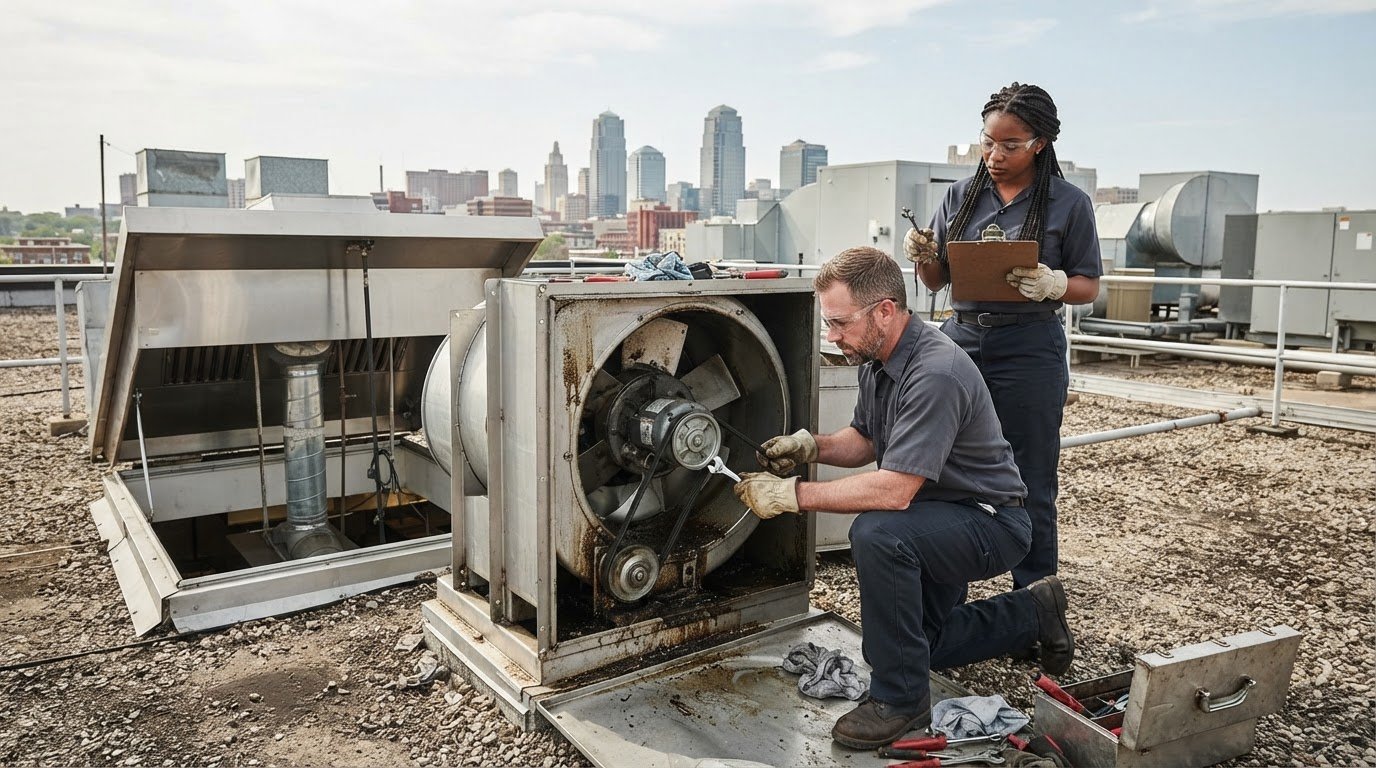
A hood-cleaning schedule depends on what your kitchen cooks and how often it operates. For most average restaurants, kitchen exhaust hood fan maintenance in Kansas City should include hood cleaning every 90 days. High-volume and solid-fuel kitchens need more frequent attention under NFPA 96 guidance.
That schedule matters, but cleaning the hood alone doesn’t maintain the full exhaust system. Grease buildup, fan condition, and airflow all affect performance, so maintenance should cover equipment beyond the canopy.
This article explains how cleaning intervals vary by kitchen use, what can affect the scope and cost of a cleaning, and what a professional service typically covers. You’ll also learn how fan inspection and repair fit into routine upkeep, and how NFPA 96 guidance applies to different commercial kitchens.
Key Takeaways
- Set hood-cleaning frequency around the kitchen’s cooking volume, fuel type, and operating schedule.
- Include the exhaust fan in maintenance planning; hood cleaning and fan upkeep address different parts of the system.
- Use NFPA 96 cleaning and inspection intervals to understand how kitchen operations affect maintenance needs.
- Know what a professional cleaning typically covers so you can assess the work performed across the exhaust system.
- Watch for changes in fan operation and airflow, which can signal that the exhaust system needs attention.
Exhaust fan maintenance and repair
Hood cleaning removes grease, while fan maintenance addresses the equipment that moves exhaust out of the kitchen. For most average restaurants, the hood-cleaning interval is 90 days; fan condition also needs attention between cleanings.
In a commercial kitchen, note changes in sound, vibration, or airflow, and arrange an inspection or repair when performance changes.
Exhaust Fan Maintenance
Maintenance focuses on the fan’s operating condition, including visible grease buildup, unusual vibration, and changes in sound or airflow. Record what staff notice during normal operation, such as a fan rattling after startup or seeming less effective during a busy cooking period. These details help establish when the change began and under what conditions.
Use a maintenance log to track inspection findings alongside kitchen exhaust cleaning dates. A recurring plan can help organize those tasks; preventive maintenance planning can also keep equipment upkeep on a consistent schedule.
Exhaust Fan Repair
Repair starts with identifying the symptom and its likely source. A fan that runs but moves less air may need a different inspection from one that stops, makes a new noise, or vibrates during operation. Note whether the issue occurs at startup, while cooking, or throughout the shift, and share those details with the service technician.
Keep the fan’s operating history and recent cleaning records available. Grease buildup, a change in sound, and reduced airflow are useful observations, but they don’t identify a failed part on their own. A technician can inspect the equipment and determine what repair is needed.
Professional Hood and Fan Cleaning
Professional kitchen exhaust cleaning commonly uses chemicals to loosen grease, power-washes it away, and polishes the hood. The cleaning scope should include the exhaust fan as well as the hood, since grease can collect beyond the visible canopy. Ask for a clear description of the surfaces and components covered in the completed work.
Compare the service record with the areas cleaned, and note any grease or operating concerns that remain. A 90-day hood-cleaning interval applies to most average restaurants, but the fan still benefits from attention to its operation between scheduled cleanings.
After cleaning, observe whether the fan starts and runs as expected during the next kitchen shift. Report any new rattle, vibration, or airflow change instead of treating cleaning as a repair. Kitchen exhaust hood fan maintenance in Kansas City works best when cleaning records, operating observations, and repair findings are kept together for the restaurant team.
Kansas City NFPA 96 requirements
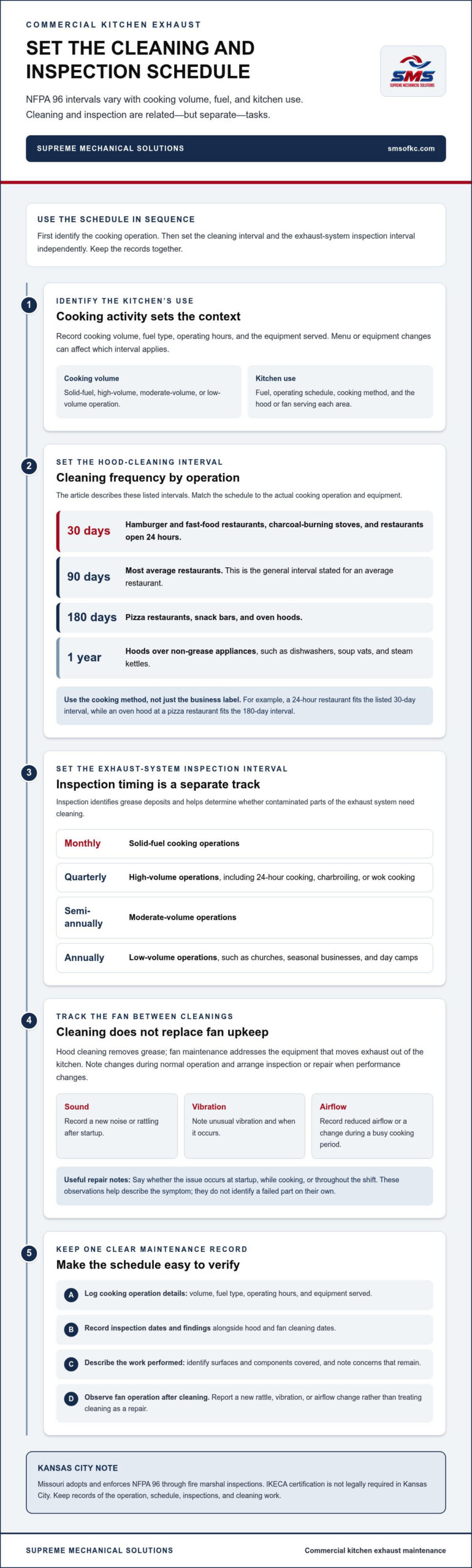
NFPA 96 guidance sets cleaning and inspection intervals according to cooking volume, fuel, and kitchen use. Missouri adopts and enforces NFPA 96 through fire marshal inspections, so operators should keep schedules suited to their operation.
Cleaning intervals vary by kitchen type. The guidance calls for:
- Cleaning frequency should reflect the kitchen’s cooking activity and fuel use.
- Cleaning frequency should reflect the kitchen’s volume and use.
- Cleaning schedules for low-volume commercial kitchens should reflect their usage and conditions.
- Seasonal or very light-use commercial kitchens may need less frequent cleaning than busier kitchens.
Specific cooking operations also have listed intervals. Hamburger and fast-food restaurants, charcoal-burning stoves, and restaurants open 24 hours have a 30-day hood-cleaning interval. Pizza restaurants, snack bars, and oven hoods have a 180-day interval. Hoods over non-grease appliances, such as dishwashers, soup vats, and steam kettles, have a 1-year interval.
Use the kitchen’s actual cooking methods to select the applicable interval. For example, a restaurant operating 24 hours fits the listed 30-day interval, while an oven hood at a pizza restaurant fits the 180-day interval. Where a kitchen has multiple cooking types, record each system and its use so scheduling reflects the equipment served.
NFPA 96 also lists exhaust-system inspection intervals. Solid-fuel cooking operations call for monthly inspections. High-volume operations, including 24-hour cooking, charbroiling, or wok cooking, call for quarterly inspections. Moderate-volume operations call for semi-annually inspections, while low-volume operations, such as churches, seasonal businesses, and day camps, call for annually inspections.
Inspection and cleaning serve related but distinct purposes. An inspection identifies grease deposits and helps determine whether contaminated parts of the exhaust system need cleaning. Record inspection dates, findings, cleaning work, and the type of cooking operation. These details help managers explain the schedule and organize follow-up during a fire marshal inspection.
IKECA certification is not legally required in Kansas City. That fact doesn’t replace the need to follow applicable cleaning and inspection practices. A kitchen manager can prepare by documenting cooking volume, fuel type, operating hours, and any changes to the menu or equipment. Those operating details help establish which NFPA 96 intervals apply and when the next inspection or cleaning is due.
What is included in a professional kitchen exhaust hood and fan cleaning service?
Professional cleaning addresses grease on the hood and exhaust fan, not just the visible canopy. Commercial kitchen cleaning commonly involves applying chemicals to loosen grease, power-washing it away, and polishing the hood. The work description should specify which equipment and surfaces are included.
Before service, identify the hood and fan serving each cooking area. A restaurant with separate fryers and a charbroiler, for example, can note which exhaust equipment serves each station. This makes the cleaning record more accurate and gives managers a useful reference for future inspections.
The core cleaning tasks generally follow a clear sequence:
- Apply cleaning chemicals to loosen accumulated grease.
- Power-wash surfaces to remove loosened grease.
- Polish the hood after cleaning.
Consider the service scope as well as the appearance. A polished hood shows that its visible surface received attention, but it doesn’t explain whether the fan or other exhaust-system areas were included. Ask for the service record to identify the equipment addressed and any areas noted for follow-up.
Cleaning and repair are different tasks. Cleaning removes grease; a fan that rattles, vibrates, or moves less air may need a separate equipment inspection. Record symptoms before service and distinguish them from cleaning observations. For example, note whether a sound continues after cleaning or appears only during a busy cooking shift.
After the work, compare the service record with the hood and fan identified before cleaning. Record the cleaning date, tasks performed, and any visible condition that needs attention. This gives managers coordinating kitchen exhaust cleaning across shifts or locations a useful service history. Clear records also help teams plan the next service based on cooking activity and the applicable interval.
For a Kansas City restaurant, keep the scope discussion practical: identify the hood and fan, describe the cooking stations they serve, and ask what the cleaning covers. Record fan noise or airflow changes separately from grease removal. This distinction helps prevent a clean hood from being mistaken for a repaired fan. It also gives the restaurant a clearer basis for tracking maintenance, reviewing completed work, and scheduling the next service.
Cost is another part of clarifying the service scope. These figures give managers a starting point when discussing a quote, but the restaurant should confirm which hoods and connected fans the service covers. A price alone doesn’t explain what equipment will be cleaned or what the service record will document.
When requesting an estimate, describe the cooking areas served by each hood and identify any separate exhaust equipment. Ask the provider to specify the cleaning tasks included and record observed concerns separately from work performed. For restaurants with multiple hoods, confirming the scope for each area makes it easier to compare the quote with the completed service record. Keep that record with prior maintenance notes so managers can review what was covered and plan follow-up without confusing grease removal with equipment repair.
Exhaust system
A commercial kitchen exhaust system works as a connected path: the hood captures cooking exhaust, ductwork carries it, and the fan moves it outside. Grease can collect beyond the visible hood, so a clean canopy alone doesn’t show the condition of the entire system. Managers should track the hood, ducts, and fan together.
Grease buildup matters because it can involve more than one component. From 2011 to 2013, 150 restaurant fires involving grease hoods and duct exhaust fans caused $7 million in damage. Grease-related fires can occur in kitchen exhaust systems. These figures underline why inspection should consider the full exhaust path, rather than only the surfaces staff can see.
Use a practical inspection record to connect observations to locations:
- Identify which hood and cooking stations feed each exhaust path.
- Record visible grease deposits at accessible system surfaces.
- Note fan noise, vibration, or airflow changes separately from grease findings.
- Document the inspection date, observations, and cleaning or repair completed.
NFPA 96 guidance calls for cleaning contaminated portions of the exhaust system when inspection finds grease deposits. That makes inspection findings useful for defining the work. For example, if an inspection identifies deposits in a duct section, the cleaning record should distinguish that area from the hood canopy and fan.
Make records more useful by describing locations consistently. Use kitchen station names, hood identifiers, or a simple site diagram. If a restaurant has separate exhaust paths for a fryer line and a charbroiler, label each path clearly. This helps staff connect findings to the right cooking area and compare records over time.
Cleaning and mechanical service address different conditions. Grease removal addresses contamination; repair addresses equipment that isn’t operating as expected. If the fan develops a new vibration after a cleaning visit, record when it occurs and which hood it serves. That information helps distinguish a mechanical concern from a cleaning issue.
For Kansas City operators, a complete system review looks beyond the hood’s appearance. Match inspection notes to the relevant hood, duct route, and fan. Then use the findings to plan cleaning or repair for the affected parts. Consistent records give managers a clearer view of completed work and remaining needs across the exhaust system.
Your exhaust
Your exhaust system’s operating pattern can reveal changes that a cleaning record won’t show. Restaurant managers can note whether the fan sounds different at startup, vibrates during a cooking shift, or seems to move less air over a specific station. These observations give a technician a clear starting point for evaluating the equipment and its operating condition.
Keep notes specific. “Fan noise” offers little context, but “rattle begins when the charbroiler is running” identifies both a condition and a cooking area. Record when the symptom appears, whether it continues through the shift, and which hood or station it affects. Compare the details with earlier maintenance records to see whether the pattern is new or recurring.
Staff can use a simple observation log during normal kitchen operations:
- Describe the sound, vibration, or airflow change without guessing at its cause.
- Identify the hood, cooking station, and operating conditions involved.
- Record when the condition starts and whether it changes during the shift.
- Note whether the observation began before or after a cleaning or service visit.
Air movement depends on the exhaust fan and connected system. If cooking smoke or odors seem to linger near a station, record where and when it happens. Don’t treat that observation as proof of a specific fault. Instead, use it to direct an inspection toward the affected exhaust path and its operating conditions.
Separate equipment concerns from routine cleaning notes. A visible grease deposit is a cleaning observation; a new vibration is an equipment symptom. Record both, but recognize that they call for different follow-up. Clear descriptions also help distinguish a one-time observation from a recurring issue across shifts or locations.
After a service visit, compare the technician’s findings with the original report. If you reported a rattling fan, note whether the visit addressed it and what work was completed. Keep the service record with the hood and fan history. This gives the next manager or technician a useful account of past symptoms, observations, and repairs.
For kitchen exhaust hood fan maintenance in Kansas City, consistent records connect daily operating observations with inspection and service history. Use them to describe what staff see and hear, not to diagnose the cause. A concise log helps focus the next conversation about an exhaust concern.
Supreme Mechanical Solutions: Air Conditioning
Supreme Mechanical Solutions supports commercial kitchens with air conditioning service for rooftop units, split systems, and mini split systems. Turn to the team when restaurant cooling equipment needs attention alongside kitchen maintenance planning. Separating HVAC concerns from exhaust observations helps managers describe the equipment and service needed.
For example, a rooftop unit that struggles to maintain indoor comfort is a separate issue from a hood fan that changes sound or airflow. Clear equipment details help direct the service conversation and keep maintenance records organized. Supreme Mechanical Solutions works with commercial operators across the Kansas City metro in Kansas and Missouri.
Plan the Next Maintenance Step
Frequently Asked Questions
How Often Should a Commercial Kitchen Receive a Hood Cleaning?
Use the interval that applies to the kitchen’s operation, and put each hood on a service calendar. Have a manager review the calendar when cooking equipment, the menu, or the operating schedule changes. Adding a high-output cooking station, for example, may affect the existing maintenance plan. Tie the schedule to the equipment served rather than relying on a single date for the entire facility.
What are the NFPA 96 requirements in Kansas City, Missouri?
Apply the NFPA 96 schedule to the kitchen’s specific operation, then build a repeatable process around it. Identify who maintains the schedule, who receives inspection findings, and who arranges follow-up work. If a restaurant changes its cooking setup, revisit the schedule and update the facility’s maintenance calendar. This keeps the plan connected to current operations instead of an outdated kitchen layout.
How often should commercial kitchen exhaust hoods and fans be cleaned in Kansas City?
Set cleaning frequency according to the operation served by each hood and fan. Start by mapping each hood to its cooking appliances, then assign the relevant cleaning interval to that system. Review the map when equipment is added, removed, or used differently. This helps prevent a single kitchen-wide calendar entry from overlooking an exhaust system with different cooking demands.
What are Kansas City fire code requirements for kitchen exhaust hood maintenance and inspections?
Prepare for fire marshal inspections by making the kitchen’s maintenance schedule and service documentation easy for the responsible manager to access. Make sure the person on duty knows where the materials are stored and how to identify the exhaust systems they cover. This helps staff answer questions about the facility’s maintenance process without relying on memory during an inspection.
How much does commercial kitchen hood and exhaust fan cleaning cost in Kansas City?
The price depends on the case and is provided after a quote request. Cost factors include the number of hoods, system configuration, cleaning scope, and equipment access. Make your request more precise by identifying the areas to be serviced and describing any access constraints. Review the quote against the requested scope to ensure the work and pricing align.
How can you inspect and maintain a kitchen exhaust fan between professional cleanings?
Keep the fan’s equipment identification available so maintenance staff can refer to the correct unit when arranging service. Include its location, model information, and relevant site access details in the facility’s equipment file. This helps distinguish one fan from another in a kitchen with multiple exhaust systems. Leave technical adjustments and component repairs to qualified service personnel.
What are signs a kitchen exhaust hood fan needs repair or replacement?
Decisions about repair or replacement depend on an inspection of the fan’s condition and the work required. Before arranging an evaluation, gather the equipment identification information and any available service documentation. If the kitchen has multiple fans, identify the specific unit and the hood it serves. This focuses the assessment on the right equipment and gives the technician useful context.
How much does kitchen exhaust fan repair or replacement cost in Kansas City?
The price depends on the case and is provided after a quote request. The estimate can vary with the fan’s condition, repair work, replacement scope, and equipment access. Share the unit’s identification details and whether you’re seeking a repair or replacement assessment. This helps define the requested work and supports a quote that reflects the equipment and service scope.


