
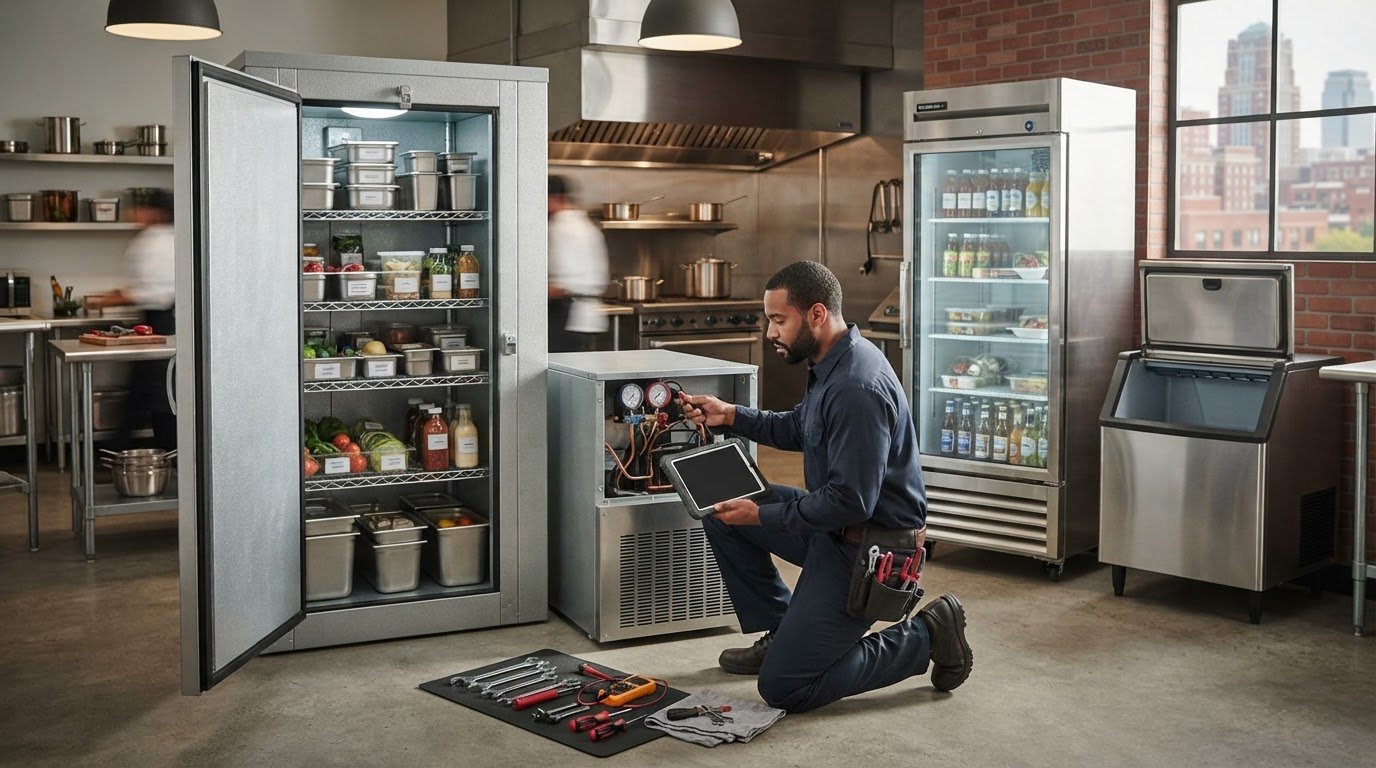
Food-service refrigeration has to do more than keep ingredients cold: it supports storage, preparation, and service throughout the day. Commercial refrigeration equipment includes walk-in coolers and freezers, reach-in units, display cases, and ice machines. Walk-in coolers should keep food below 40°F, while freezers hold products that need to stay frozen.
Choosing commercial refrigeration equipment that fits your operation matters, and reliable performance depends on more than the unit itself. Learn how retail and food-service systems differ, what energy efficiency means in practice, and how maintenance, warranty terms, and service support fit into ownership.
This guide also explains the role of routine service and the practical factors to consider when planning refrigeration for a restaurant, store, or other commercial space. Use it to compare system types and understand the support that helps keep refrigeration running as part of daily operations.
Key Takeaways
- Match walk-in coolers and freezers to the products and storage needs of your operation.
- Compare energy efficiency when evaluating equipment, and consider how system design affects ongoing use.
- Build routine maintenance into equipment planning to support reliable operation and address wear over time.
- Understand how centralized rack and distributed systems serve retail displays in different ways.
- For food-service spaces, consider how walk-ins, reach-ins, and ice machines fit the daily workflow.
What is Commercial Refrigeration?
Commercial refrigeration equipment keeps food and other temperature-sensitive products chilled or frozen for business use. Common options include walk-in coolers and freezers, reach-in refrigerators and freezers, chest freezers, and specialty low-temperature storage.
Commercial Refrigeration Equipment Types
Walk-in coolers and freezers provide enclosed storage for larger inventories. Reach-in units keep frequently used products close to workstations or sales areas. Chest freezers offer another option for frozen stock, while specialty low-temperature systems serve products with specific storage needs, such as ice cream.
Stand-alone refrigerators, freezers, and reach-in coolers have integrated refrigeration components, according to the US EPA. That setup differs from a walk-in, where the cooled storage space and refrigeration components are arranged as a system. When comparing models, consider the products stored, access frequency, available floor space, and whether staff need to move full containers in and out.
For walk-ins, assess door placement, loading access, and room for stored products before choosing a layout. A cooler that supports quick ingredient access serves a different workflow from a freezer used for longer-term frozen inventory. Kansas City operators can explore commercial refrigeration systems when planning equipment for their space.
Reach-in refrigerators and freezers suit operations that need direct access without entering a storage room. Glass-door models display products, while solid-door models keep stored items out of view. Chest freezers can hold bulk frozen stock, but consider how staff will organize and retrieve items from a deeper storage area.
Temperature Ranges and Refrigerant Rules
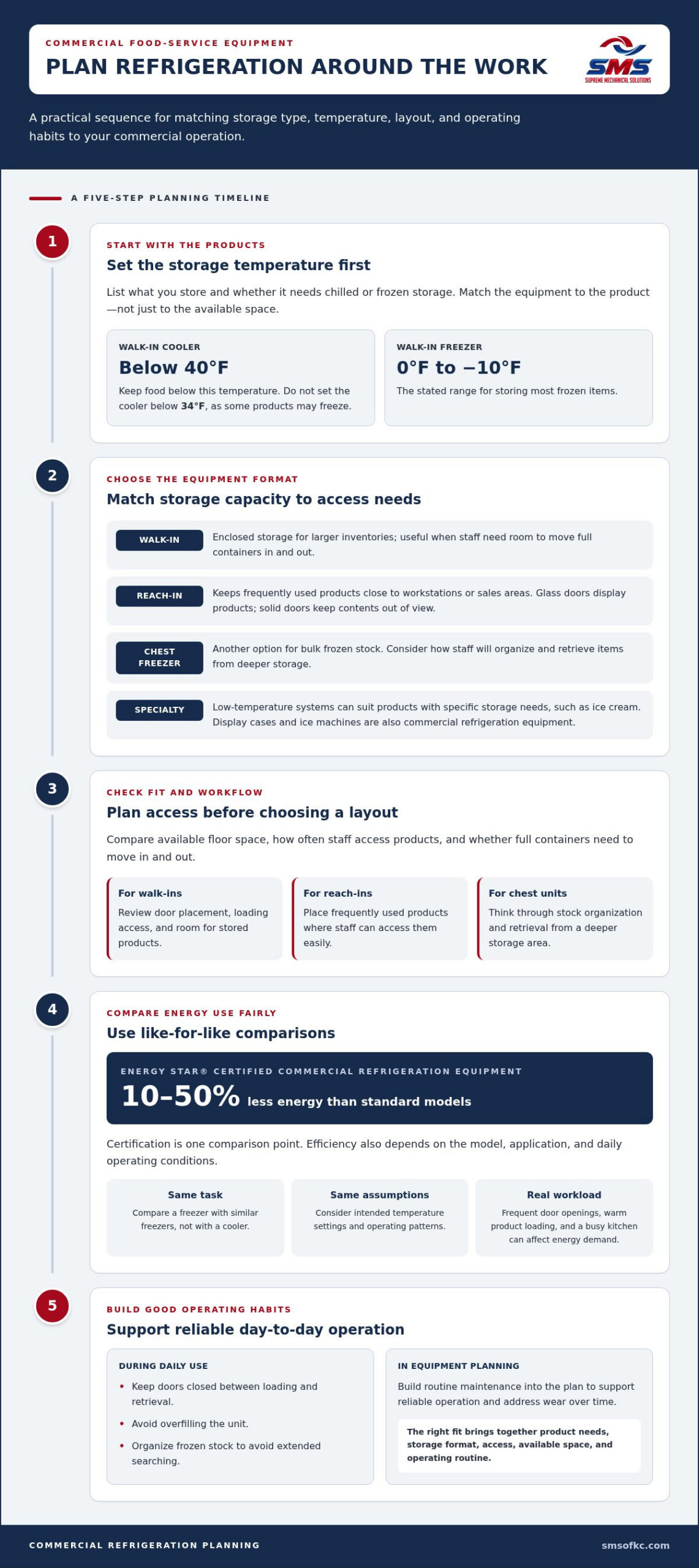
Walk-in coolers operate above 0°C and at or below 13°C. Food in a commercial walk-in cooler should stay below 40°F, but the cooler should not be set below 34°F because some products may freeze. Walk-in freezers are set between 0 and -10°F for most frozen items.
The intended use and product type determine whether cooler or freezer storage is appropriate. A walk-in freezer can hold consumable products for months or even years, while a cooler is designed for chilled storage. Select the system for the products it will store, then monitor its temperature consistently.
In the described walk-in refrigerator, return air entering the evaporator is about 35°F, and the evaporator coil is about 25°F. The described space maintains humidity at about 85 percent. These operating details show why the temperature displayed in a storage area doesn’t describe every part of the refrigeration cycle.
In the United States, refrigerant rules and phaseout schedules can affect equipment selection and service planning. Identify the refrigerant and system application when reviewing applicable federal requirements. Refrigerant choice is one part of the equipment decision, alongside storage temperature, capacity, and system design.
To choose a suitable system, list the products to be stored, their temperature needs, and how staff will access them. Compare walk-in, reach-in, and chest formats against the available space and workflow. This helps match equipment type and temperature settings to daily storage demands.
Do you offer energy-efficient refrigeration options?
Energy efficiency depends on the model, application, and daily operating conditions. Compare certified options in light of how your operation stores chilled and frozen products.
Efficiency and Operating Costs
ENERGY STAR® certified commercial refrigeration equipment can use 10-50% less energy than standard models. That difference can affect the electricity needed to keep products cold during normal operation. Use the certification as one comparison point, then consider how each model fits your storage needs and operating routine.
Operating costs also reflect the system’s workload. Frequent door openings, loading warm products, and running equipment in a busy kitchen can affect energy demand. Compare models designed for the same task, such as a reach-in cooler for daily ingredients or a freezer for frozen inventory. Like-for-like comparisons make efficiency differences more useful for planning.
Review available energy information and consider how the equipment will be used. A unit suited to the storage volume and access pattern may avoid unnecessary operating demand. Convenience matters, too: keeping frequently used products within easy reach can support workflow and reduce the time staff spend searching with doors open.
For a practical comparison, list the products being stored, how often staff will access them, and the available space. Compare suitable models using the same assumptions, including intended temperature settings and typical operating patterns. Compare a freezer with similar freezers, not with a cooler, to keep the assessment relevant.
Efficiency and Sustainability
Energy efficiency supports sustainability by reducing the electricity required for refrigeration. ENERGY STAR® certification offers a concrete point of comparison, while equipment selection determines how well a model fits its daily task. Review energy use alongside storage capacity, access needs, and the products being protected.
Operational choices matter after installation, too. Keep doors closed between loading and retrieval, and avoid overfilling the unit. These habits help the system do its intended job without unnecessary workload. For frozen inventory, organize stock so staff can retrieve items without extended searching.
Materials alone don’t determine energy performance. A stainless-steel finish may suit a commercial workspace, but it does not replace comparing efficiency information across suitable models. Consider the full application: storage type, daily access, equipment placement, and operating routine. These factors help distinguish practical efficiency from a feature that only looks useful on paper.
Efficiency is one part of responsible equipment planning, not the only consideration. Match the model to its intended use, then maintain settings and operating habits that support that use. Comparing certified models with similar capacity and applications gives operators a clearer basis for decisions and connects energy use to everyday refrigeration needs.
Maintenance, warranties, and customer support
Maintenance records, warranty terms, and repair support all affect day-to-day planning for restaurants and other commercial operations. A clear routine helps staff spot changes and share useful details when equipment needs attention.
Buying and Maintenance Guides
A buying decision should connect equipment selection to storage needs, available space, and daily preparation. A counter unit serving ingredients during a busy shift, for example, has different access demands from a walk-in storing backup stock. Consider how staff load, retrieve, and rotate products before comparing models.
A maintenance guide can turn those decisions into repeatable tasks. Record the equipment type, location, observed temperature, and any changes in operation. For merchandisers, note display conditions and door use. These details help operators describe a developing issue clearly and keep service records organized.
Equipment Lifespan and Maintenance
Commercial refrigeration equipment typically lasts 10-20 years with proper maintenance. Cleaning coils, replacing worn belts and gaskets, and changing filters when needed can support reliable operation. Ice machines also need cleaning, while water filters require attention as part of routine upkeep.
Use a written schedule tailored to each unit’s function. A restaurant can track walk-in performance separately from reach-in units used during preparation. Log maintenance dates, observed changes, and completed work. Records make recurring issues easier to identify and support informed repair decisions.
Common Problems and Repair Costs
Common warning signs include temperature changes, pooled water, unusual cycling, or an ice machine producing less ice. Note when the issue began, which unit is affected, and whether it changes during normal use. Those observations help focus the repair assessment.
Repair cost depends on the fault, component, equipment type, and access required; pricing is provided after a quote request. A temperature issue may involve different causes than a damaged door gasket or an ice machine problem, so diagnosis guides the work.
Warranty terms vary by equipment and purchase. Review the documents for covered parts, exclusions, maintenance conditions, and claim steps, and keep invoices and service records together. If a unit needs attention, share its model information, symptoms, and maintenance history with the service team.
Support is most useful when operators can explain the issue and its effect on storage or service. Tell the technician, for example, whether a walk-in is affecting stored ingredients or a merchandiser is disrupting product access. Clear notes help focus the assessment and coordinate the next repair step.
Retail refrigeration systems and display cases
Retail refrigeration protects products while supporting clear display and convenient access. Choose a system by matching the case layout, stored products, and store workflow.
Rack and Medium-Temperature Systems
Medium-temperature refrigeration systems typically maintain 35°F to 45°F. Retail cases use this range for products such as beverages and other chilled items. Confirm the intended application before comparing models, since frozen products require a different storage setup.
A rack refrigeration system connects multiple compressors in parallel, with the compressors located in a mechanical room. This arrangement serves several cases through a shared system. By contrast, distributed systems use multiple smaller units near the display cases they serve, according to the U.S. Environmental Protection Agency. Compare equipment location, case arrangement, and service access.
Comparing Refrigeration Equipment
Reach-in refrigerators keep products accessible to staff, while walk-in coolers provide room for larger stock and bulk handling. Display cases prioritize product visibility, including glass-door cases for chilled beverages. Choose based on storage volume, customer access, and how products move through the store.
Whether to buy or lease new or used equipment depends on ownership needs, expected use, condition, and service history. For used models, review maintenance records and operating condition; for new equipment, compare system fit and available features. Consider leasing if flexibility around ownership matters, and buying if long-term control is the priority.
Electrical, Ventilation, and Installation Requirements
Electrical needs depend on the specific refrigerator and the site’s available supply. Compare the unit’s electrical information with the location before installation. Ventilation requirements also vary by design, so allow the airflow clearance required around the selected model.
Placement affects installation and daily use. Check access routes, door swing, nearby heat sources, and clearance for cleaning or service. Position a glass-door display case to support customer viewing without obstructing aisles. Match the installation plan to the case design and store layout.
Self-contained units have refrigeration components integrated into the equipment, while split systems place components separately. This affects equipment placement and the installation layout. Review the floor plan and intended display before choosing a configuration.
Use a straightforward selection process: identify the products, decide whether customers or staff need direct access, and map the available space. Then compare case type and system arrangement. A beverage display beside a checkout counter, for example, has different access needs from a stock cooler in a back room.
Food-service refrigeration equipment
In a commercial kitchen, refrigeration supports receiving, preparation, service, and replenishment. Plan equipment around how ingredients move through those stages. Note where deliveries enter, where staff portion ingredients, and which stations need chilled items during service. This helps identify operational pinch points before deciding where equipment goes.
Restaurants often handle ingredients in different quantities and packaging. A receiving plan can separate bulk cases from items needed at individual prep stations. Staff can record product groups and their usual destinations, then organize stock so routine retrieval doesn’t interrupt cooking. This makes the refrigeration layout work with the kitchen’s actual sequence of tasks.
Inventory records also connect refrigeration performance to kitchen operations. If staff notice a change, log the affected unit, product group, and time of observation. Note whether the issue appears during delivery, preparation, or a busy service period. That context gives a service assessment more useful detail than a general report that something feels off.
Ice machines support beverage service and food preparation, so include them in the kitchen’s equipment plan. Consider their location in relation to staff movement and where ice is used. A machine away from a busy prep route can reduce interruptions, while clear access helps staff and service personnel reach the unit.
Before a new kitchen opens or its menu changes, review the refrigeration plan against the updated workflow. Identify products that need dedicated storage, stations that rely on quick access, and how receiving connects to preparation. A menu change that adds chilled ingredients, for example, may shift where staff need access during service.
- Receiving: Record the product groups and delivery path.
- Preparation: Identify stations that use chilled ingredients.
- Service: Note where staff retrieve items during active shifts.
- Equipment records: Log unit locations and observed operating changes.
For a service visit, share the unit’s location, the observed symptom, and the kitchen task affected. Explain whether the issue involves a walk-in, reach-in, or ice machine, and what staff were doing when they noticed it. These details help frame the assessment around the equipment and its role in the operation.
A useful food-service plan treats refrigeration as part of kitchen coordination, not a separate purchasing decision. Keep equipment information with the kitchen’s operating records, and update it when stations, menu needs, or receiving routines change. This gives managers a practical reference for future service and planning.
Supreme Mechanical Solutions: Air Conditioning
Supreme Mechanical Solutions provides commercial air conditioning support for businesses whose cooling needs affect staff, customers, or daily operations. Whether you’re planning a new system or need service for existing equipment, the right setup depends on the building and how its spaces are used.
Options include rooftop units, split systems, and mini split systems. Rooftop units suit some commercial layouts, while split and mini split systems offer other ways to distribute cooling. Share the equipment type and the issue you’re experiencing so the service discussion can focus on the system and its operating conditions.
For commercial air conditioning service in the Kansas City metro, call (913) 399-7711 or email sales@smsofkc.com to schedule service.
Plan Your Next Equipment Step
Let your operating needs guide the next decision, whether you’re planning a replacement, addressing a performance issue, or reviewing how cooling fits your facility. A clear record of equipment type, operating concerns, and service history can focus the conversation on practical priorities for your commercial refrigeration equipment.
Supreme Mechanical Solutions also provides commercial air conditioning services for rooftop units and split systems. Coordinating cooling needs across a commercial property connects equipment planning to how each space is used. Share the specific concern and facility context when arranging service.
A well-planned next step helps your team move forward with greater clarity and confidence.
Frequently Asked Questions
What’s the Difference Between Medium-Temp and Low-Temp Refrigeration Equipment?
Medium-temperature equipment serves products that need chilled storage, while low-temperature equipment serves products kept frozen. The difference is the intended operating range and the product’s storage needs. A kitchen, for example, may use separate units for chilled ingredients and frozen stock. Keep the application clear when reviewing equipment documentation so the selected system suits the products and their handling requirements.
How do I choose the right size commercial condenser or commercial evaporator?
Select system components for the design load and operating conditions. A refrigeration professional considers the enclosure, insulation, product load, door use, and temperatures the system must maintain. The condenser and evaporator must be selected as parts of one system, not as independent upgrades. For a replacement, provide the existing unit’s model information and describe any changes to the space or its use.
What’s the difference between R-404A and R-410A refrigerant systems?
R-404A is described for medium- and low-temperature commercial refrigeration applications. The relevant choice depends on the equipment’s design and intended use. Check the unit’s nameplate or service documentation to identify its specified refrigerant, then use that information when planning service or replacement. Don’t choose a refrigerant based on its name alone; the equipment’s design and application determine the appropriate system requirements.
Which commercial refrigerator brands are most reliable?
No brand is the best fit for every operation. Reliability depends on choosing a unit suited to its intended use, maintaining it, and addressing operating changes promptly. Compare models by application, configuration, service documentation, and fit with the facility’s workflow. In a restaurant, assess whether the unit can be accessed and maintained without disrupting nearby prep stations or routine kitchen tasks.
What size commercial refrigerator does a restaurant or grocery store need?
Choose capacity based on the operation’s inventory cycle and usable space. Review how stock changes between deliveries, which items need separate storage, and where staff need access during service. A restaurant prep schedule may create different access demands from a grocery display area. Sketch the intended placement and traffic path, then make sure staff can load, organize, and retrieve products without disrupting work areas.
What energy-efficiency ratings and operating costs should buyers compare?
Compare energy information for models designed for the same task, and review ENERGY STAR® certification where applicable. To understand operating costs, track the unit’s electricity use alongside operating hours and workload. Note changes after installation or adjustments, and compare periods with similar business activity. This provides a more useful view than comparing equipment with different capacities or roles.
What are the U.S. food safety temperature requirements for commercial refrigeration?
Food businesses must follow the requirements that apply to their location and operation. Build a monitoring routine that records readings, identifies the unit checked, and notes any corrective action. Train staff to report unusual readings promptly and keep records available for operational review. Since requirements vary by jurisdiction and food-handling context, apply the rules relevant to the facility rather than relying on a general equipment setting.
How often should refrigeration systems be maintained and serviced?
Set service frequency according to the equipment, workload, and operating environment. A written schedule can assign routine tasks, record completed work, and flag recurring issues. Staff should report changes in operation between planned visits rather than waiting for the next scheduled check. List each unit by location and function so maintenance planning accounts for equipment used in storage, preparation, and service.


