
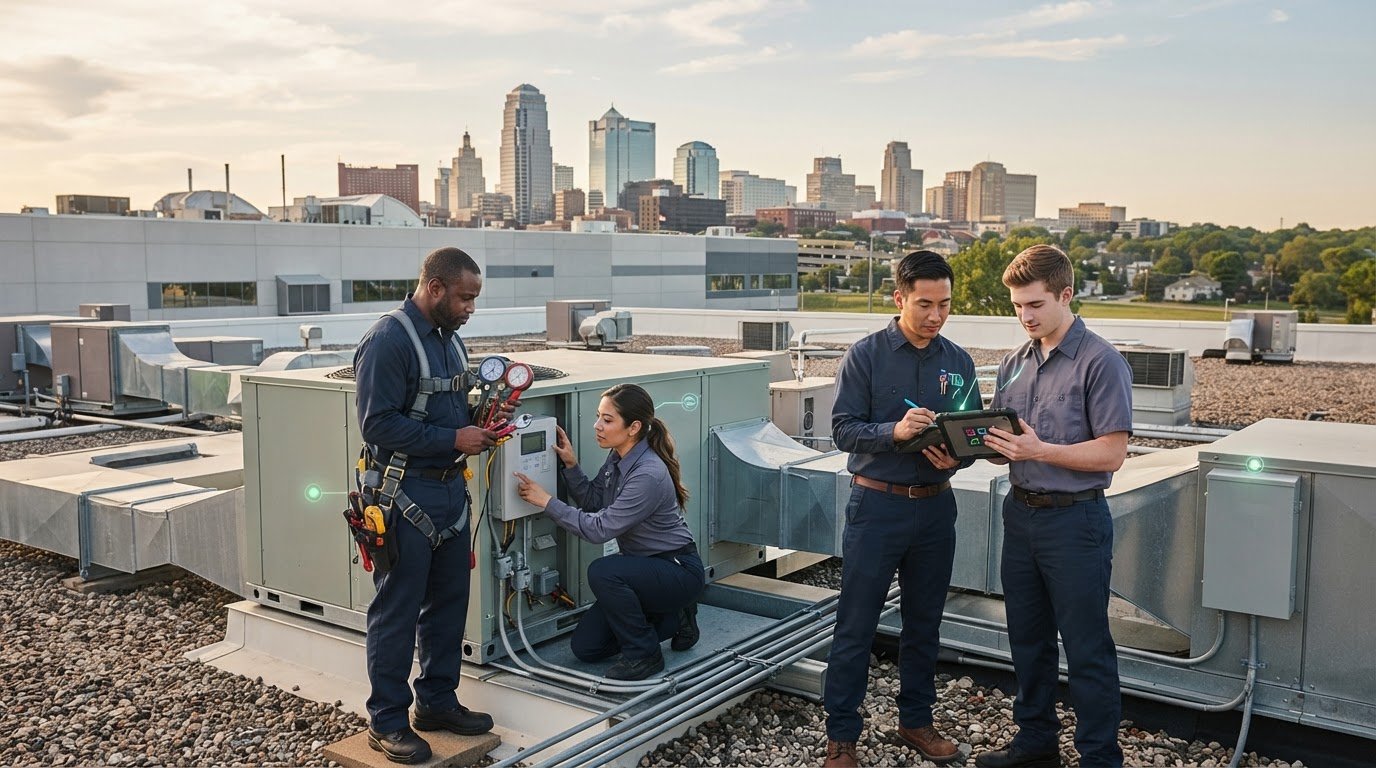
An HVAC outage can disrupt more than indoor comfort. Avoiding HVAC downtime in commercial buildings starts with a consistent maintenance process: use a CMMS to organize equipment tasks, keep accurate service records, and address performance changes before they become failures. Schedule professional service at least twice a year, before the cooling and heating seasons.
It’s easy to focus on the repair, but an outage can affect staff, customers, tenants, and daily operations. A clear plan helps teams spot developing issues, schedule maintenance around business needs, and respond effectively when equipment fails. This article covers five practical steps: using CMMS tools, maintaining useful records, planning for contingencies, monitoring system performance, and preparing for emergencies.
Key Takeaways
- Use a CMMS to organize maintenance tasks and keep equipment history accessible to the people responsible for building operations.
- Build contingency time into HVAC work schedules so inspections, commissioning, and unexpected delays don’t create avoidable disruption.
- Track warning signs and investigate the cause of recurring issues instead of repeatedly addressing symptoms.
- Set clear response roles, repair approval steps, and communication procedures before an HVAC emergency occurs.
- Assess how an outage could affect staff, tenants, customers, and business operations to prioritize preparation.
1. Auditing existing HVAC equipment and maintenance records
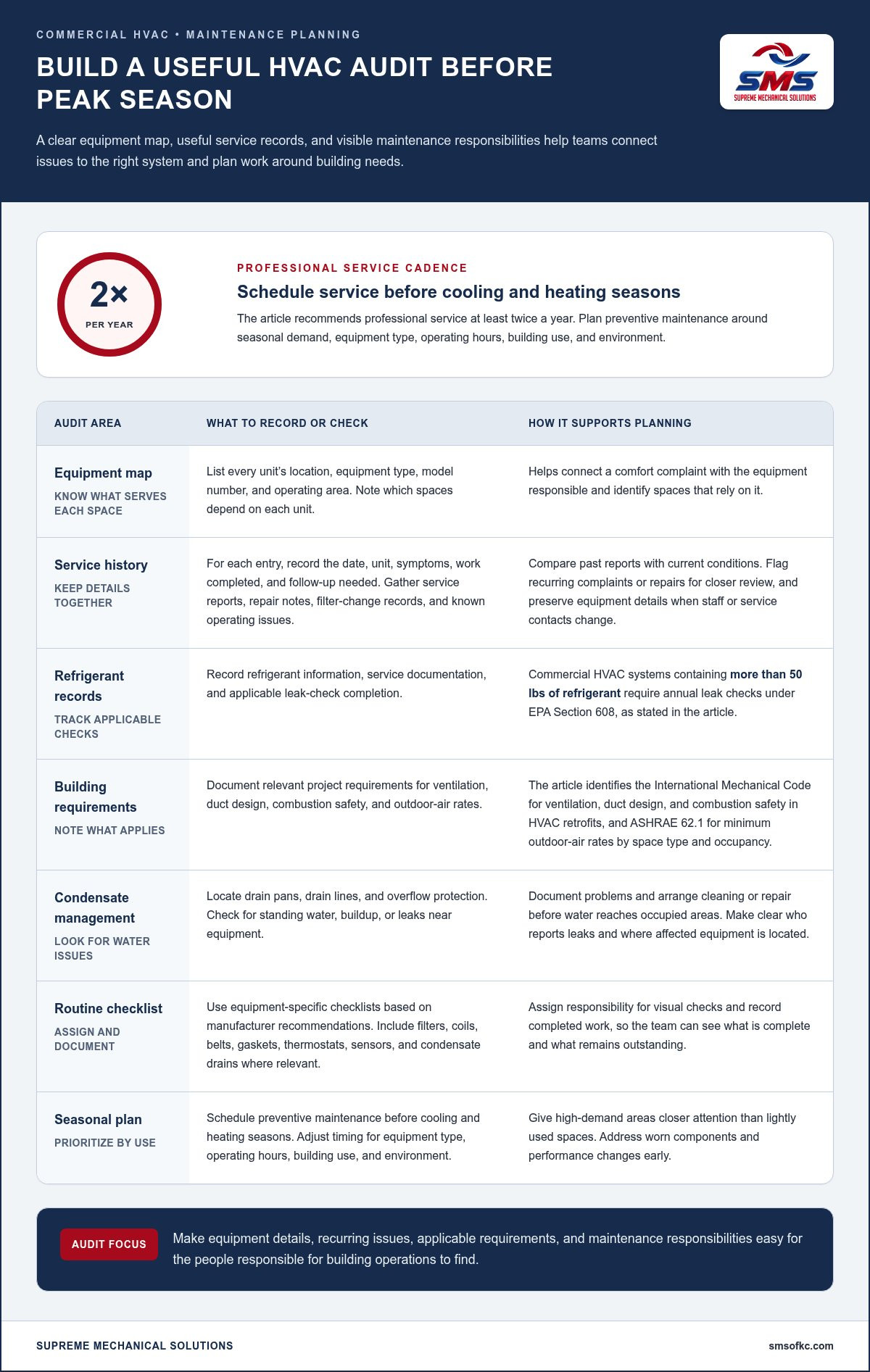
Start by inventorying every HVAC unit that serves the building. Record each unit’s location, equipment type, model number, and operating area. Note which spaces depend on it, such as a restaurant dining room or kitchen. This map helps technicians connect a comfort complaint with the equipment responsible. Avoiding HVAC downtime in commercial buildings starts with knowing which equipment serves each critical space.
Gather service reports, repair notes, filter-change records, and known operating issues. For each entry, record the date, unit, symptoms, work completed, and follow-up needed. Compare the history with current conditions. If the same unit has recurring cooling complaints or repairs, flag it for closer review. Organized records help managers identify patterns and preserve equipment details when staff or service contacts change.
According to the U.S. Environmental Protection Agency, commercial HVAC systems containing more than 50 lbs of refrigerant require annual leak checks under EPA Section 608. Add the applicable check to the equipment record, alongside refrigerant information and service documentation. This gives owners and technicians a clear place to track completed checks and review relevant records during future maintenance.
U.S. requirements can include the International Mechanical Code, which covers ventilation, duct design, and combustion safety for HVAC retrofits. ASHRAE 62.1 sets minimum outdoor-air rates for occupied commercial spaces by space type and occupancy. Maintenance and repair planning should preserve the ventilation and safety requirements that apply to the building and work. A facility team can note relevant project requirements in its maintenance records.
Include condensate management in the audit. Locate drain pans, drain lines, and overflow protection, then check for standing water, buildup, or leaks near equipment. A restricted drain can send water toward ceilings, finishes, or stored materials. Document any issues and arrange cleaning or repair before water reaches occupied areas. Make clear who reports leaks and where the affected equipment is located.
Build a checklist for each equipment type, following the manufacturer’s recommended practices. Include filters, coils, belts, gaskets, thermostats, sensors, and condensate drains where relevant. Assign responsibility for routine visual checks and record completed work. For example, a checklist can show whether filter maintenance is complete or still outstanding, rather than relying on memory. Avoiding HVAC downtime in commercial buildings also means making maintenance responsibilities visible to the team.
Use audit findings to plan preventive maintenance around the cooling and heating seasons. Schedule professional service before periods of peak use, then adjust timing for equipment type, operating hours, building use, and environment. High-demand areas may need closer attention than lightly used spaces. Addressing worn components and performance changes early can reduce the chance that a manageable issue becomes an emergency breakdown.
2. Allowing contingency time for delays, inspections, and commissioning
Commercial operators should inspect filters, belts, coils, heat exchangers, ductwork, refrigerant levels, and electrical connections. Check filters for blockage, belts for cracks or fraying, and coils for dirt that can limit heat transfer. Technicians should also assess airflow at supply outlets and confirm that each zone responds to its controls.
Schedule seasonal HVAC maintenance before cooling or heating demand peaks, and allow time for any follow-up work. A planned service visit may uncover a worn belt, restricted drain, or refrigerant concern that requires additional attention. If the schedule has no flexibility, even a small repair can delay commissioning or reopening.
Plan backward from the date the equipment must be ready. First, identify inspection and commissioning tasks. Next, schedule service and arrange any required parts or access. Finally, allow time for unexpected mechanical issues, retesting, or coordination with building operations. For a restaurant, this may mean planning work around kitchen access and service hours.
Coil cleaning and heat-exchanger inspections need enough space and time in the schedule. Dirty coils can restrict heat transfer, while a damaged or obstructed heat exchanger can affect heating performance. Ask the maintenance team to document the condition found, work completed, and recommended follow-up. These records help managers distinguish completed cleaning from unresolved mechanical concerns.
Check filters and belts before peak use, not after airflow or equipment operation changes. Replace clogged filters and worn belts as needed, then verify that the unit operates normally. Because a filter change can affect airflow, include a post-service check rather than treating replacement as the final task.
Inspect ductwork for visible damage, loose connections, or obstructions that may reduce airflow to occupied zones. Compare room conditions with thermostat readings and note areas with uneven temperatures. For zoned systems, test each area’s controls and confirm that dampers respond. These checks can reveal distribution problems that an inspection of the rooftop unit alone may miss.
Have technicians check refrigerant levels and investigate possible leaks before commissioning. Low refrigerant can impair cooling, and adding refrigerant without finding the cause may leave the underlying issue unresolved. Allow time for diagnosis, repair, and a final operating check. Electrical and control issues also need attention in the schedule, especially if they affect startup or communication between components.
For a planned service schedule, review commercial HVAC maintenance options and align the work with building access, operating demands, and commissioning needs.
3. Diagnosing underlying causes of equipment failures
A recurring HVAC fault is a clue, not a diagnosis. If a facility has uneven temperatures, trace the issue from the affected space to its controls, airflow path, and equipment. For example, weak cooling in one room may point to a distribution problem, while similar complaints across several zones may indicate a broader system or control issue. Record where and when the symptom occurs.
Watch for rising utility costs, frequent thermostat adjustments, unusual noise, water around equipment, or units that run continuously. Each sign can indicate declining performance or a developing fault. When staff report a change, note the time, affected area, and operating conditions. This detail helps technicians connect a symptom with a specific operating pattern instead of treating every service call as an isolated event.
Use a consistent diagnostic sequence. Confirm the reported temperature and thermostat setting, then check that controls communicate correctly and airflow reaches the affected area. Compare current conditions with prior service records. If a unit runs continuously, for example, investigate whether it is struggling to meet demand or responding to an inaccurate control signal.
Look for issues that can compound. Dirty filters restrict airflow, while malfunctioning thermostats or incorrect settings can cause inconsistent heating or cooling. Electrical problems involving wiring, fuses, or breakers can interrupt operation and create safety risks. Technicians should identify the fault and contributing conditions, then document the corrective work. Replacing a component without addressing the cause can leave the disruption unresolved.
Server rooms need precise cooling because temperature changes can put data and hardware at risk. Treat temperature complaints in these spaces as operational concerns, not routine comfort requests. Track room readings alongside equipment behavior. If cooling becomes uneven, check system performance and controls promptly, then tell the people responsible for facility operations which area is affected and what the status is.
Equipment age matters, but it shouldn’t determine the response on its own. Older HVAC systems may need more attention, yet a professional replacement assessment should consider both equipment condition and building needs. Review failure frequency, repair history, and current performance. A system that still meets the facility’s requirements may need targeted repairs, while repeated faults or declining performance can point to a broader reliability concern.
In Kansas City, prepare for summer heat and winter cold by assessing HVAC equipment before extreme weather arrives. High demand can expose weaknesses that were less noticeable in mild conditions. Include heat exchangers, burner assemblies, and ventilation pathways in seasonal evaluations. Consider operating hours and building use when setting service priorities, since a heavily used area may face greater disruption if equipment fails.
End each diagnosis with a clear record of the symptom, root cause, work completed, and any follow-up. Compare later issues with that record. This turns repeat calls into useful reliability information and helps managers decide whether a problem needs monitoring, repair, or a closer equipment assessment.
4. Performance monitoring and emergency preparedness
Track each unit’s operating issues, repair history, downtime, and effects on occupants. A maintenance log or building automation system can reveal repeated alarms, longer run times, or temperature changes before they disrupt operations. Compare readings with the unit’s usual pattern, assign someone to review exceptions, and escalate developing failures.
Prepare an emergency contact sheet with equipment locations, model numbers, prior repairs, and approved contacts. Specify who can authorize diagnostics, repairs, or after-hours work, and who updates employees, tenants, or customers. Clear authority helps avoid delays while managers locate decision-makers during an outage.
When comparing maintenance contracts and emergency response terms, review which inspections and repairs are covered, how urgent calls are handled, and what hours apply. Match the terms to building operating hours, critical equipment, and the consequences of downtime.
Preventive maintenance costs vary with equipment type, quantity, condition, operating demands, and the work included. The price depends on the specific requirements and is provided after a quote request, with those factors shaping the scope.
Plan backup strategies around the space and the system that could fail. Identify areas that can temporarily operate at reduced capacity, and determine whether suitable temporary heating or cooling equipment can support critical operations. Use temporary equipment safely and avoid overloading the building’s electrical capacity. Keep staff instructions and occupant communications ready for affected areas.
If a unit fails, facility managers should document the symptoms, identify affected spaces, notify authorized contacts, and arrange a diagnosis. Share equipment details and repair history, then update occupants on the status and any access restrictions. Avoid repeated resets or adjustments that could obscure the original fault; record what changed and when.
Make spare-parts decisions based on installed equipment and service history. Filters and belts are practical inventory candidates when the building team can identify the correct types and replacement needs. For specialized components, use model information and recurring repair records to guide stocking decisions, rather than accumulating parts that may not fit or be needed.
Emergency repairs outside regular scheduling windows can involve higher labor fees, while expedited shipping may help obtain replacement parts sooner. Include these possibilities in operational planning, without assuming every outage requires expedited delivery. A clear approval process lets the authorized contact weigh repair urgency, parts timing, and business impact.
After a failure, record the cause, affected components, repair action, and downtime. Review the log for patterns and update contacts or procedures when roles change. This turns each emergency into useful information for improving monitoring and response planning.
5. Business and tenant impacts of HVAC downtime
An HVAC outage affects business operations, not just indoor comfort. In a restaurant, an uncomfortable dining area may prompt guests to leave or avoid returning. In an office, staff may struggle to focus, meetings may move, and work may slow. The actual business impact depends on the affected spaces, outage duration, and operating conditions.
Tenants experience an outage differently from property managers. A tenant may face uncomfortable work areas, disrupted customer service, or employee complaints. Managers need to understand which spaces are affected and share clear updates about equipment condition. For example, a notice identifying a closed zone and an alternate work area gives occupants practical direction while repairs proceed.
Temperature-sensitive inventory and equipment add another layer of risk. A warehouse holding sensitive products may need environmental controls to protect stock from temperature and humidity changes. A server room depends on cooling to help protect hardware and data. Identify these critical spaces in advance, then prioritize decisions based on what the affected equipment supports.
A thermostat reading can help clarify a complaint, but it doesn’t show the whole impact. Compare readings with conditions in the occupied area and note whether the issue affects one room or several zones. A single overheated meeting room may call for a different operational response than a building-wide loss of cooling. Record affected areas to help managers explain conditions to tenants and assess disruption.
Track business effects alongside repair records. Note the affected department or tenant, interrupted activities, inventory concerns, and changes to customer access. If the same area repeatedly loses heating or cooling, compare each incident with previous reports. This record helps managers identify the systems with the greatest operational impact and direct planning toward business continuity.
Tailor communication to the audience and operational changes. Restaurant managers may need to adjust seating or communicate service limitations; property managers may need to update tenants about access or affected spaces. Give employees and customers timely, accurate information, and revise it as equipment conditions change. After service resumes, review what happened, which activities were disrupted, and whether building procedures need adjustment.
Commercial HVAC systems support comfort, tenant operations, and equipment protection. Treating these functions as business priorities helps managers look beyond the mechanical fault and make better-informed continuity decisions.
Supreme Mechanical Solutions: Air Conditioning
Supreme Mechanical Solutions helps commercial operators in the Kansas City area address air conditioning needs across their facilities. If recurring comfort issues or equipment failure disrupts operations, the team services commercial rooftop units, split systems, and mini-split systems. Share the affected area, equipment type, and observed symptoms to clarify the service need and support coordinated next steps.
For restaurant managers, franchise operators, and property teams, keeping equipment details and service history accessible can make a service call more straightforward. Supreme Mechanical Solutions provides commercial air conditioning support in Kansas City and nearby communities in Kansas and Missouri.
Keep the Next Service Decision Planned
Preventing unexpected equipment failures requires a proactive approach to facility management. By partnering with Supreme Mechanical Solutions, you can establish a reliable maintenance schedule that keeps your commercial systems running smoothly year-round. Do not wait for a costly breakdown to disrupt your business operations. Take control of your facility’s climate control today by scheduling your next service appointment in advance.
Frequently Asked Questions
How does a CMMS help prevent HVAC failures specifically?
A computerized maintenance management system (CMMS) connects equipment records with scheduled work and service history. Managers can assign tasks, see overdue maintenance, and track recurring faults by unit. For example, repeated work orders for one rooftop unit can prompt a focused assessment instead of another isolated repair. Store equipment locations, model numbers, reported symptoms, and completed work in the system so technicians can review relevant history before servicing a unit.
How often should commercial HVAC systems be professionally serviced?
Commercial HVAC systems should receive full professional service at least twice a year, before the cooling and heating seasons. Use these visits to prepare equipment for seasonal demand and identify issues before heavier use. The right schedule also depends on equipment type, operating hours, building use, and environment. A facility with long operating hours or heavy equipment demands may need more frequent maintenance than a lightly used space.
What HVAC maintenance records should a building owner keep?
Keep an accessible record for each unit with its location, model number, service dates, reported symptoms, repairs, and follow-up actions. Include filter changes and inspection results where applicable, so staff can distinguish completed tasks from outstanding concerns. For example, recording which unit serves a tenant suite helps a new manager connect a complaint with the right equipment. Store records where authorized building staff and technicians can retrieve them during a service call.
What are the most common causes of HVAC downtime in commercial buildings?
Restricted airflow, dirty filters or coils, worn components, control problems, and electrical faults can all contribute to equipment interruptions. Low refrigerant can also impair cooling and indicate a leak. Start by comparing the affected area, thermostat reading, and recent operating changes. If several spaces report the same issue, consider a shared system or control problem; a concern in one room may point to distribution or zone operation.
How does preventive HVAC maintenance reduce downtime, and what should a maintenance schedule include?
Preventive maintenance gives teams a planned opportunity to identify developing issues before they interrupt operations. Build the schedule around seasonal demand, equipment needs, and manufacturer-recommended practices. Assign someone to record completed work and unresolved findings. For example, if a service visit identifies a worn belt, track its replacement and confirm normal operation afterward. Clear task ownership helps keep recommendations from being lost during staff changes or busy operating periods.
What are the warning signs of impending HVAC equipment failure?
Changes from normal operation deserve attention, including unusual noise, water near equipment, uneven temperatures, rising utility use, frequent thermostat adjustments, or a unit that runs continuously. Record when the change occurs, where it is noticed, and which equipment may be involved. A short staff log can help technicians distinguish a recurring pattern from an isolated complaint. Report changes promptly, especially when they affect a critical room or business activity.
How do HVAC monitoring systems and predictive maintenance help prevent outages?
Building automation systems can support remote HVAC monitoring, scheduling, and alerts, while maintenance software can use equipment performance history to forecast potential problems. Managers can review alerts alongside service records and operating conditions, then prioritize an inspection when a trend changes. For facilities in Kansas City, Kansas City, Missouri, Overland Park, Olathe, Lenexa, Shawnee, Leawood, Lee’s Summit, Independence, Blue Springs, Liberty, Gladstone, Grandview, Belton, Raymore, and Louisburg, these records can help coordinate attention across sites.


