
What if a commercial furnace keeps producing heat but still leaves parts of your building uncomfortable? The issue may involve more than the unit itself. Building size, operating hours, and how the furnace works with the rest of the HVAC system all shape the right heating decision.
For Kansas City business owners and facility managers, dependable heat supports staff, customers, and daily operations. It can be difficult to tell whether a change in comfort or unusual equipment behavior calls for maintenance or a deeper technical assessment.
This practical checklist will help you understand the furnace’s role in your building’s HVAC system and assess the details that matter before planning service, replacement, or maintenance. You’ll review building use, operating patterns, and observable warning signs, then see how commercial heating and preventive maintenance can support more dependable operation. The goal is a clearer path to decisions that fit your building, not guesswork based on the equipment alone.
Key Takeaways
- Understand how a commercial furnace generates heat and how thermostat or zone controls call for it.
- Compare indoor furnace, rooftop, and integrated system configurations by location, ductwork, and operating needs.
- Record thermostat settings, affected areas, and when operating changes occur to make service discussions more useful.
- Use a practical sequence to document building needs, assess equipment, plan work, and keep maintenance records.
- See how commercial heating service and preventive maintenance can support dependable operation across Kansas City metro buildings.
Commercial Furnace Basics: What the System Does for Your Building
What role does a furnace play in commercial building comfort? It supplies heat, but its contribution depends on how it connects to the rest of the HVAC system and how the building is used. A commercial furnace generates heat and distributes warmed air through a building’s air-distribution system. That definition is a useful starting point for understanding its job without confusing the furnace with the entire heating and cooling setup.
Reliable heating helps staff work, supports customer-facing spaces, and keeps everyday business activity moving through colder weather. If the heating system isn’t doing its job, the effects may show up as uncomfortable work areas, disrupted routines, or pressure to adjust how a space is used. Supreme Mechanical Solutions provides commercial heating service in the Kansas City metro, including furnace and rooftop unit work.
How a commercial furnace fits into the HVAC system
The furnace is the heat source. Ductwork carries warmed air from the equipment to occupied areas, while controls signal when heating is needed and help direct system operation. Together, these components connect the equipment’s heating function to the rooms where employees and customers spend time. For a concise overview of furnace types and components, see furnace (central heating) basics.
A furnace handles heating; a complete HVAC configuration may also include cooling equipment, controls, and shared air-distribution components. For example, a restaurant may rely on a furnace for heat while separate air-conditioning equipment handles cooling. In a warehouse, heating equipment serves work and storage areas, while the building’s layout and air-distribution design affect where that heat goes. The exact arrangement depends on the building and equipment.
Why building use matters when assessing heating
Equipment decisions make more sense when they reflect the way a building operates. Occupancy, business hours, room use, and changes in activity all affect when different areas need heat. A dining area, kitchen, office, and storage space may follow different schedules and have different comfort requirements. These operating details help frame an assessment of the heating system and its controls.
Before discussing equipment needs, note how the space is used throughout a typical workday. Consider:
- Which areas are occupied during opening, operating, and closing periods.
- Whether particular rooms have different schedules or heating needs.
- Where staff or customers notice changes in comfort.
- How the existing thermostat or zone controls relate to those areas.
These observations give a practical foundation for reviewing the furnace as part of the building’s overall HVAC setup. Supreme Mechanical Solutions also handles commercial air conditioning, allowing heating decisions to be considered alongside the building’s broader HVAC needs. Explore commercial heating services for more on heating equipment and support.
How a Commercial Furnace Generates and Circulates Heat
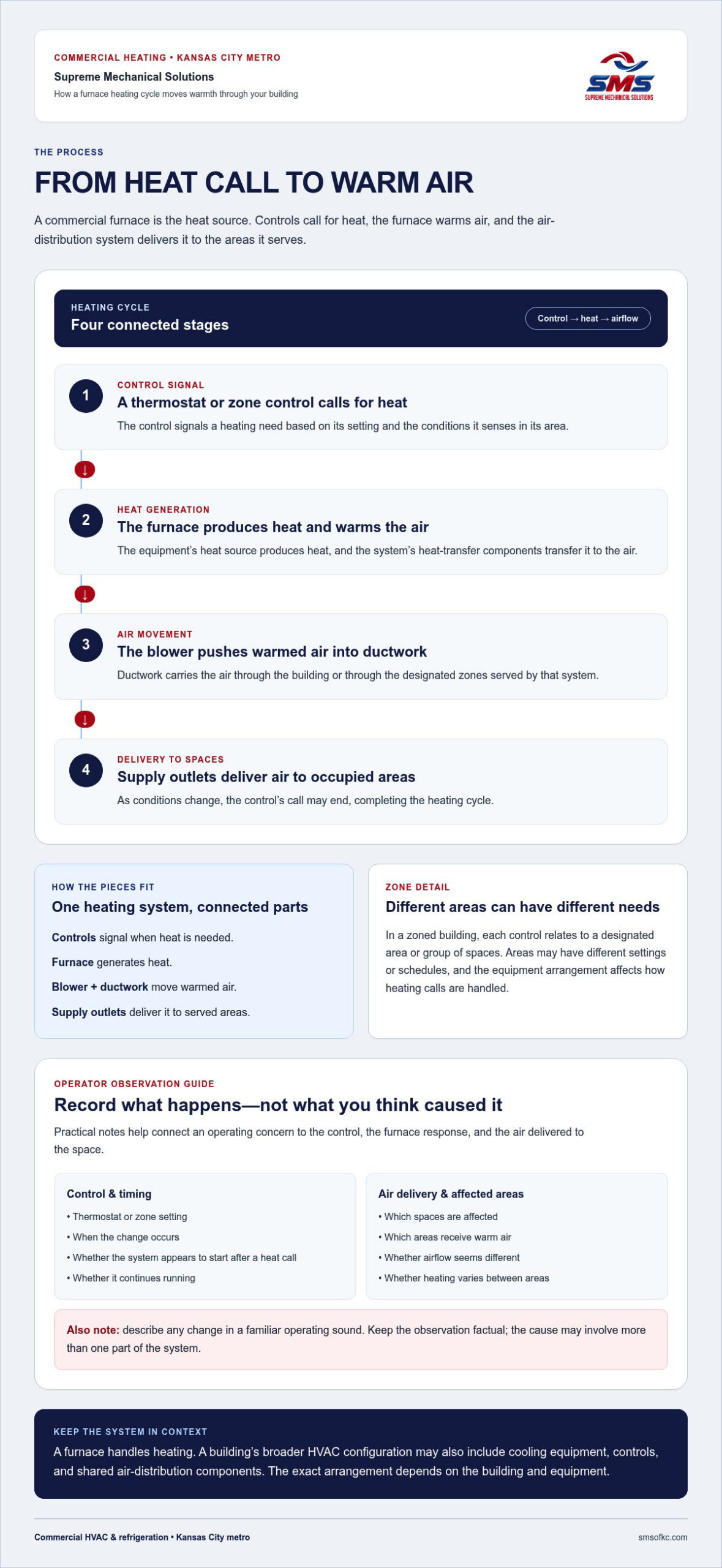
A heating cycle connects a control signal to the movement of warm air through the building. The thermostat or zone control monitors conditions in its area and calls for heat when the space needs it based on the control setting. The furnace then generates heat, transfers it to the air, and uses a blower to move that air through ductwork. The cycle responds to the control setting and building conditions, rather than running as a separate process from the spaces it serves.
A furnace heating cycle begins with a control’s call for heat, transfers heat to air, and circulates that air through ductwork to occupied areas.
From thermostat call to warm air in occupied areas
In a building with zones, each control relates to a designated area or group of spaces. A call from one zone signals a heating need there, while other areas may have different settings or schedules. The specific equipment arrangement affects how these calls are handled, so the sequence below describes the general process, not a diagnosis or a substitute for equipment-specific instructions.
- A control calls for heat. A thermostat or zone control signals that its area needs heating based on its setting and sensed conditions.
- The furnace begins its heating cycle. The equipment’s heat source produces heat, and the system’s heat-transfer components warm the air.
- The blower moves air. A blower pushes warmed air into the ductwork serving the building or designated zones.
- Air reaches occupied areas. Supply outlets deliver warmed air to the spaces served by that duct system. As conditions change, the control’s call may end, completing the cycle.
For operators, this sequence helps separate the control’s request from the furnace’s response and the final air delivery. A space that doesn’t receive the expected airflow could involve more than one part of that chain. A technician can assess the equipment; staff observations help describe what happened and where.
What operators can observe during a heating cycle
Keep observations practical. Note whether the system appears to start after a heat call, whether it continues running, and which areas receive warm air. Record the thermostat or zone setting, the affected spaces, and when the change occurs. If a familiar operating sound changes, airflow seems different, or heating varies between areas, describe what you notice without deciding what caused it.
These notes create a clearer starting point for a service discussion and help connect an operating concern to a time, location, and control setting. Don’t open equipment panels or attempt to diagnose internal components. Leave technical assessment to a service professional. For commercial heating support in the Kansas City metro, Supreme Mechanical Solutions handles furnace service and related commercial heating systems.
Commercial Furnace Checklist: Match the Configuration to the Building
A configuration should fit the building’s layout, occupied areas, existing equipment, and operating schedule. A commercial furnace configuration must match the building it serves, not just an equipment category. Before comparing options, map which spaces need heat, how air reaches them, and what access is available for service.
Use this comparison as a starting point. Actual system design depends on the building and its existing HVAC arrangement.
| Configuration | Typical location | Ductwork and system relationship | Building considerations |
|---|---|---|---|
| Standalone indoor furnace | Inside a mechanical or service area | Generally connects to ductwork that distributes heated air | Review available equipment space, duct routes, access, and which occupied zones it serves. |
| Packaged rooftop arrangement | On the building’s roof | Combines equipment functions in a rooftop arrangement and connects to the building’s air distribution | Consider the existing rooftop equipment, building layout, service access, and areas served. |
| Larger system integration | Across equipment and spaces in the building | Heating operates as part of a broader HVAC system with connected controls and air distribution | Assess how zones, existing equipment, and operating schedules work together. |
Questions to assess before selecting a furnace configuration
Start with the building’s use, then document the physical conditions that shape the project. This gives a facility manager and service team a clearer basis for comparing configurations and planning work.
- Spaces served: List occupied areas and note how each is used during the workday.
- Existing ductwork: Record which areas receive air through the current duct system and where recurring comfort issues occur.
- Equipment location and access: Note where existing equipment sits and what access is available for service and planned work.
- Operational constraints: Document schedules, areas with different operating hours, and any limits that affect when work can be planned.
Fuel sources such as gas or electricity are broad examples in commercial heating. The applicable options depend on the specific equipment and project. Treat fuel as one consideration alongside building layout, system connections, and operational requirements.
Furnace, rooftop unit, or another commercial heating system?
A furnace provides heat, while a rooftop unit may combine heating with other HVAC functions. A unit heater serves as another type of commercial heating equipment; an infrared heater is a different heating category. These systems aren’t interchangeable based on category alone. Compare what each arrangement needs to serve, how it relates to current equipment, and whether it suits the site’s operating pattern.
Supreme Mechanical Solutions works with commercial furnaces, rooftop units, unit heaters, and commercial infrared heating in the Kansas City metro. Matching equipment to the building’s zones, access conditions, and existing system is a practical first step toward planning dependable commercial heating.
Kansas City Commercial Furnace Checklist: What to Observe During Operation
Across the Kansas City metro, commercial heating systems move through seasonal changes in use. A restaurant, warehouse, or other facility may notice operating differences as heating becomes part of the daily schedule. Staff don’t need to diagnose equipment. Their role is to notice what changes, record where and when it happens, and share clear observations with a service professional.
Supreme Mechanical Solutions serves commercial businesses in Kansas City, Kansas City MO, Kansas City KS, Overland Park, Olathe, Lenexa, Shawnee, Leawood, Lee’s Summit, Independence, Blue Springs, Liberty, Gladstone, Grandview, Belton, Raymore, and Louisburg. Use this checklist during normal business operations. Compare conditions across the spaces your system serves, and focus on observable details rather than assumptions about the cause.
Routine observations for restaurant, warehouse, and facility teams
Check whether occupied work areas receive consistent heat during scheduled business hours. A complaint in one area is worth recording even if other spaces seem unchanged. Note the location, the time, and whether the concern is present throughout the shift or appears under particular operating conditions.
- Thermostat or zone setting: Record the displayed setting and which control serves the affected area.
- Location: Identify the room, work zone, or other area where staff notice a change.
- Airflow: Note whether air movement at the usual outlets seems weaker or different than expected.
- Sound: Describe unusual sounds and when they occur, without trying to identify the source.
- Timing: Record when the concern began, whether it recurs, and whether it happens during a particular part of the operating schedule.
A simple shared log helps staff describe patterns consistently. At the start of seasonal heating operations, record a baseline of normal observations, then add entries when something changes. Include reports of recurring temperature differences between areas. This makes it easier to distinguish an isolated comment from a repeated concern and gives a technician useful context.
When an observation calls for professional attention
Repeated heating interruptions, unusual sounds, or a persistent change in airflow are reasons to arrange a professional assessment. These observations don’t confirm a specific component failure. They help identify what the system is doing and where further evaluation may be useful. Keep the log available for the service visit, and include any recent changes to operating schedules or affected areas.
Keep observations separate from repairs. Don’t open equipment, reach inside the unit, or attempt technical adjustments. Share the information with a service professional instead. Supreme Mechanical Solutions provides commercial heating service and supports HVAC repair and preventive maintenance for Kansas City metro businesses. Its commercial repairs and preventive maintenance can help address operating concerns and support planned upkeep.
Plan Commercial Furnace Service and Maintenance With a Local HVAC Partner
A useful service plan starts with clear information about the equipment and the building. Gather the equipment location, areas served, operating schedule, control settings, and any recurring concerns documented by staff. Include the system’s service history if available. These details help focus the assessment on how the furnace operates in the actual space, rather than treating the unit as separate from the rest of the HVAC system.
For ongoing upkeep, plan maintenance around the building’s use and the equipment’s condition. Supreme Mechanical Solutions provides commercial heating service and preventive maintenance, including quarterly maintenance plans. Its broader commercial HVAC work includes rooftop units, split systems, mini splits, VRF systems, and heat pumps. When a business also needs refrigeration or kitchen equipment support, the company handles commercial refrigeration, ice machines, and commercial cooking and food equipment repair as well.
One coordinated service relationship can make it easier for restaurant operators, property managers, and facility teams to organize heating, cooling, and refrigeration needs. Share any comfort patterns, scheduling constraints, or areas that cannot be taken out of service during normal operations so the work can be planned with the site’s priorities in mind.
Put Your Heating Plan Into Motion
Turn your observations into a practical next step: identify the affected areas, note the time and operating conditions, and gather the system’s service history. That information gives the service team a useful starting point for assessing the furnace and its relationship to the building’s controls and air distribution. For Kansas City area businesses, Supreme Mechanical Solutions provides commercial heating, HVAC repair, and preventive maintenance to help address equipment concerns and plan ongoing care.
Call (913) 399-7711 or email sales@smsofkc.com to schedule service.
Frequently Asked Questions
How often should a commercial furnace be inspected?
Inspection timing depends on the equipment, building use, and operating history. Work with a commercial HVAC professional to set a schedule that fits the site, and keep a record of service visits and recurring concerns. A restaurant with long operating hours may have different planning needs from a warehouse with a different schedule. Don’t wait for a breakdown to start tracking how the system operates.
Why is my commercial furnace running but not heating the building evenly?
Uneven heat can reflect an issue with air distribution, controls, or another part of the system, but symptoms alone don’t identify the cause. For example, if one office area stays cooler while nearby spaces feel typical, note the rooms and whether the pattern recurs under similar operating conditions. Share those observations with a technician, who can assess the system rather than relying on guesswork.
Can a commercial furnace serve multiple areas of a building?
Yes, a furnace can serve multiple spaces through a connected air-distribution system. How well the arrangement suits a particular building depends on its layout, ductwork, and controls. A facility team can map which areas the equipment serves and note whether different spaces have separate schedules or recurring concerns. That information helps a technician assess whether the configuration aligns with how the building operates.
What does it mean when a commercial furnace cycles on and off frequently?
Frequent starts and stops are an operating symptom, not a diagnosis. The cause could relate to controls, system operation, or building conditions, so don’t assume a specific component has failed. Record when the pattern occurs, which spaces are affected, and whether staff notice a connection to the schedule or thermostat setting. Arrange a professional assessment if the behavior repeats or disrupts normal operations.
Is a rooftop furnace different from an indoor commercial furnace?
The main difference is the equipment arrangement and location. A rooftop unit may combine heating with other HVAC functions, while an indoor furnace is located within the building and works with its connected system. Site access matters too: roof access and indoor mechanical-space access create different planning considerations for service. Review the existing equipment layout and how the system connects to the areas it serves.
What should staff do if a commercial furnace stops heating during business hours?
Staff should report the interruption to the person responsible for facilities, note the time and affected areas, and record any visible control message without opening equipment. Follow the business’s operating procedures for communicating the issue and managing affected work areas. Avoid technical adjustments or attempts to repair the equipment. Share the notes with a commercial HVAC technician so the concern can be assessed using clear site information.
Can one contractor support a commercial furnace and other building HVAC equipment?
Yes. Supreme Mechanical Solutions supports commercial heating, air conditioning, and refrigeration equipment for businesses across the Kansas City area, including Kansas City, Overland Park, Olathe, Lenexa, Shawnee, and Lee’s Summit. Its work includes furnaces, rooftop units, heat pumps, unit heaters, and infrared heaters, along with commercial refrigeration. Coordinating related equipment needs through one contractor can help facility teams organize service across their building systems.


