
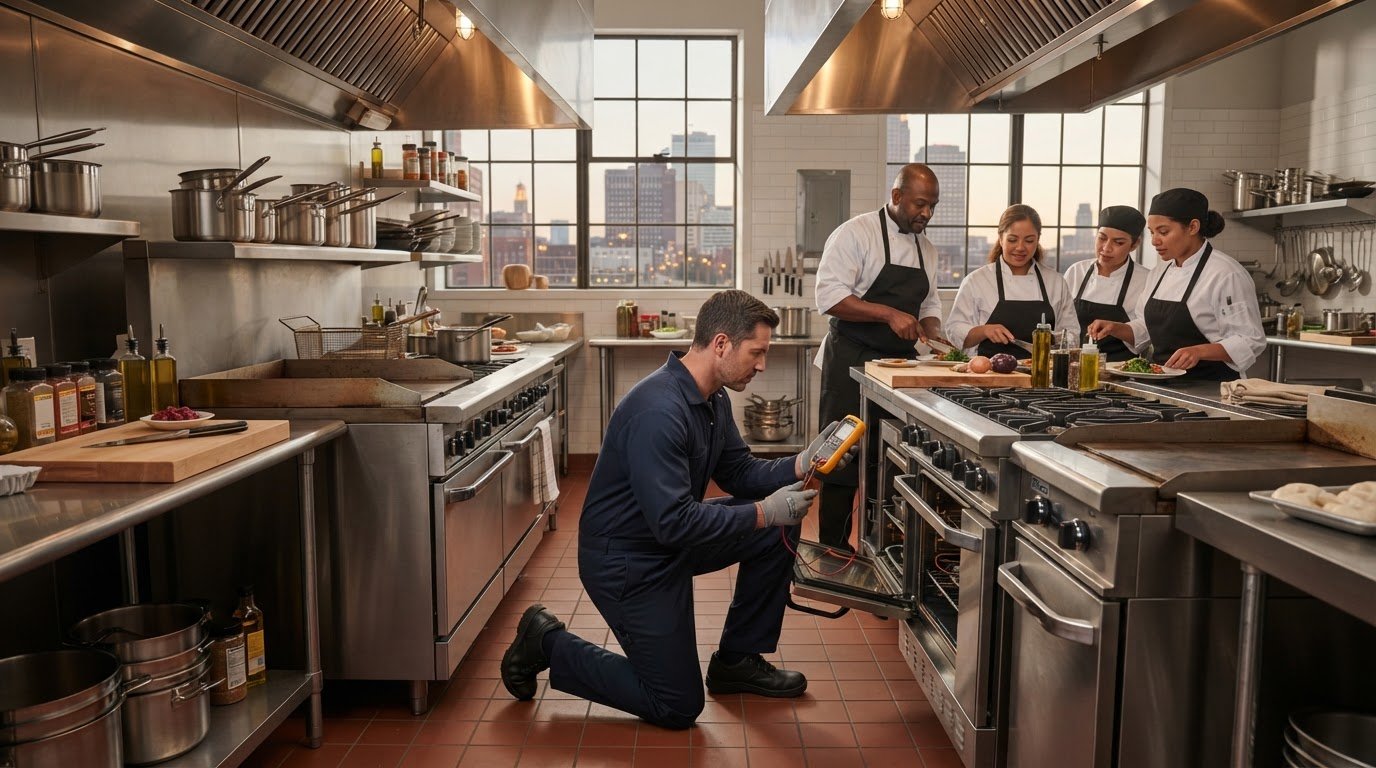
A cooking equipment failure can disrupt prep, slow service, and leave managers deciding what to address first. Supreme Mechanical Solutions provides commercial cooking equipment repair Kansas City restaurants and other commercial kitchens rely on to keep operations moving. When requesting service, share the equipment type, its location, what staff have noticed, and how the issue affects kitchen operations.
It’s understandable to focus on getting the kitchen back on schedule. A clear description of what the equipment is doing, when the issue began, and which tasks it affects gives the service team useful context. This article explains common signs of trouble and the details to gather before arranging repair.
You’ll also learn how cooking equipment service fits alongside commercial HVAC, refrigeration, exhaust fan, and makeup air support. These systems serve different functions, but they all contribute to a working commercial kitchen. Identifying which equipment is affected helps managers coordinate the right service and keep next steps clear.
Key Takeaways
- Notice changes in equipment performance, and record what staff observe and how it affects prep or service.
- For commercial cooking equipment repair Kansas City, share the equipment type, symptoms, location, and operational impact when requesting service.
- Use a simple sequence to prepare: observe the issue, document details, communicate clearly, and coordinate access.
- Distinguish an active equipment problem from planned preventive maintenance to organize kitchen service needs.
- Cooking equipment repair can fit alongside commercial HVAC and refrigeration support for local businesses.
When Commercial Cooking Equipment Problems Disrupt Kansas City Kitchens
The lunch rush is building, but a piece of cooking equipment isn’t heating as expected. Staff pause to adjust the workflow, orders take longer, and the manager must decide what information to gather before arranging service. Clear observations help make the repair request more focused. Describe what changed and how it affects the kitchen, without guessing at the cause.
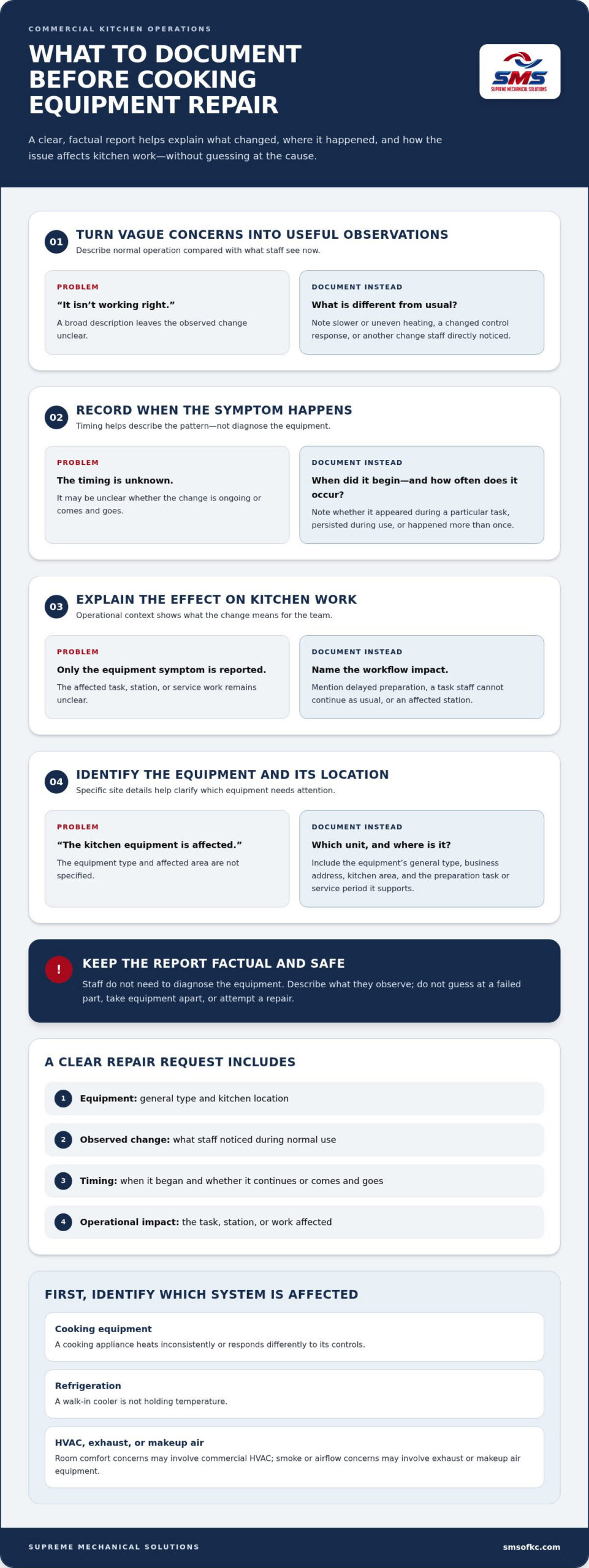
First, identify which system is involved. A cooking appliance that heats inconsistently or responds differently to its controls is a different concern from a walk-in cooler that isn’t holding temperature. Room comfort issues may point to commercial HVAC, while smoke or airflow concerns may involve exhaust or makeup air equipment. A general overview of a Commercial Kitchen can help frame how equipment and work areas function together, but the most useful service detail is the specific equipment showing a change.
Which operating changes should a restaurant manager notice?
Staff don’t need to diagnose the equipment. Their job is to describe its normal operation compared with what they’re seeing now. Note when the change began, whether it happens repeatedly or continues without interruption, and which tasks it affects. Don’t take equipment apart or attempt a repair. Focus on safe, clear observations.
- Heating: Record whether heating seems slower, uneven, or different from usual.
- Controls: Note if controls respond differently, display an unfamiliar indicator, or don’t appear to change operation.
- Consistency: Describe whether the issue occurs intermittently or persists during use.
- Workflow: Identify affected tasks, such as a delayed preparation step or a limit on what staff can cook.
- Timing: Note when the symptom first appeared and whether staff have observed it more than once.
Why location and kitchen context matter in Kansas City
Commercial kitchens across the Kansas and Missouri sides of the metro include restaurants, franchise locations, and other food-service businesses. Clear location details help distinguish one site from another, especially when a manager coordinates service for multiple properties. Include the business address and the kitchen area where the affected equipment is installed.
Be specific about the equipment’s place in the workflow. For example, say whether it serves a particular preparation area or is used during a key service period. That context explains the operational impact without turning the report into a technical diagnosis. For commercial cooking equipment repair Kansas City kitchens need, useful details include equipment type, observed change, timing, affected area, and any disrupted work.
Commercial Cooking Equipment Repair Examples for Kansas City Restaurants
A cooking equipment symptom can affect more than the station where it appears. If a unit is slow to reach its usual operating condition, staff may need to adjust preparation timing, shift tasks, or coordinate around reduced working capacity. These examples are illustrative, not diagnoses. An on-site assessment determines the appropriate repair.
Commercial cooking and food equipment repair addresses problems that interfere with the normal operation of equipment used to prepare food in a commercial kitchen. The goal of an initial service discussion is to describe the change and its impact, not to identify a failed part. For commercial cooking equipment repair Kansas City restaurants can start with a clear account of what staff observe during normal use.
When equipment stops heating or performs inconsistently
Imagine a unit that normally reaches its usual operating condition but now seems slower, or behaves differently from one use to the next. Staff may have to wait before continuing a task, rearrange preparation, or coordinate with another station. Those details describe the operational effect without assuming what caused it.
Record the symptom and timing for the service discussion. Note whether it appeared during a particular task, continued throughout use, or came and went. Include any effect on preparation or service pace. Don’t attempt to adjust or open equipment to investigate.
When controls or normal operation change
Visible changes can include controls responding differently than staff expect, an unfamiliar display, or an operating sequence that no longer seems typical. These observations apply across commercial cooking equipment, even when employees aren’t familiar with its internal components. Report what changed and when, rather than suggesting a technical cause.
That distinction matters. A description such as “the control stopped responding as usual during the shift” gives the service team an observation to assess. Naming a suspected component without evidence can distract from the actual symptom. Keep the report factual, and mention whether the behavior persisted or occurred intermittently.
For a concise handoff, managers can gather a few practical details:
- Equipment and location: Identify the equipment by its general type and the kitchen area where it’s used.
- Observed change: Describe what staff saw or experienced, such as different heating behavior or a changed control response.
- Timing: Note when the symptom began and whether it continues or comes and goes.
- Workflow effect: Explain which task or station was affected, without estimating a repair or equipment condition.
These examples help restaurant teams communicate clearly across shifts and locations. Supreme Mechanical Solutions provides commercial cooking and food equipment repair for businesses in the Kansas City metro. When a kitchen issue needs service, connect with Supreme Mechanical Solutions and share the observations your team has gathered.
How to Assess a Cooking Equipment Issue Before Calling for Repair
A clear service request starts with a simple handoff, not a technical diagnosis. Guide staff through four steps: observe the change, document what happened, communicate the facts, and coordinate access. This keeps the report useful and helps separate an equipment concern from other issues affecting the kitchen.
- Observe. Ask staff to describe the operating change they noticed during normal use. Keep it factual: what seemed different, which equipment was involved, and where it is located. Staff should report what they see and experience rather than opening equipment, adjusting components, or trying to identify a fault.
- Document. Record when the issue began and whether it has continued, occurred intermittently, or changed over time. Add the kitchen area and the task affected. A brief shift note can help a manager distinguish a single observation from a recurring disruption without relying on memory later.
- Communicate. Share the equipment type, location, observed behavior, timing, and effect on operations. Keep the description direct. “The equipment operated differently during preparation and delayed that station’s work” is more useful than a guess about what might be wrong.
- Coordinate. Identify a staff contact who can explain the situation and arrange access to the affected area. If the business has multiple locations, specify the site and kitchen. Share any operating constraints that affect coordination, without assuming what repair will be needed.
The most useful service request identifies the equipment and location, describes the observed change and when it began, and explains how kitchen operations are affected.
What information should managers collect?
Keep the details brief but specific. Record where the equipment is, what staff observed, when the change started, and whether it has progressed or stayed consistent. Describe the practical effect, such as a delay to a preparation task or a change in how staff coordinate work. Leave technical conclusions to the assessment.
A manager can use a simple handoff note or message so the same facts reach the person arranging service. Identify the kitchen area, state the observed operating change, note its timing, and explain which workflow is affected. If the issue was only observed once, say so. If staff have seen it more than once, record that pattern without inferring a cause.
How can operators distinguish related service needs?
Match the report to the system showing a change. A cooking equipment concern is separate from a walk-in or reach-in cooler or freezer issue. An exhaust fan or makeup air concern belongs to ventilation observations. If the issue involves building heating or cooling, describe it as an HVAC concern. Commercial HVAC repair addresses that separate system category.
Clear distinctions help managers coordinate commercial cooking equipment repair Kansas City kitchens need without blending unrelated symptoms into one report. If several systems appear affected, note each observation separately and identify its location. Supreme Mechanical Solutions handles commercial kitchen equipment alongside refrigeration, HVAC, exhaust fans, and makeup air service across the Kansas City metro.
Repair, Maintenance, and Kitchen Operations: Making a Practical Plan
An active equipment problem and planned preventive maintenance call for different responses. Repair addresses a current change in operation. Maintenance is scheduled to care for relevant equipment and systems as part of an ongoing operating plan. Neither approach guarantees uninterrupted service, so treat maintenance as a planning tool, not a promise that problems won’t occur.
| Active equipment problem | Planned preventive maintenance |
|---|---|
| A change is affecting operation or kitchen workflow. Share the observed issue and its impact so the equipment can be assessed. | Service is planned around relevant equipment and maintenance needs. Coordinate timing and scope with kitchen operations. |
| A technician assesses the equipment and determines appropriate work. | Applicable tasks may include cleaning coils or checking belts, filters, or gaskets, depending on the system. |
| The focus is the current concern and its effect on the business. | The focus is planned care. Ice machine cleaning and water filter service relate to ice machine needs. |
When should an operator request repair service?
Arrange service when an operating change continues, returns, or disrupts kitchen work. A concern that affects staff coordination or a normal task deserves a clear report, even if the cause isn’t apparent. Managers shouldn’t attempt repairs or assign a technical diagnosis. If equipment appears unsafe to use, keep staff clear and follow the business’s established safety procedures.
The technician assesses the equipment and determines the appropriate work. A manager can make that assessment more focused by sharing the equipment’s location, the observed change, when it began, and its operational impact. For commercial cooking equipment repair Kansas City businesses can use, those details give the service discussion practical context without promising a repair timeline or outcome.
Where does preventive maintenance fit?
Preventive maintenance contracts and quarterly maintenance plans help commercial operators organize planned service. The work should relate to the equipment or system being maintained. For example, coil cleaning, belts, and filters apply where relevant to HVAC equipment; gaskets may be relevant to refrigeration equipment. Ice machine cleaning and water filters belong in the context of ice machine service.
Managers can use a plan to coordinate maintenance with operating needs, keep track of equipment areas, and separate planned tasks from active repair concerns. The plan supports organization, but it can’t guarantee uninterrupted operation or eliminate the need to assess a new problem. If a system changes between planned visits, treat that as a separate service issue and report the current symptoms.
Supreme Mechanical Solutions provides commercial cooking and food equipment repair alongside preventive maintenance and related commercial HVAC and refrigeration services. Call (913) 399-7711 or email sales@smsofkc.com to schedule service.
Commercial Cooking Equipment Repair and Related Kansas City Services
Supreme Mechanical Solutions provides commercial cooking and food equipment repair for restaurants and other local businesses. A kitchen issue may involve a cooking appliance, refrigeration equipment, or a building system. Identifying the affected system helps managers coordinate service clearly. One company can support related needs through commercial HVAC, refrigeration, exhaust fan, and makeup air services.
Service covers the Kansas City metro in Kansas and Missouri, including Kansas City, Kansas City, KS, Kansas City, MO, Overland Park, Olathe, Lenexa, Shawnee, Leawood, Lee’s Summit, Independence, Blue Springs, Liberty, Gladstone, Grandview, Belton, Raymore, and Louisburg. Restaurant owners, franchise operators, and facility managers can share the location, affected equipment, and observed operating change when arranging service. For commercial cooking equipment repair Kansas City businesses can rely on, clear communication helps connect the request to the right service category.
How cooking equipment fits with broader commercial support
Cooking equipment repair addresses concerns with equipment used in food preparation. Commercial refrigeration service is separate and applies to walk-in or reach-in coolers and freezers, glycol chillers, and ice machines. If both kitchen equipment and refrigeration are affected, describe each issue independently so the service request reflects what staff have observed.
Ventilation symptoms also deserve their own description. An exhaust fan or makeup air concern may occur alongside a kitchen equipment issue, but it relates to airflow rather than the cooking appliance itself. Likewise, a comfort or temperature concern in the building may involve commercial HVAC. If the building’s rooftop unit is involved, identify it as the affected system to distinguish that concern from a kitchen equipment repair request.
Keeping those categories clear helps managers coordinate related work without assuming that one symptom explains another. Supreme Mechanical Solutions handles commercial cooking and food equipment repair alongside commercial HVAC and refrigeration, with exhaust fans and makeup air also part of its commercial support.
How to request service in the Kansas City metro
When arranging service, provide the business location, equipment type, symptoms staff observed, when the change began, and how it affects kitchen operations. If the request concerns more than one system, describe each concern separately. This gives the service team useful context and helps keep communication organized across restaurants, franchise locations, and other commercial properties.
Office hours are Monday to Friday, 8:00 AM to 4:30 PM. 24-hour emergency service is available at (913) 399-7711. To schedule commercial cooking equipment service in the Kansas City metro, call (913) 399-7711 or email sales@smsofkc.com.
Keep Your Kitchen Ready for the Next Service Call
Make service coordination part of your kitchen’s operating routine. Designate a manager or shift lead to handle equipment concerns, and keep essential site and equipment details easy for the team to find. That preparation can make the next decision clearer, especially when a change appears during a busy shift or across multiple locations.
For commercial cooking equipment repair Kansas City businesses need, a direct conversation with the service team is a practical next step when an issue affects operations. Share what staff observed and the impact on the kitchen, then coordinate service around your business’s needs. Supreme Mechanical Solutions supports commercial kitchens with cooking and food equipment repair alongside related building services.
Call (913) 399-7711 or email sales@smsofkc.com to schedule service. With a clear point of contact and useful details ready, your team can move forward with confidence.
Frequently Asked Questions
What should I do first when commercial cooking equipment stops working?
Keep staff from attempting repairs and follow your business’s established safety procedures. Let the manager on duty know which equipment is affected, then consider how the issue changes the kitchen’s workflow. For example, if a station can’t complete its assigned task, the manager can coordinate work around that disruption while arranging service. Don’t assume the cause. An on-site assessment determines the appropriate work.
Can Supreme Mechanical Solutions repair commercial cooking and food equipment?
Yes. Supreme Mechanical Solutions provides commercial cooking and food equipment repair for commercial kitchens, including restaurants and food-service operations. For commercial cooking equipment repair Kansas City businesses can request service by describing the issue and identifying the affected equipment. A technician assesses the equipment to determine the appropriate repair work, while the manager can coordinate access to the kitchen area.
Is 24-hour emergency service available for commercial cooking equipment problems?
Supreme Mechanical Solutions offers 24-hour emergency service for commercial HVAC. Cooking equipment repair is a separate service. When arranging cooking equipment service, describe the affected equipment and its operational impact so the request is clear. For 24-hour emergency commercial HVAC service, call (913) 399-7711.
What information should I provide when requesting commercial equipment repair?
Share the business address, the kind of equipment involved, and where it is located within the facility. Explain what staff noticed and whether the issue affects one task, a station, or broader operations. If the property has multiple kitchens or sites, identify the specific location and a staff contact who can coordinate access. These details help organize the service request without requiring staff to diagnose the equipment.
Does Supreme Mechanical Solutions serve restaurants outside Kansas City, Missouri?
Yes. Service includes commercial locations on both the Kansas and Missouri sides of the metro, so Kansas City, Missouri isn’t the only area served. When arranging service for a restaurant elsewhere in the metro, provide the municipality and business address. This helps distinguish the site, especially for operators coordinating service across multiple restaurant locations.
Can one service provider handle kitchen equipment and commercial HVAC needs?
Yes. Supreme Mechanical Solutions handles commercial cooking and food equipment repair as well as commercial HVAC and refrigeration. The company also services exhaust fans and makeup air units. These are distinct systems, so describe each affected area separately if concerns overlap. For example, report a cooking equipment issue independently from a building heating or cooling concern to help coordinate the relevant service.
Does preventive maintenance replace the need for equipment repairs?
No. Preventive maintenance helps organize planned care for commercial equipment, but it can’t guarantee that a problem won’t occur or replace repair service when operation changes. A new or continuing symptom should be treated as an active issue for assessment. Supreme Mechanical Solutions offers preventive maintenance contracts and quarterly maintenance plans. To schedule service, call (913) 399-7711 or email sales@smsofkc.com.


