
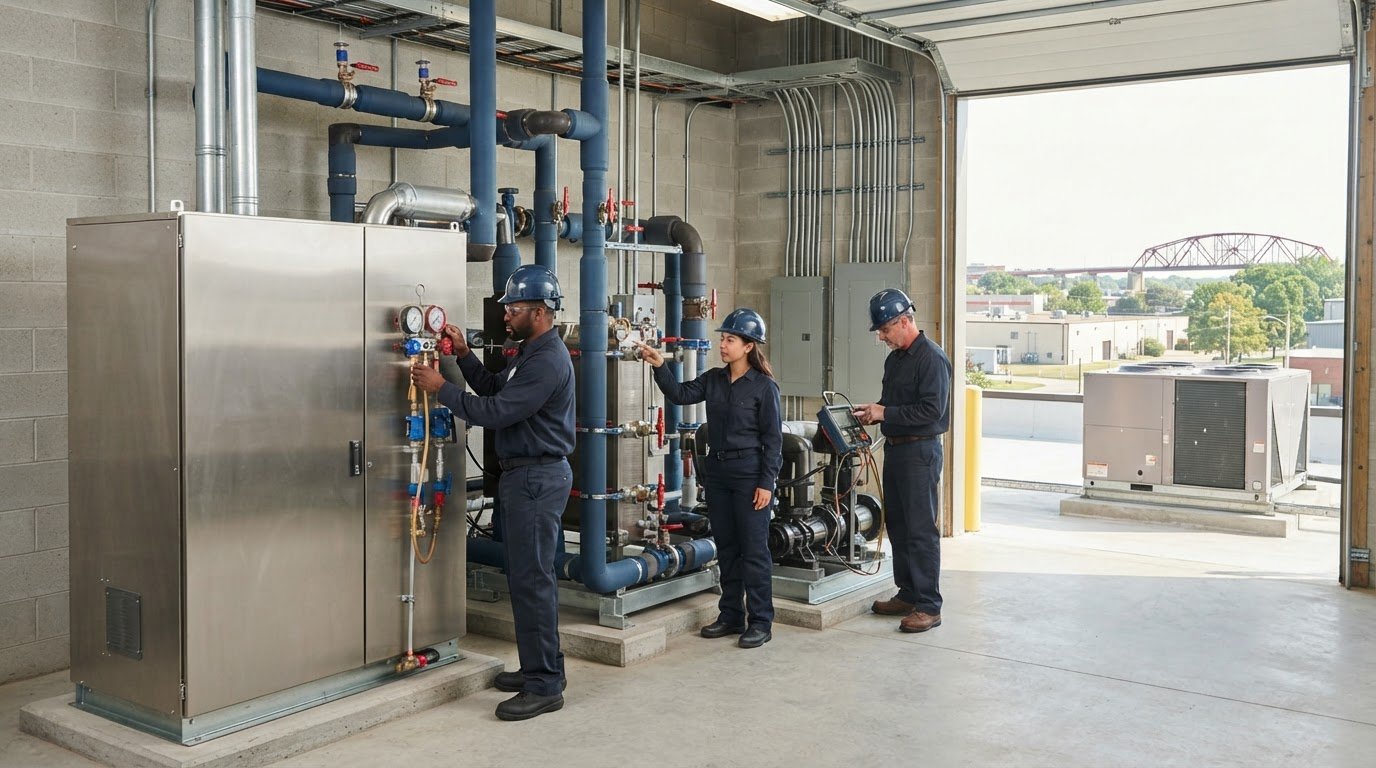
A chiller’s capacity label won’t tell you whether it fits your facility. Effective glycol chiller selection starts with the actual cooling load, required temperatures, flow conditions, and glycol-loop requirements. Without those details, it’s easy to choose equipment that doesn’t match the work or disrupts daily operations.
Capacity is only one part of the decision. You also need to understand when cooling demand peaks, what the process requires, and how the chiller will connect to the existing system. Restaurants, warehouses, gas stations, and other commercial facilities each have operating conditions that shape equipment needs.
This guide explains what information to gather before selecting a system, how chiller capacity relates to glycol-loop conditions, and what to consider when comparing options. You’ll also learn how to move from project requirements to a commercial installation plan. Supreme Mechanical Solutions installs and maintains commercial glycol chiller solutions across the Kansas City metro, alongside related refrigeration, HVAC, and kitchen equipment services.
Key Takeaways
- Start glycol chiller selection with documented operating conditions, not a capacity label alone.
- Gather the cooling load, temperature targets, flow needs, glycol details, and site constraints before planning equipment.
- Compare system options against the facility’s requirements to assess whether each fits the application.
- Use an ordered project checklist to organize information for a commercial facility in the Kansas City area.
- Clear project requirements help Supreme Mechanical Solutions coordinate glycol chiller work with related commercial refrigeration, HVAC, or kitchen equipment needs.
What a Glycol Chiller Does in a Commercial Cooling System
A glycol chiller is a refrigeration system that cools a circulating fluid, typically a glycol-and-water mixture, to carry heat away from commercial equipment or a process. Instead of cooling an occupied room, it serves a connected load that needs controlled cooling. This distinction is a useful starting point for glycol chiller selection: identify what needs cooling and how the loop serves it.
The chiller removes heat from the circulating fluid, which carries heat from the load back to the chiller. A heat exchanger separates the fluid loop from the chiller’s refrigeration process. For a concise overview of common components and applications, see What is a Glycol Chiller?
How a glycol loop transfers cooling
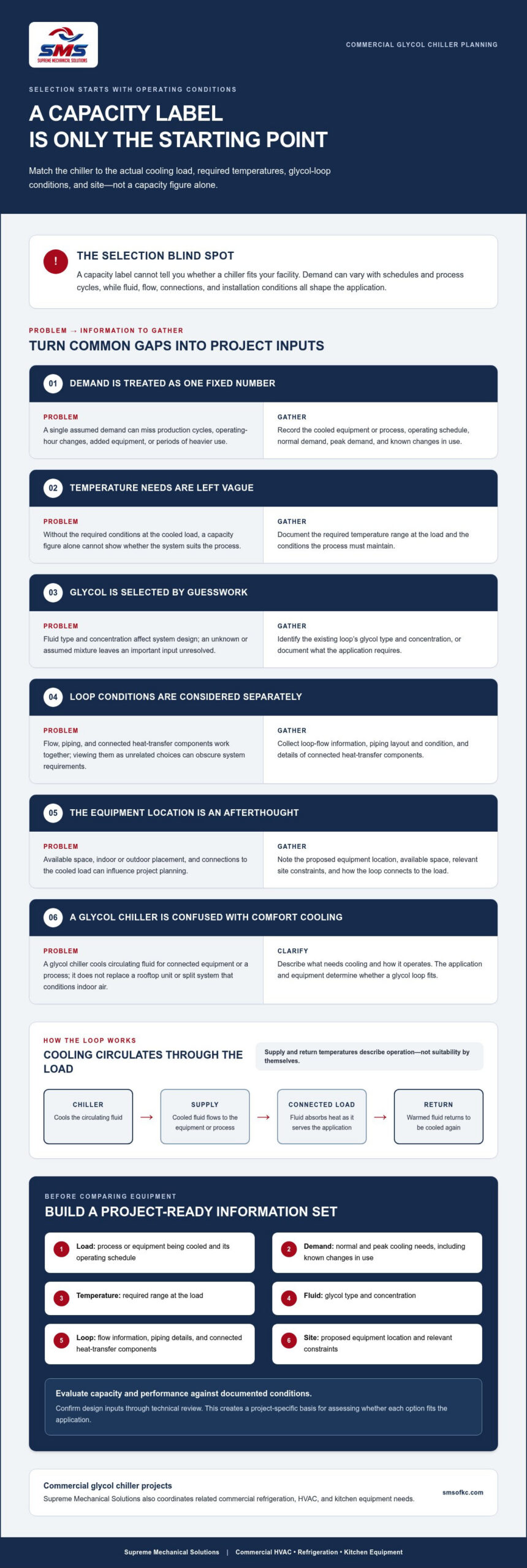
Cooled fluid leaves the chiller at the supply temperature and flows through piping to the equipment or process. As it absorbs heat, the fluid warms and returns to the chiller at a higher temperature. The chiller cools it again before it circulates through the loop. The difference between supply and return temperatures helps describe how the loop is operating, but it does not, by itself, define system capacity or suitability.
Loop design depends on the application and system requirements. The equipment being cooled, desired operating temperatures, fluid composition, piping arrangement, and circulation needs all influence how the system should be planned. The fluid and operating conditions need to work together. A glycol loop is not a one-size-fits-all arrangement.
Where commercial facilities may use glycol chillers
A glycol chiller may serve a commercial process or product-cooling application designed for a circulating secondary fluid. For example, some beverage dispensing systems use glycol-cooled lines to keep beverages cool as they move from a refrigerated area to a serving point. Other commercial processes may also use a glycol loop when their equipment is designed for this method of cooling.
That role differs from building comfort air conditioning. A rooftop unit or split system cools and conditions indoor air for occupants. A glycol chiller supplies cooling to connected process equipment. A restaurant may need both types of systems, but one does not replace the other. Not every food-service operation requires a glycol chiller; the application and equipment determine whether it fits.
Keep these functions distinct when planning a project. Describe the load the chiller must serve, how it operates, and the cooling conditions it requires. That gives the project team a practical starting point for assessing the loop and related commercial refrigeration equipment.
Which Operating Conditions Shape Glycol Chiller Selection?
A suitable system starts with a clear picture of the work it must support. Glycol chiller selection depends on the cooling load, required temperatures, fluid characteristics, circulation needs, and installation conditions. These inputs work together. A capacity figure on its own can’t show whether a system will meet the facility’s operating requirements.
Gather operating records and process details before comparing equipment. If the load changes during the day or across production cycles, include those variations rather than relying on a single assumed demand. Evaluate capacity and performance figures against documented conditions, with a technical review of the application.
Cooling load and required temperatures
Start with the equipment or process that needs cooling. Record its operating schedule, normal demand, periods of peak demand, and any planned changes in use. Note the required temperature range at the load and the conditions the process must maintain. Separate steady operation from short periods of heavier demand so neither is mistaken for the whole job.
An assumed load can lead to equipment that is poorly matched to actual use. If an estimate overlooks a production cycle, added equipment, or a change in operating hours, it may not represent the conditions the chiller will face. Documented process information gives the project team a sound basis for evaluating capacity and operating requirements.
Glycol, flow, and operating environment
Fluid details matter. The glycol type and concentration affect system design, so record what the existing loop uses or what the application requires. Don’t select a mixture by guesswork. Flow requirements, piping layout and condition, and the heat-transfer components connected to the loop also shape system operation. Review these factors together rather than treating them as separate equipment choices.
Site conditions are part of the selection, too. Note whether the chiller is planned for indoor or outdoor placement, how much equipment space is available, and how the loop connects to the cooled load. Existing piping or heat-transfer components may influence project planning. Confirm design inputs and capacity or performance values through technical review rather than relying on estimates alone.
Before an equipment discussion, assemble:
- The process or equipment being cooled and its operating schedule
- Normal and peak cooling demand, including known changes in use
- The required temperature range at the load
- Glycol type and concentration
- Loop flow information, piping details, and connected heat-transfer components
- The proposed equipment location and relevant site constraints
This information turns an equipment conversation into a project-specific review. Supreme Mechanical Solutions provides glycol chiller projects for commercial facilities and can coordinate refrigeration needs with related HVAC and kitchen equipment considerations.
Why Chiller Capacity Alone Does Not Determine the Right Fit
A nominal capacity rating is one part of the selection, not proof that a chiller suits the system. Capacity must be considered alongside the load’s temperature requirements, the fluid loop, connected equipment, and facility operations. A system that appears to match a single load estimate may still be a poor fit if the estimate doesn’t reflect actual operating conditions.
Chiller capacity only makes sense when evaluated against the temperatures, flow conditions, and operating demands the system must serve. Compare equipment against documented requirements, not just a label or design assumption.
Capacity, temperature difference, and actual demand
The cooling load and the temperatures required by the process inform capacity selection. Design assumptions can establish a starting point, but measured or otherwise documented operating needs provide a clearer basis for review. Compare normal demand with peak periods, and consider whether the load changes with production, service hours, or connected equipment. Don’t rely on a single snapshot if the facility operates differently at other times.
For example, a process with steady demand has a different operating pattern from one with distinct periods of heavier use. That difference does not establish which chiller is better. It identifies what the system plan needs to account for. Final capacity and performance figures require technical review against the application.
System compatibility and operating priorities
Existing system conditions can affect equipment fit. Review piping, connected heat-transfer equipment, control needs, and available installation space. Also consider the operating schedule, how important it is to maintain the process, and access for routine service. These details help determine whether the project can incorporate existing components or needs a broader system plan.
Use the comparison below to organize the discussion. It pairs each selection factor with its role and the information facility staff can gather.
| Selection factor | Why it matters | Information to gather |
|---|---|---|
| Cooling load | Capacity needs to reflect the load the system actually serves. | Process demand during normal and peak operation. |
| Temperature conditions | Required conditions shape how the equipment and loop are assessed. | Required process temperatures and available operating records. |
| Loop and connected equipment | Existing components influence system compatibility and planning. | Piping details, heat-transfer equipment, and controls. |
| Operating pattern | Steady and variable loads place different demands on operation. | Schedule, changes in demand, and facility priorities. |
| Installation and service access | Space and access affect project layout and ongoing serviceability. | Proposed location, clearance, and access constraints. |
Use these inputs to compare project scenarios based on need, not an unsupported ranking of equipment. A steady process, a variable schedule, and a loop with existing components each call for a different review. Don’t assume an energy or performance outcome without project-specific evaluation.
A Practical Glycol Chiller Selection Checklist for Kansas City Facilities
A well-organized project review starts with information your team already has: what needs cooling, when it operates, and how the current system is arranged. For restaurants, warehouses, gas stations, and other commercial buildings across Kansas City, Kansas City, MO and KS, Overland Park, Olathe, Lenexa, Shawnee, Leawood, Lee’s Summit, Independence, Blue Springs, Liberty, Gladstone, Grandview, Belton, Raymore, and Louisburg, a written checklist keeps equipment planning tied to actual facility use. It also gives the project team a clearer view of site coordination and operational constraints.
Project information to assemble before equipment planning
Work through the checklist in order. Capture known details and flag anything that needs review. Clear records make glycol chiller selection more specific and help prevent decisions based on assumptions.
- Describe the application. Identify the product, process, or equipment the chiller will serve and how cooling supports its operation.
- Record the operating schedule. Note operating hours, periods of peak activity, and seasonal or planned changes in use.
- Document temperature needs. Gather the target temperature range at the cooled load and operating records that show how conditions vary.
- Inventory existing system components. List current refrigeration equipment, piping, connected heat-transfer components, and known control requirements. Include glycol type and concentration.
- Identify business constraints. Note access limitations, acceptable downtime windows, and continuity needs that affect project timing or coordination.
- Review the proposed location. Record available space, equipment access, and the route between the chiller and intended load. Include site conditions that could shape installation planning.
Reviewing installation and service access
Equipment placement needs to work for installation and future service access. Consider how the chiller connects to the intended cooling load, whether existing piping can be incorporated into the project plan, and how staff or service personnel will reach the equipment. Record access restrictions early, especially where restaurant or warehouse operations may affect work areas or downtime planning.
Review the broader mechanical layout, too. A facility may have separate refrigeration and comfort-cooling needs. If a project also involves commercial rooftop units, coordinate space and access without treating those units as substitutes for process cooling. A combined review can help organize related HVAC, refrigeration, and kitchen equipment work around facility operations.
This checklist gives commercial operators a practical starting point for discussing a glycol chiller project. Supreme Mechanical Solutions supports commercial refrigeration projects throughout the Kansas City area. Call (913) 399-7711 or email sales@smsofkc.com.
Plan a Commercial Glycol Chiller Project with Supreme Mechanical Solutions
A commercial glycol chiller project starts with the facility’s operating needs, not a standard equipment assumption. Information about the application, temperatures, schedule, and existing system gives Supreme Mechanical Solutions a practical basis for planning the work. That preparation connects equipment decisions to the process the chiller will serve.
Supreme Mechanical Solutions installs and maintains commercial glycol chiller solutions for businesses across the Kansas City metro in Kansas and Missouri. Restaurants, gas stations, warehouses, and other commercial facilities can bring their process requirements and site information into the discussion. Clear project details keep planning focused on the facility’s actual conditions.
What to expect when discussing a glycol chiller project
Start with a straightforward description of the cooled process or equipment. Share the required temperature range, typical operating schedule, and periods when demand changes. Existing equipment and site details also help frame the conversation, including the condition of connected refrigeration components, piping information, controls, and available installation space.
These details support glycol chiller selection by showing how the system must fit into day-to-day operations. A restaurant may need to coordinate work around kitchen activity, while a warehouse may need to explain which process or equipment depends on cooling. The project plan should reflect those operating requirements rather than rely on generic assumptions. Final equipment details depend on the application and site.
If some records are incomplete, share what your team knows and identify what still needs assessment. Useful information can include operating notes, equipment documentation, temperature records, and a description of access or downtime constraints. This helps establish a clear project picture before discussing specifications, pricing, or timing.
Coordinate refrigeration support for commercial operations
A glycol chiller may be one part of a facility’s refrigeration needs. A project discussion can also account for related commercial refrigeration, such as walk-in cooler or freezer equipment. Supreme Mechanical Solutions also provides commercial HVAC and kitchen equipment services, helping coordinate related facility needs when they are part of the project.
Keeping the scope clear helps operators and project teams distinguish the chiller’s role from other building systems. Describe which equipment the glycol loop serves and note related refrigeration or kitchen concerns. That context keeps the project conversation practical and aligned with commercial operations.
For commercial glycol chiller service in the Kansas City metro, call (913) 399-7711 or email sales@smsofkc.com to schedule service.
Move Your Glycol Chiller Project Forward
A well-planned glycol chiller project gives your team a clear path from operating needs to an equipment plan that fits the facility. Use the information you’ve gathered to start a focused conversation about the application and next steps. Thoughtful glycol chiller selection keeps the project centered on the work the system needs to support.
Supreme Mechanical Solutions provides commercial glycol chiller solutions as part of its refrigeration services. Related HVAC, walk-in refrigeration, or kitchen equipment needs can also be coordinated as part of the project. Start with a plan shaped around your commercial operation.


